

On 14 December 2025, a mass shooting on Bondi Beach in Sydney became one of the deadliest incidents of its kind in Australia. Two gunmen, Sajid Akram and his son Naveed Akram, opened fire on a crowd gathered to celebrate the Jewish holiday Hanukkah, killing 15 people and injuring dozens. Before the shooting, the attackers threw improvised explosive devices (IEDs) into the crowd, which failed to detonate. Sajid was subsequently shot and killed by police at the scene, while Naveed was arrested and transported to the hospital with injuries.
The investigation further indicated that Naveed was likely involved in activities related to Islamic extremism prior to the mass shooting in Sydney. At the scene, homemade ISIS flags were also recovered from the attackers’ vehicle.
The attack was subsequently classified as terrorism by New South Wales police and assessed as inspired by the Islamic State of Iraq and Al-Sham (ISIS). While ISIS did not formally claim responsibility for the incident, it later praised the attack in its official weekly Al-Naba newsletter, describing it as a “source of pride.”
Occasionally, ISIS has deliberately refrained from claiming responsibility for attacks, either in an attempt to avoid association with failed operations or to conceal operational links to its sleeper cells. In the case of the Bondi Beach shooting, however, the absence of a formal claim may reflect a broader “no allegiance” approach, lowering the threshold for violence and moving beyond traditional models of leaderless jihad.
This Insight discusses the “no allegiance” strategy in ISIS’s operational and propaganda efforts, referring to a model of violence in which individuals carry out attacks without formal membership or tactical coordination with the group, framing their actions as aligned with its ideological project. It analyses this threat concept and how the “no allegiance” approach lowers the threshold for participation in ISIS-inspired violence. The Insight also examines the role of social media platforms in facilitating exposure to ISIS-related content and creating conditions that foster low-threshold radicalisation.
How ISIS Official Propaganda Advances the “No Allegiance” Strategy
This Al-Naba editorial, published on 18 December 2025 and titled “The Pride of Sydney,” arguably provided greater strategic value than a formal claim of responsibility for the Bondi Beach attack. Rather than officially taking credit, the editorial reinforced ISIS’s broader recruitment strategy, targeting priorities, and methods of inspiring violence globally, and effectively asserting its ideological ownership over jihadist-affiliated attacks.
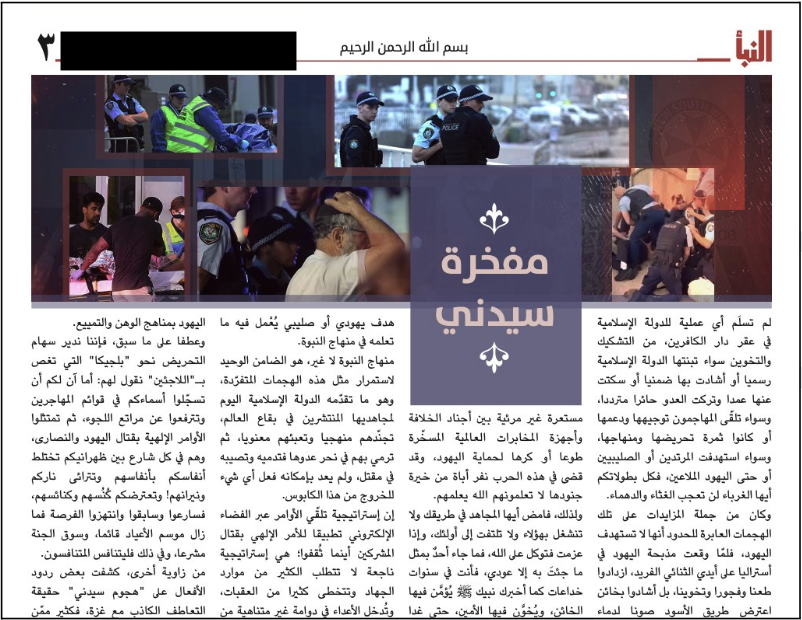
Figure 1. A photo of the main article from the 18 December 2025 issue of Al-Naba (Obtained from TRACTerrorism).
In particular, while commenting on the mass shooting in Sydney, the newsletter praised the fact that Jews were “bleeding on the streets of Australia” and referred to the attack as a successful operation carried out by Sajid and Naveed Akram, who were portrayed by Al-Naba as “lions” and “heroes.” The editorial emphasised that adherence to monotheism and “prophetic methodology” remains the only essential foundation for planning and executing attacks. From this perspective, formally claiming responsibility becomes secondary, as the identity of the Islamic State is embedded in acts of violence conducted by mujahideen (fighters engaged in jihad) and already “imprinted on their swords.”
Importantly, the editorial also highlighted the central role of online platforms in recruiting future militants and in inspiring and indirectly coordinating lone-actor attacks around the globe. It described this approach as low-cost and not requiring complex resources, stating that only a complete shutdown of the internet would prevent ISIS from advancing its ideological aims.
The coverage of the Bondi case in the Al-Naba editorial is just one of the most recent manifestations of how ISIS propaganda materials promote the group’s “no allegiance” strategy and take credit for the inspiration of attacks worldwide.
As an example, in its 9 January 2025 issue of Al-Naba, ISIS reiterated its claim of ideological responsibility for inspiring the car-ramming attack in New Orleans on 1 January 2025, which was carried out by an Islamist-motivated individual. Meanwhile, the 4 July 2024 issue was devoted entirely to ISIS’s policy of unclaimed violence. Tellingly titled “They Are of Us and We Are of Them,” it referred to a series of lone-actor attacks in Russia, Switzerland, Belgium and Serbia that took place at the end of 2023 and in the first half of 2024, and whose perpetrators had documented pledges of their allegiance to ISIS. Its core argument is that such lone-actor attacks in Europe demonstrate the organisation’s ability to influence sympathisers worldwide, transcending geographical boundaries and reflecting the effectiveness of its discourse. It further emphasised that religious bonds outweigh administrative ties with the group, while noting that ISIS has its own criteria for determining when to officially claim responsibility for the incidents. As in the December 2025 newsletter, the group reaffirmed its exclusive ideological role in inspiring Islamist attacks around the globe.
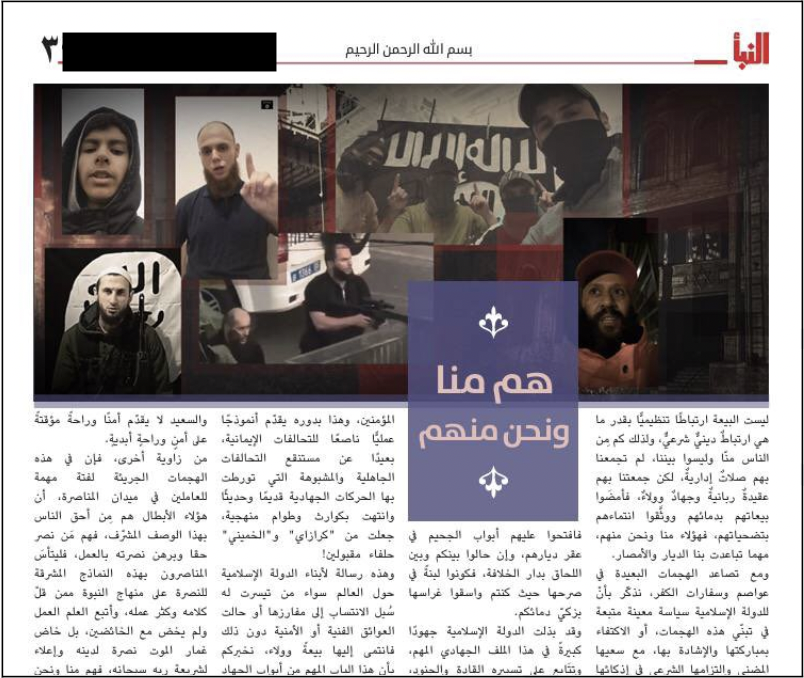
Figure 2. A photo of the main article from the 4 July 2024 issue of Al-Naba (Obtained from Huda al-Saleh (@huda_1alsaleh) on X).
This pattern was also reflected in an audio message from ISIS spokesperson Abu Hudhayfah Al-Ansari, released on 21 February 2026. Although the message focused mostly on Syria and its government, Al-Ansari also addressed the group’s role in inspiring and framing jihadist attacks that the world witnessed over the past two years.
These ISIS communications do not indicate a new phenomenon in the group’s propaganda, but rather a consistent effort to monopolise its ideological ownership of Islamist violence worldwide. This approach also appears to function as a mechanism for maintaining unity across ISIS’s network of affiliates, particularly given the limited operational role of the centralised leadership within ISIS.
The language used in both official and unofficial ISIS media products also plays a significant role in attracting sympathisers. It tends to incorporate adversarial, theological and emotional elements, while frequently responding to relevant geopolitical and other global developments. More broadly, this form of propaganda offers simplified answers to complex social and political questions, which may resonate with certain audiences, particularly socially isolated individuals. A detailed psycho-linguistic analysis, however, falls beyond the scope of this Insight.
By prioritising ideological commitment over formal allegiance or administrative ties, the group reinforces the idea that individuals can act on its behalf without direct coordination. Without the need to receive orders from ISIS leadership or to establish formal contact with the group, this both lowers the threshold for affiliation and expands the pool of potential lone-wolf attackers. This strategy aligns with contemporary digital environments, which enable individuals to radicalise without formal affiliation and allow the proliferation of ISIS ideological narratives across mainstream platforms.
Online Propaganda to Offline Action: ISIS-Inspired Cases in the West
According to Europol’s recently released EU Terrorism Situation and Trend Report (EU TE-SAT) 2025, social media and messaging platforms remained the primary vehicles for the dissemination of jihadist audio-visual materials in 2024, with the young audience as a key target group. The report also indicated that extremist actors continue to adapt propaganda formats and communication strategies to platforms popular among youth.
Pro-ISIS nasheeds and excerpts from Al-Naba newsletters, content issued by the official ISIS Amaq agency, as well as propaganda produced by both official and unofficial pro-ISIS media outlets, are among the types of content frequently observed by researchers across mainstream social media networks, including TikTok, Instagram, YouTube, and Facebook. Algorithms of these platforms may often inadvertently facilitate the discovery of jihadist materials by interested audiences. This factor is actively exploited by pro-ISIS elements to maintain a presence on mainstream social media environments and disseminate such content despite ongoing crackdown measures by law enforcement. It should be noted that all aforementioned platforms have zero tolerance policies towards violent extremist and terrorist content on their platforms.
This link between ISIS’s strategy of unclaimed violence and online radicalisation has been observed in recent cases in Western countries, where individuals exposed to ISIS propaganda have acted without direct organisational ties by inciting or planning to carry out lone-actor attacks.
In December 2025, the FBI disrupted an alleged mass-casualty attack at a grocery store and a fast-food restaurant on New Year’s Eve in Charlotte, United States. The attack was purportedly planned to be carried out in support of ISIS. The suspect was active on social media, where he was posting pro-ISIS communications, with some of them inciting violence against Christians, Jews and other “disbelievers,” and visited unnamed websites affiliated with the organisation.
On 10 February 2026, Dutch police arrested 15 suspects, aged between 16 and 53, across the Netherlands on suspicion of spreading ISIS propaganda and inciting supporters to commit terrorist offences and martyrdom attacks on TikTok. The individuals were involved in creating and managing a TikTok account that disseminated the group’s content with Dutch subtitles, with some posts exceeding 100,000 views.
Meanwhile, in France, on 17 February 2026, two 16-year-old minors were arrested for plotting a jihadist-inspired attack in Lille. According to the French National Anti-Terrorism Prosecutor’s Office (PNAT), the attack was planned to target an unnamed but “well-known” shopping centre in the city, with the use of improvised explosive devices (IEDs). French authorities stated that the minors were inspired by online propaganda from ISIS. On 10 March 2026, a separate jihadist and antisemitic plot was foiled following the arrest of two brothers aged 20 and 22 in northern France. The individuals were also radicalised by ISIS ideology and recorded a video in which two of them pledged allegiance to the group.
These recent cases indicate that the suspects were ISIS supporters acting independently, often with a limited ideological depth and understanding of jihadist narratives, which reflects a broader pattern of digitally driven radicalisation. Furthermore, the involvement of very young individuals, mainly socially isolated males, is particularly visible in such cases, a trend that has been observed particularly over the past five years.
In other words, this ‘simplified’ form of ISIS membership, coupled with continuous incitement to violence through clear and accessible narratives, enables individuals to engage in violence without formal affiliation while still operating within the group’s ideological framework. In this context, even limited identification with ISIS ideology may lead some individuals to perceive themselves as acting on behalf of the group. The presence of ISIS-related violent content online, particularly across mainstream social media platforms, makes ISIS rhetoric easily accessible and further facilitates exposure, normalisation, and subsequent radicalisation.
Conclusion and Recommendations
Threats associated with ISIS’s strategy of “no allegiance” violence stem not only from individual attacks themselves, but from a model that complicates attribution, lowers barriers to participation, and enables the continuous reproduction of violence under the ISIS brand. The relatively simple mechanisms through which extremists develop a sense of belonging to the group contribute to the growth of an “invisible” base of pro-ISIS sympathisers. This dynamic further complicates the detection, tracking, and prevention of lone-actor attacks globally. The threat is assessed to be particularly prominent in Western countries, which are often perceived as high-value and more symbolically significant targets.
At the same time, mainstream social media platforms remain an important part of this environment. They enable the dissemination and accessibility of ISIS-related propaganda content, even in the absence of direct organisational coordination. Algorithm-driven content distribution, combined with the adaptability of extremist messaging, creates conditions in which exposure to such material can occur with minimal effort. While technology companies and government institutions continue to invest in measures to counter extremist content, the persistence and re-emergence of such materials highlight the complexity of effective moderation in rapidly evolving digital environments.
Social media platforms are recommended to improve their ability to detect extremist content in video and audio formats where little or no text is present, moving beyond keyword-based approaches. Platforms should also strengthen measures to prevent the repeated re-upload and circulation of previously removed material across platforms through shared detection mechanisms; the Global Internet Forum to Counter Terrorism’s Hash-Sharing Database is a prime example of this.
–
Sergey Elkind is a former Israeli intelligence analyst and a geopolitical researcher with expertise in OSINT investigations and online threat environments. His professional interests include the study of jihadist and militant online activity, as well as the analysis of their propaganda materials and techniques. Currently, he is applying his background and skills in the German civic sector, where he coordinates intercultural initiatives that foster dialogue, inclusion and social resilience.
–
Are you a tech company interested in strengthening your capacity to counter terrorist and violent extremist activity online? Apply for GIFCT membership to join over 30 other tech platforms working together to prevent terrorists and violent extremists from exploiting online platforms by leveraging technology, expertise, and cross-sector partnerships.
The views and opinions expressed in this Insight are the authors’ own and do not necessarily reflect those of GNET or any of its partners.