


On 17 October 2025, the Coimisiún na Meán – Ireland’s agency for developing and regulating a thriving, diverse, creative, safe and trusted media landscape – issued a decision concerning two hosting service providers under the Terrorist Content Online Regulation. The Irish agency warned Pinterest (alongside WhatsApp) “to take specific measures to protect their services from being used for the dissemination of terrorist content, and to report to Coimisiún na Meán on the specific measures taken within three months from the receipt of the decision”. In the months since the agency’s statement, the presence of “terrorist content”, specifically Salafi-Jihadi propaganda, is still fairly prevalent on these platforms. The propaganda is multifaceted and varied in content. In particular, the authors have observed that Pinterest continues to host some Islamic State (IS) institutional and Ansar Production propaganda, namely, the most representative and evident form of IS content. This Insight will examine the continued presence of IS institutional and Ansar Production propaganda on Pinterest, despite the warning issued by the Coimisiún na Meán, underscoring the need for more effective platform-level counter-strategies.
Pinterest: Connecting People Through Content
Pinterest self-describes as a “visual discovery engine for finding ideas like recipes, home and style inspiration, and more” with more than 600 million monthly active users. The interactions on Pinterest are focused on sharing ‘Pins’, which can take the form of images or short videos. Users can interact with other users’ Pins in the Explore or Home sections, which let you search for and discover content related to your interests. Users can save and organise Pins within their profile into categorised boards. Notably, Pins do not always display information about their original creator. This depends on the privacy settings or account type of the user who shared the content. Pinterest also enables users to create private accounts and private boards, whose content does not appear in search results or public links. In the case of these hidden boards, the identity of the user who saved a Pin cannot be seen.
This particular feature thus gives Pinterest users the chance to further manage their experience on the platform, allowing them to freely share a varied selection of content while safeguarding their own identity. This is central to Pinterest’s platform architecture and user experience. Generally speaking, Pinterest has become popular for finding ideas and inspiration across various categories, prioritising the discovery aspect rather than user-tracking, as is typical of other social media platforms in the current digital environment.
Taken together, these main features of Pinterest represent a potentially useful ’alternative’ platform where extremists can further disseminate the most canonical and recognisable IS propaganda without being deplatformed as easily on other mainstream social media platforms. Users sympathetic to IS continue to exploit such features, namely private accounts and secret and/or private boards.
The Presence of pro-IS Propaganda Material on Pinterest
IS and wider jihadist supporters have long adopted what has been termed the Multiplatform Communication Paradigm (MCP). The MCP is a media strategy based on a cross-platform approach aimed at diversifying the movements’ online presence by simultaneously using multiple social media platforms, messaging platforms or social networks. Like other social media platforms, Pinterest has, over the years, attracted the attention of pro-IS supporters, who have viewed the platform as another means of disseminating propaganda online.
An Insight by Meili Criezis, published in February 2024, analysed the use of generative artificial intelligence (AI) by IS supporters to create and disseminate pro-IS propaganda on Pinterest. She identified many pro-IS accounts posting content created with generative AI, which were shared across several social media platforms, including hundreds of images on Pinterest. Furthermore, in August 2024, Criezis dove deeper into IS content on Pinterest in two Insights, specifically how its algorithm helps pro-IS users curate their feeds, and how the Pinterest algorithm enables users to find other ‘like-minded’ accounts. Criezis’ analyses show that Pinterest hosts both branded and non-branded pro-IS material and that its recommendation algorithm facilitates the discovery of related material, in a variety of languages, generating millions of monthly views. Criezis stressed a key element of the online modus operandi of pro-IS accounts, namely the importance of a multiplatform approach (as described by the MCP). This approach becomes even more evident when examining the content itself, which is often generated on platforms such as Pinterest and then repurposed into images or videos for other mainstream social networks, such as TikTok. In December 2025, the authors observed IS supporters on TikTok encouraging other supporters to use Pinterest after TikTok ultimately banned them and deleted their shared content (Figure 1).
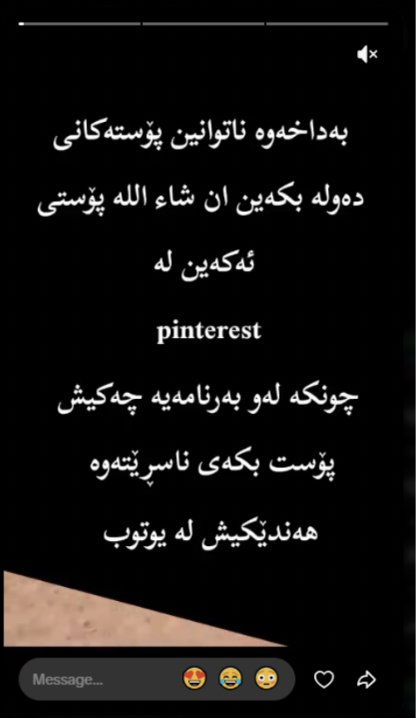
Figure 1: A screenshot from the story of a pro-IS TikTok user encouraging cross-platform movement.
On Pinterest, the Content Remains
More than a year and a half after Criezis’ investigation into pro-IS material on Pinterest, such content remains present on the platform. Despite Irish authorities warning Pinterest to develop an effective removal campaign to counter the spread of terrorist content within its digital environment, the presence of pro-IS propaganda material is still preponderant within the platform. For instance, during a single day of monitoring for pro-IS propagandistic material on Pinterest, the authors identified 207 pins containing the most explicit form of pro-IS propaganda, namely, Institutional and Ansar Production media outputs (Figure 2).
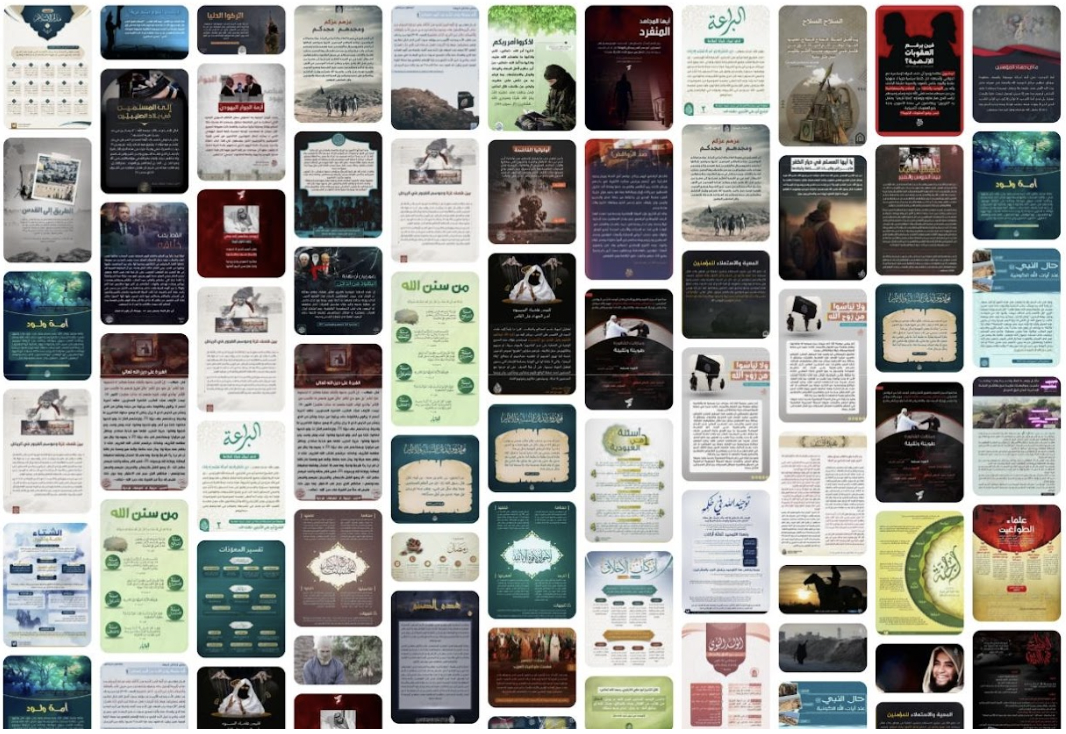
Figure 2: Examples of Institutional and Ansar Production propaganda material.
The 207 pro-IS-related pins are distributed as follows:
- 4 AMAQ News Agency bulletins
- 21 frames of IS’s institutional videos
- 26 pieces of IS’s institutional propaganda
- 41 An-Naba infographics
- 115 Ansar Production posters
By using simple search terms related to IS, the authors easily identified the problematic content. As demonstrated by Criezis, searching specific terms in Arabic circumvents content moderation policies even more easily. In fact, most of the propaganda content on Pinterest is in Arabic, often accompanied by Arabic descriptions and/or hashtags. There are several ‘obvious’ terms blocked in the platform’s search bar; however, by using IS-related Arabic, it was possible to find Pins related to An-Naba and/or several Ansar Production posters focused on different frames of the An-Naba editorials (Figure 3). An-Naba is one of the most important sources of IS institutional propaganda. It is the official IS newsletter, and its editorials reflect the group’s propaganda line. In this respect, the Ansar Production media outlets often take fragments from An-Naba editorials to create more usable content (posters and videos) for IS’s supporters. The accessibility of this content on Pinterest in Arabic underscores the challenge many platforms face when it comes to language diversification in moderation.
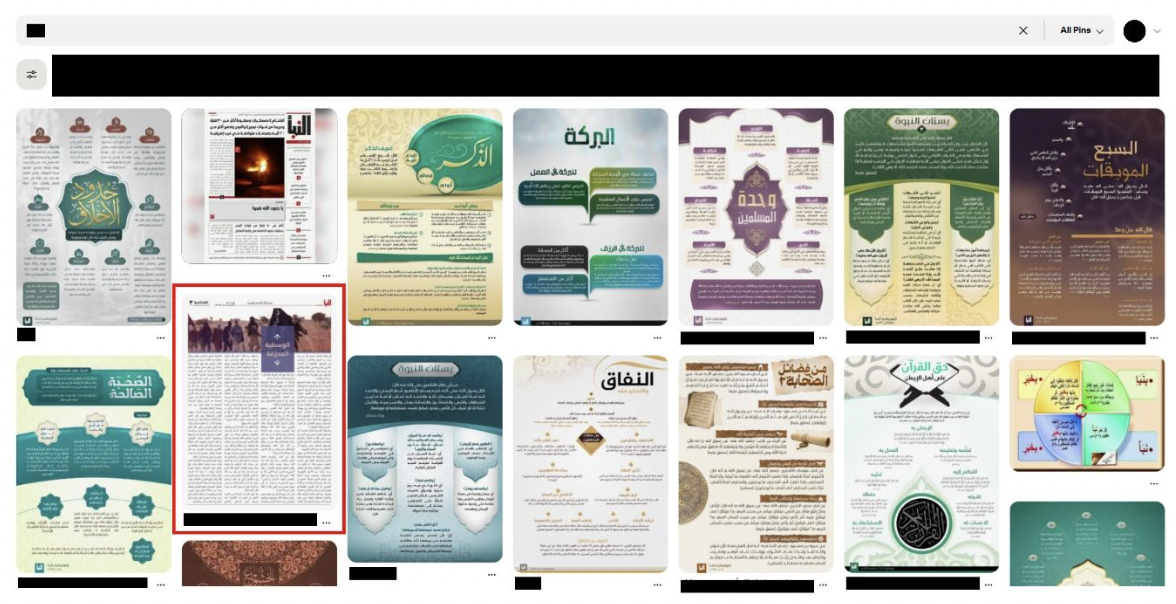
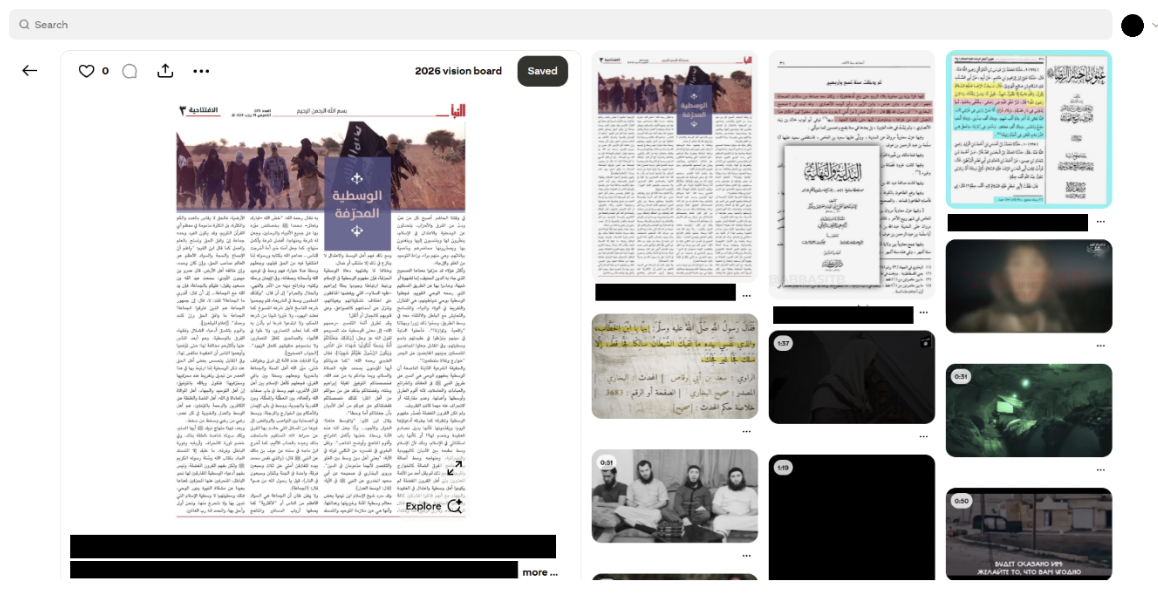
Figure 3: Results on Pinterest by using Arabic keywords related to IS institutional propaganda.
Once our Pinterest algorithm was trained, content was also found in the ‘suggested’ section, thereby maximising the amount of Institutional propaganda material detected on the platform. Within the ‘suggested’ section, other pro-IS Institutional propagandistic content was found, namely frames of IS’s official videos showing the recognisable IS’s black banner logo in the right corner and/or images issued by AMAQ News Agency (Figure 4). AMAQ News Agency is IS’s institutional news service, which was created to produce and share audiovisual media content related to IS’s military operations, ranging from short text bulletins to embedded videos.
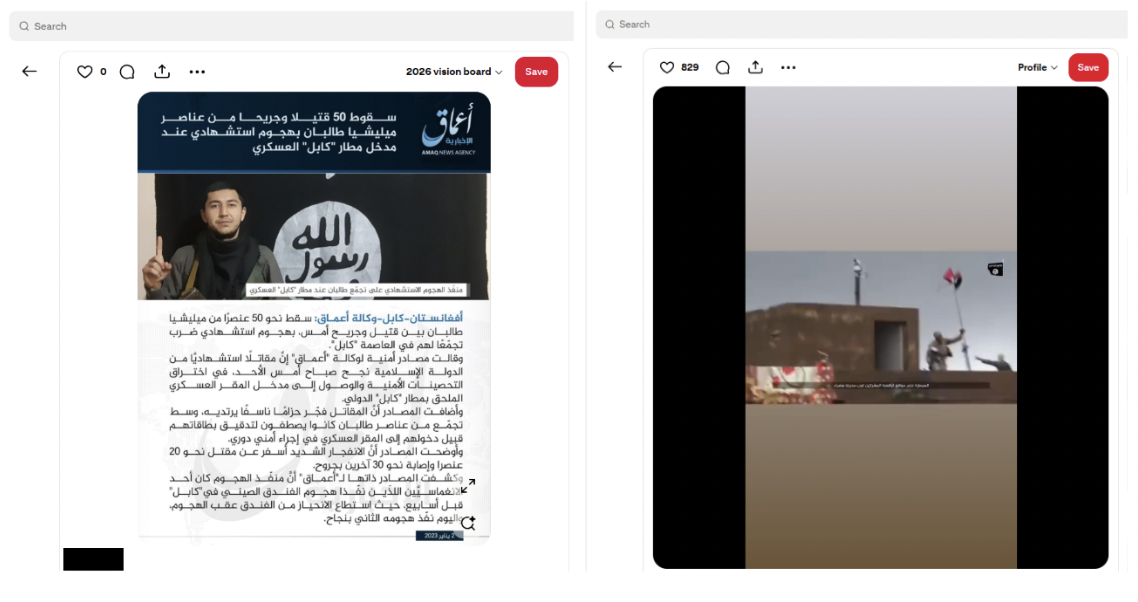
Figure 4: An example of AMAQ News Agency image (left) and a frame of an IS institutional video (right).
Considering this, it is possible to say that Pinterest constitutes an all-encompassing environment where users are constantly exposed to new content based on their research and recommendations. Furthermore, using explicit terms related to the Ansar Production media outlets, a significant number of pro-IS propagandistic pieces attributable to Ansar Production were observed (Figure 5).
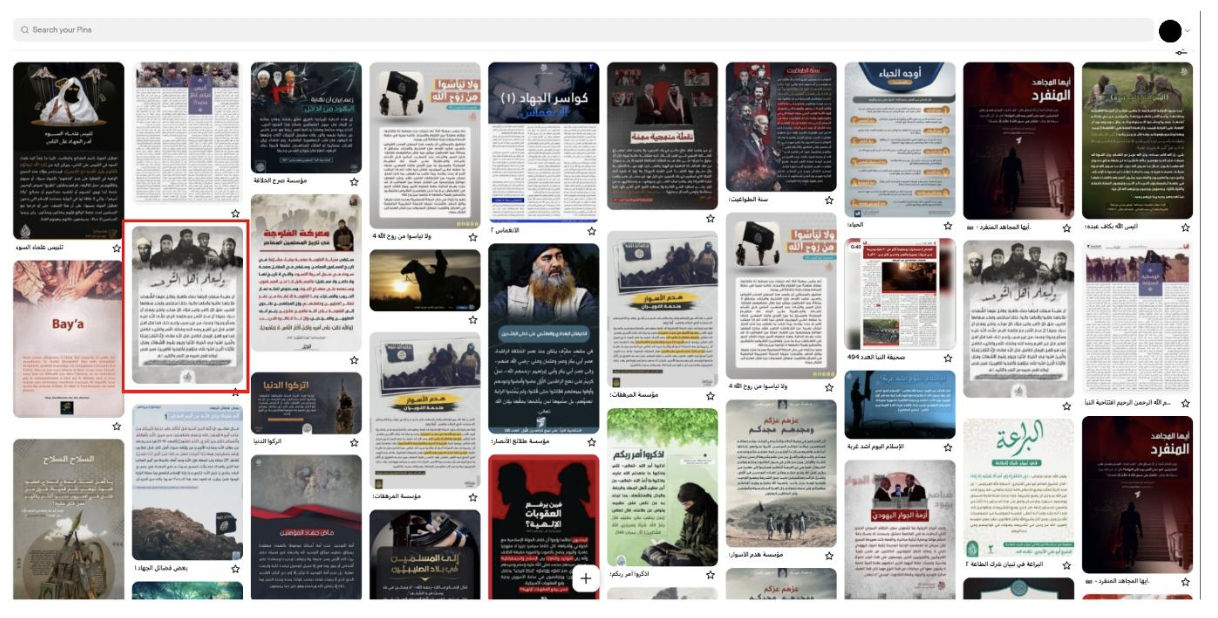
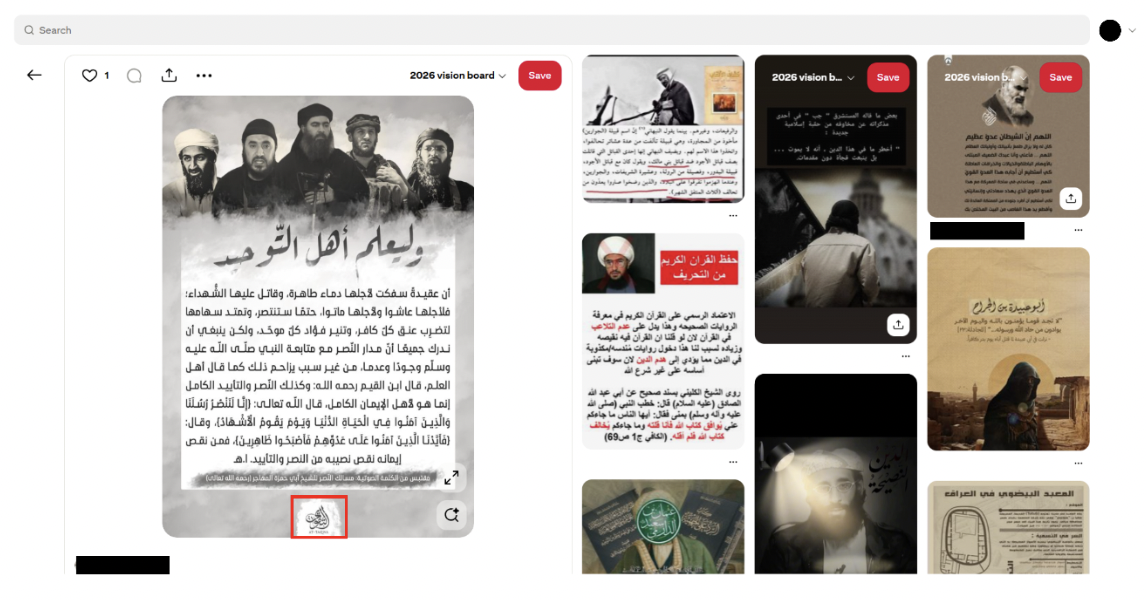
Figure 5: Examples of Ansar Production media houses’ propaganda material.
Some of the mentioned Ansar production media houses’ content was characterised by textual descriptions, often containing excerpts from An-Naba in Arabic, frequently accompanied by hashtags (Figure 6).
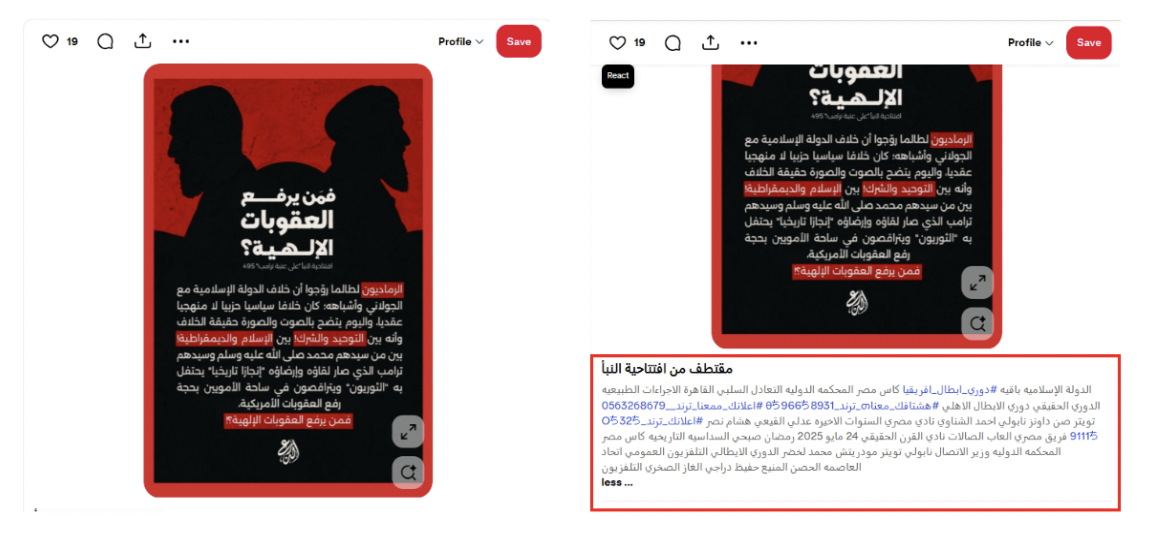
Figure 6: Example of Ansar Production propaganda with a caption in Arabic.
However, it is important to note that pro-IS propaganda material is also detectable not necessarily using explicit words, terms, or expression referred to IS. On the contrary, by simply using generic Arabic words, pro-IS propagandistic material can be found as well (Figure 7). In this respect, it was possible to find Ansar Production posters and IS’s video frames coming from Institutional media outlets, such as al-Furat.
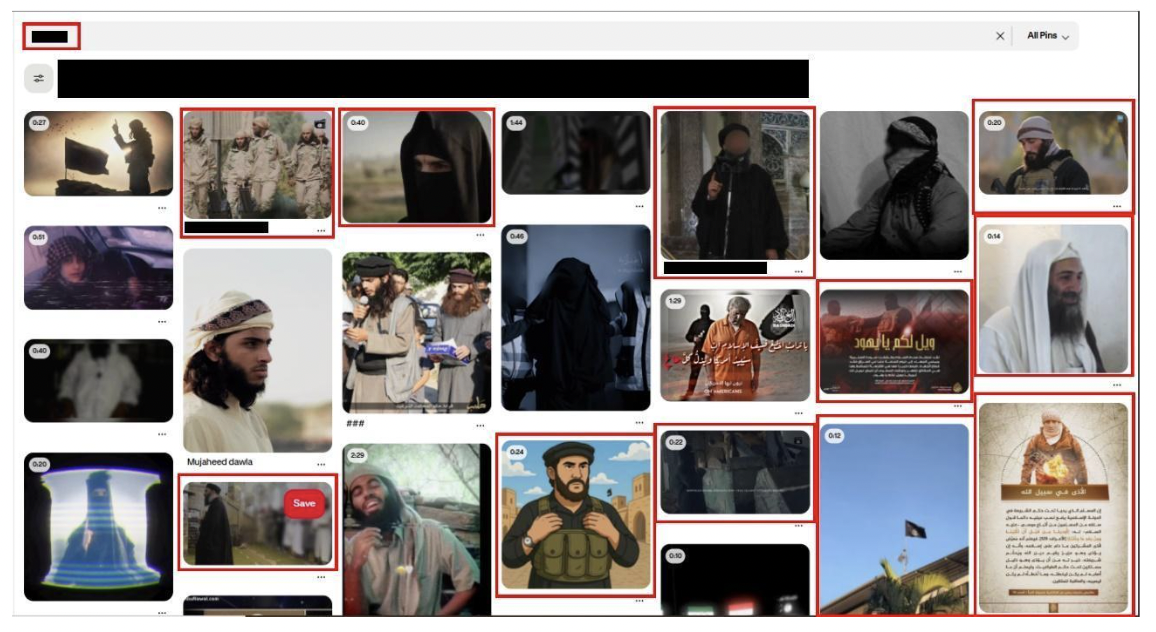
Figure 7: Examples of pro-IS material found by simply using Arabic words.
Since Pinterest allows users to create private/secret boards and set their profiles to private, most of the propagandistic content observed is shared in its original form, often circumventing censorship. To a lesser extent, some of the Institutional propaganda material appears to be self-censored to avoid deplatforming, using symbols and other elements to hide recognisable logos, such as the IS’s black banner in IS institutional videos and the AMAQ News Agency logo in military bulletins (Figure 8).
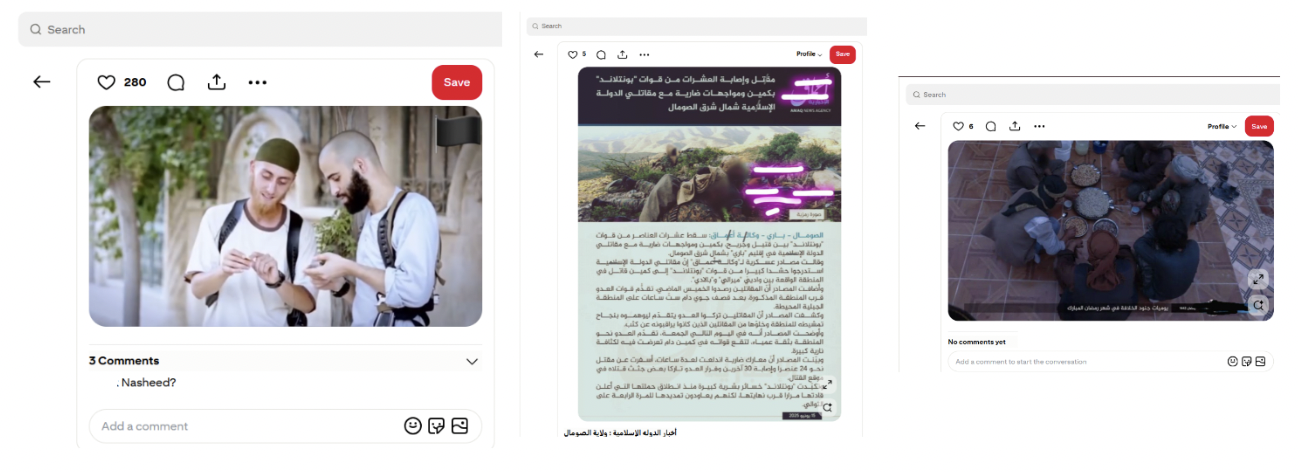
Figure 8: Examples of partially-censored IS institutional propaganda material: an institutional video (left), an AMAQ News Agency bulletin (centre and right).
Although most of the Pins detected were private and anonymous, several public pro-IS Pinterest profiles have been detected (Figure 9). As shown in Figure 9, some public users openly shared different An-Naba frames and infographics alongside IS’s video frames.
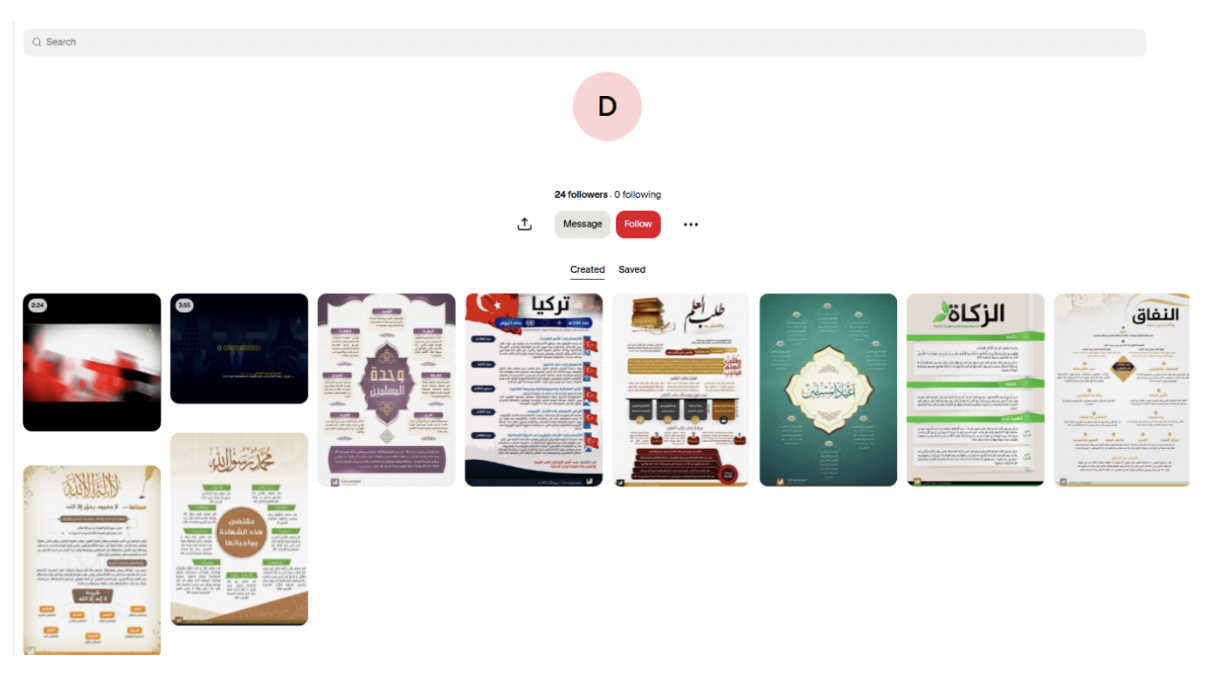
Figure 9: Example of a pro-IS user on Pinterest sharing An-Naba infographics.
During a one-day monitoring period, the authors identified at least 40 accounts sharing and/or reposting pins related to pro-IS propaganda on the platform, including the most explicit propaganda, namely Institutional and Ansar Production. Among the latter users, some have also created boards that collect all pro-IS propagandistic material in explicitly labelled folders, making it easier for supporters and/or sympathisers to find the referenced audiovisual content (Figure 10).
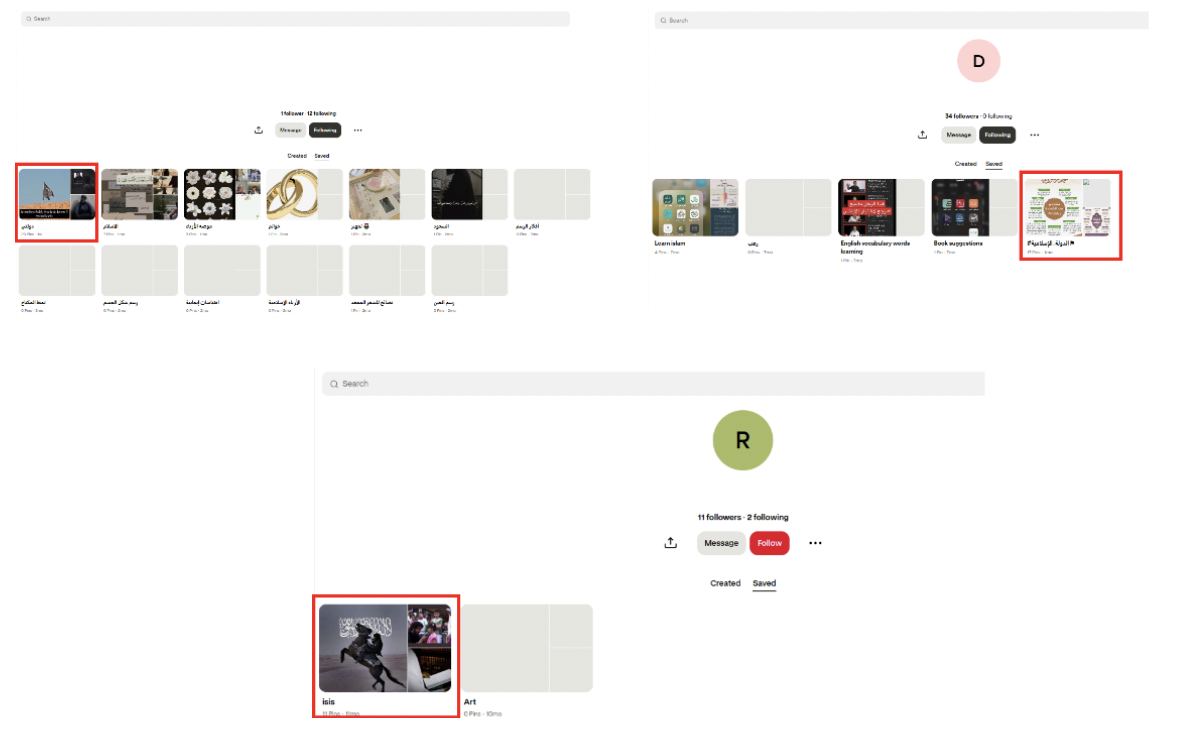
Figure 10: Examples of boards collecting pro-IS propaganda content.
Conclusions
While Pinterest’s Community Guidelines prohibit content and accounts that encourage, praise, promote or provide aid to dangerous actors or groups and their activities, including extremists, terrorist organisations, gangs and other criminal organisations, the platform remains of use to a small but resilient group of pro-IS actors to disseminate propaganda.
Moreover, audiovisual content appears to be readily accessible on Pinterest. Using simple, non-specific keywords, the IS institutional and Ansar Production propagandistic content can be accessed. In addition, Pinterest’s algorithm, which underpins its network, enhances access to content. The latter is essentially based on a ‘Search-Recommendation’ dichotomy, with the ‘suggested’ section trained on users’ searches to create an immersive digital environment. This is underscored by the platform’s significant privacy protections, which allow users to create secret boards and accounts and share content freely with little traceability. This appears crucial, given the large number of Pinterest users involved in disseminating pro-IS propaganda, especially as an ‘alternative’ collection and propagation tool for explicit content after ban campaigns and restrictions on other platforms. Hence, the ease with which content can be found makes it possible for pro-IS supporters to conceive of Pinterest as a ‘surface’ repository where pro-IS propaganda can be openly found and later disseminated across other social media platforms. While other platforms also have this problem, Pinterest plays a role within the pro-IS online ecosystem. Beyond enabling exposure to official IS propaganda, particularly content produced by Institutional media outlets and Ansar Production, Pinterest also provides a pool of visual resources that supporters actively repurpose when producing and circulating their own propaganda across the wider IS network.
Overall, to counter the presence and diffusion of IS institutional propaganda, Pinterest could implement automated tools that detect IS propaganda material based on recurring graphic elements and symbolism. Furthermore, as with other social networks, Pinterest should focus more on extremist-laden Arabic-language content, both in shared material (such as An-Naba editorials and Ansar Production posters) and textual Pin captions.
In a statement from Pinterest, a spokesperson has said:
“The material discussed in the Insight does not accurately reflect the typical Pinterest experience. The content referenced represents only a small fraction of the billions of Pins on our platform. When we become aware of content that violates our Community Guidelines, we act swiftly to take appropriate action against such content. We remain committed to providing a positive and safe experience for everyone on Pinterest.
—
Alessandro Bolpagni is a senior research analyst at the Italian Team for Security, Terroristic Issues, and Managing Emergencies – ITSTIME. He also specialised in digital HUMINT (Human Intelligence) and OSINT/SOCMINT (Open Source and Social Media Intelligence), oriented particularly on Islamic terrorism and Russian Private Military Companies (PMC). He focused on monitoring terrorist networks and modelling recruitment tactics in the digital environment, particularly on new communication technologies implemented by terrorist organisations. He has produced operational reports and lectures for training and education purposes for companies, research centres, and law enforcement agencies.
Grazia Ludovica Giardini is a Junior Researcher at the Italian Team for Security, Terroristic Issues, and Managing Emergencies – ITSTIME. She has a BA in Linguistic and Cultural Mediation from the Faculty of Languages, Literatures, Cultures and Mediation of the Università degli Studi di Milano and an MA in International Cooperation and Development Policies at the Università Cattolica del Sacro Cuore (UCSC) in Milan. She specialises in the application of Open Source Intelligence (OSINT), Social Media Intelligence (SOCMINT) techniques, and Digital Human Intelligence (Digital HUMINT). Her research activities are focused on monitoring Salafi-jihadi groups’ communication strategies and propaganda through various online platforms.
—
Are you a tech company interested in strengthening your capacity to counter terrorist and violent extremist activity online? Apply for GIFCT membership to join over 30 other tech platforms working together to prevent terrorists and violent extremists from exploiting online platforms by leveraging technology, expertise, and cross-sector partnerships.
The views and opinions expressed in this Insight are the authors’ own and do not necessarily reflect those of GNET or any of its partners.