

On 1 February 2026, a meme token called GOYIM appeared on the Solana blockchain, a public digital network where cryptocurrencies are created and traded. In contemporary far-right online spaces, the term appears in slogans such as “The Goyim Know”, promoting conspiracy theories of hidden Jewish control.
The GOYIM website centres on antisemitic language and imagery, embedding this framing within an interactive environment that combines an AI meme generator, a live X feed, gamified terminology, and real-time trading data in a single interface.
After listing on decentralised and centralised exchanges, GOYIM was presented primarily as a ticker symbol analysed for price and volatility, while its explicitly ideological website faded from prominence.
This Insight analyses both the ideological design and the technical infrastructure of the GOYIM token, showing how a project built around explicit antisemitic framing moves into mainstream trading environments, where attention shifts to price and trading activity, rather than ideology.
How Meme Tokens Generate Value
Meme tokens convert attention into speculative value. By transforming political or cultural references into emotionally charged, shareable content, they generate visibility that can signal momentum in highly volatile markets. Spikes in online activity often coincide with increased trading volume, as attention itself becomes a signal of opportunity. In such an environment, heightened activity can trigger fear of missing out (FOMO), drawing traders into positions shaped more by momentum than fundamentals.
Platform Architecture and Generative AI in the GOYIM Project
The project’s visual language is visible before any discussion of the token. The GOYIM website homepage displays a stereotype caricature associated with antisemitic imagery. Positioned above the token’s name and central slogan “Rise of the Nations”. The image brands the token within an openly ideological context.
At the centre of the website is an embedded generative tool built on the Gemini 2.5 flash model. Users can enter prompts and generate antisemitic memes directly within the platform.
Meme creation is integrated directly into the interface, lowering the barrier to producing and circulating antisemitic content.
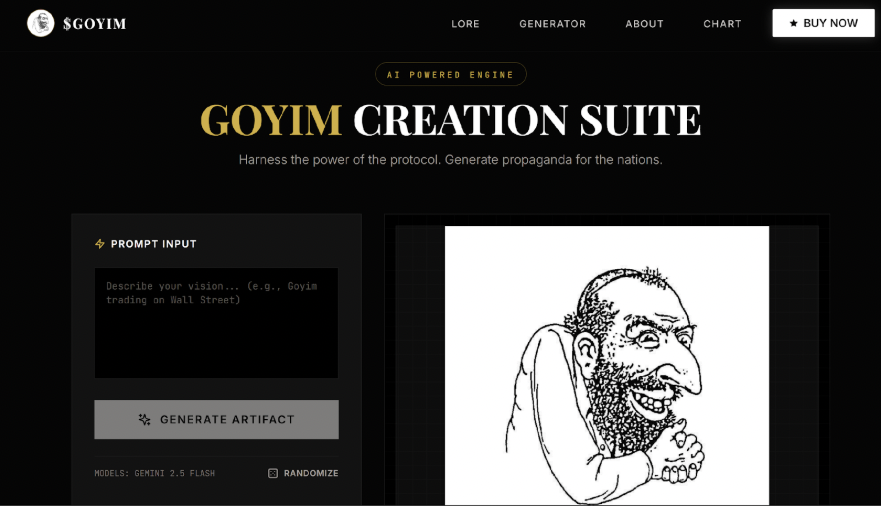
Figure 1: The GOYIM website integrates an AI-based meme generation tool into the project’s main interface.
Clicking the “View Chart” button beneath the Solana contract address opens a retro-style desktop screen labelled “GoyOS,” where the AI tool is located.
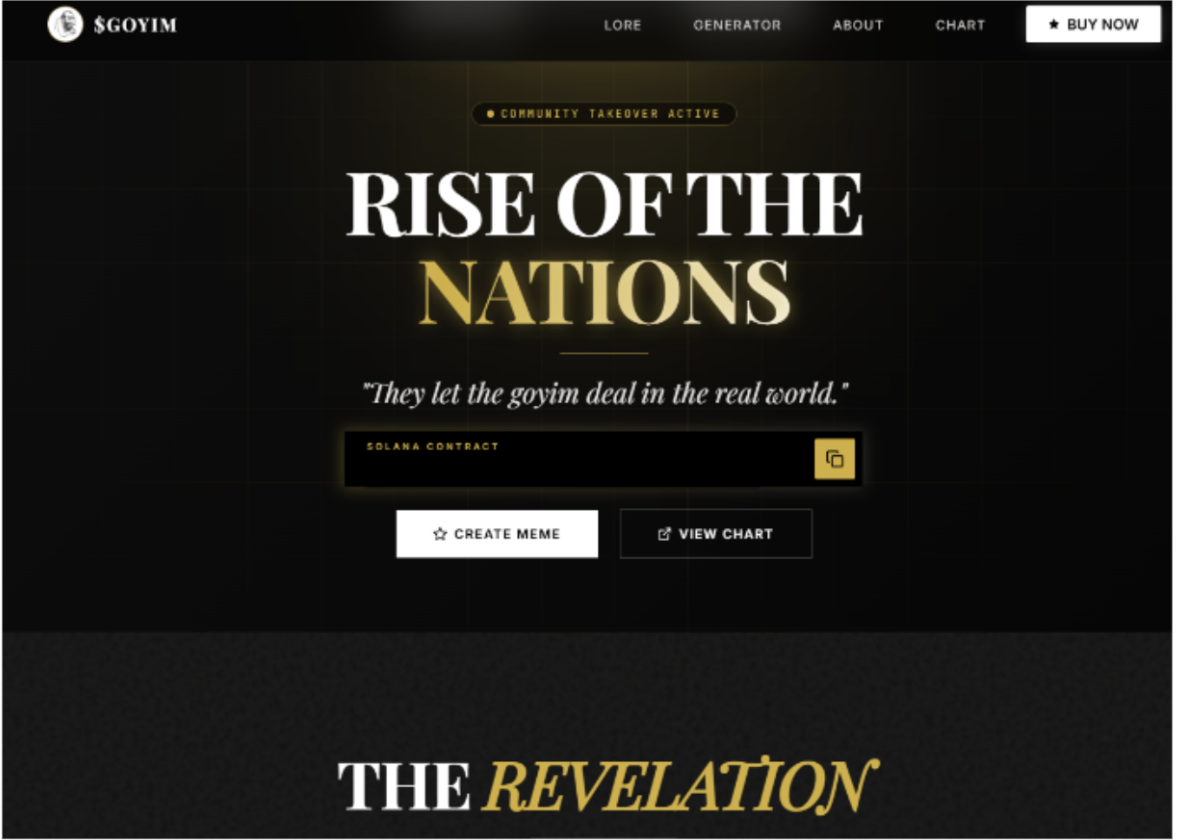
Figure 2: Main project page showing the “View Chart” button positioned beneath the Solana contract address.
The button launches an environment where ideological and financial factors coexist, rather than producing a conventional price chart.
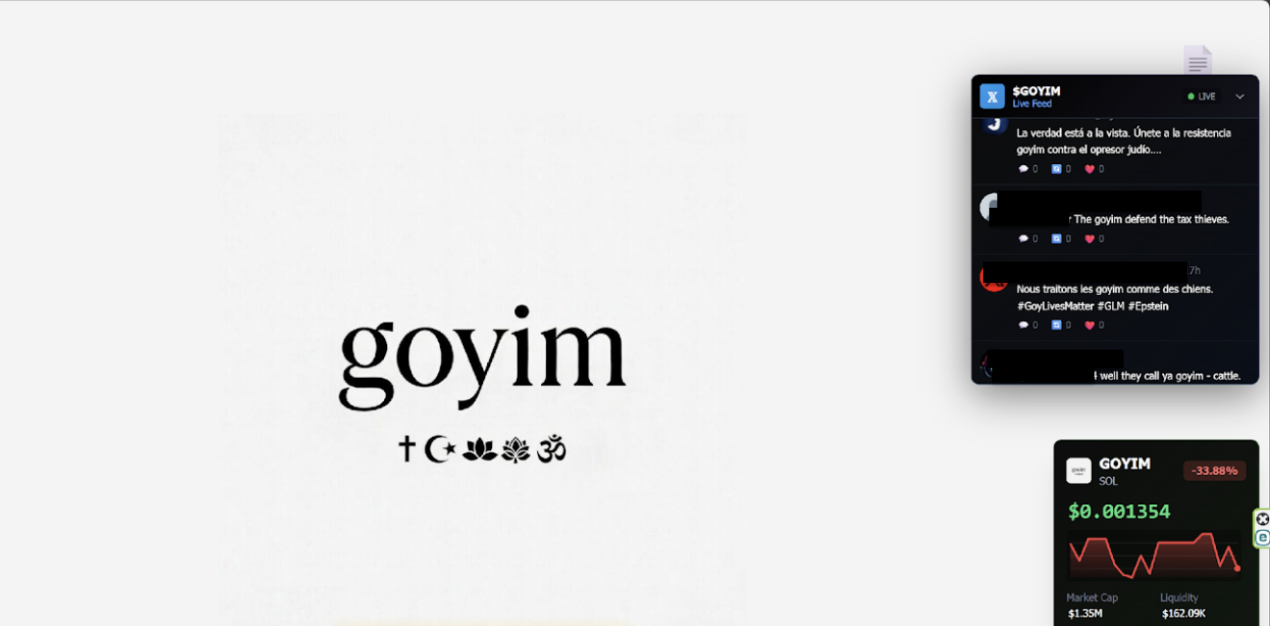
Figure 3: The retro desktop interface (“GoyOS”) opened from the project’s main page.
Source: the GOYIM project website, accessed 14 February 2026.
Other elements within the interface carry the same ideological message. A section titled “Meme Depot,” groups antisemitic memes directly on the project’s site.
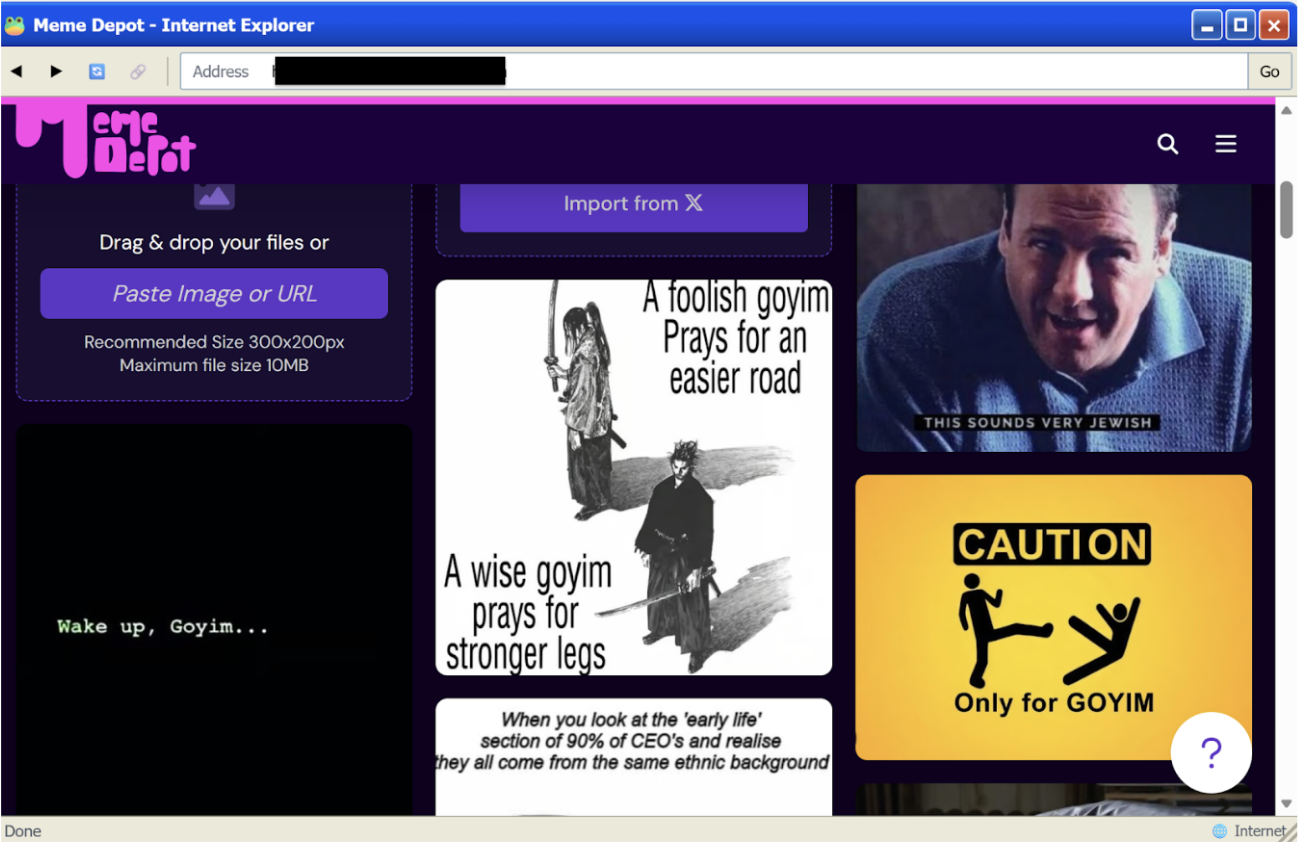
Figure 4: The “Meme Depot” page within the GoyOS interface, where memes are displayed directly on the project website.
A basic grid game, titled “Goyswеeper”, repeats the project’s terminology during play. When a user loses, the screen displays the words “YOU GOYED” instead of “Game Over.” By placing that phrase inside a routine game interaction, the interface turns ideological language into part of ordinary play.
The interface includes a live feed labelled “GOYIM$ Live,” continuously pulling posts from X. The feed connects ideological content to ongoing social media activity, allowing users to move between the site and external platforms without leaving the project’s visual environment.
The content itself spans multiple languages and includes conspiracy narratives, dehumanising language, and hashtags such as #Epstein. In several cases, the X accounts linked through the interface were later suspended or removed from X.
Below the live feed, a real-time price panel displays market capitalisation, liquidity, and transaction volume. Users are thus able to move seamlessly from ideological content to financial activity, with trading and propaganda integrated within a single platform environment.
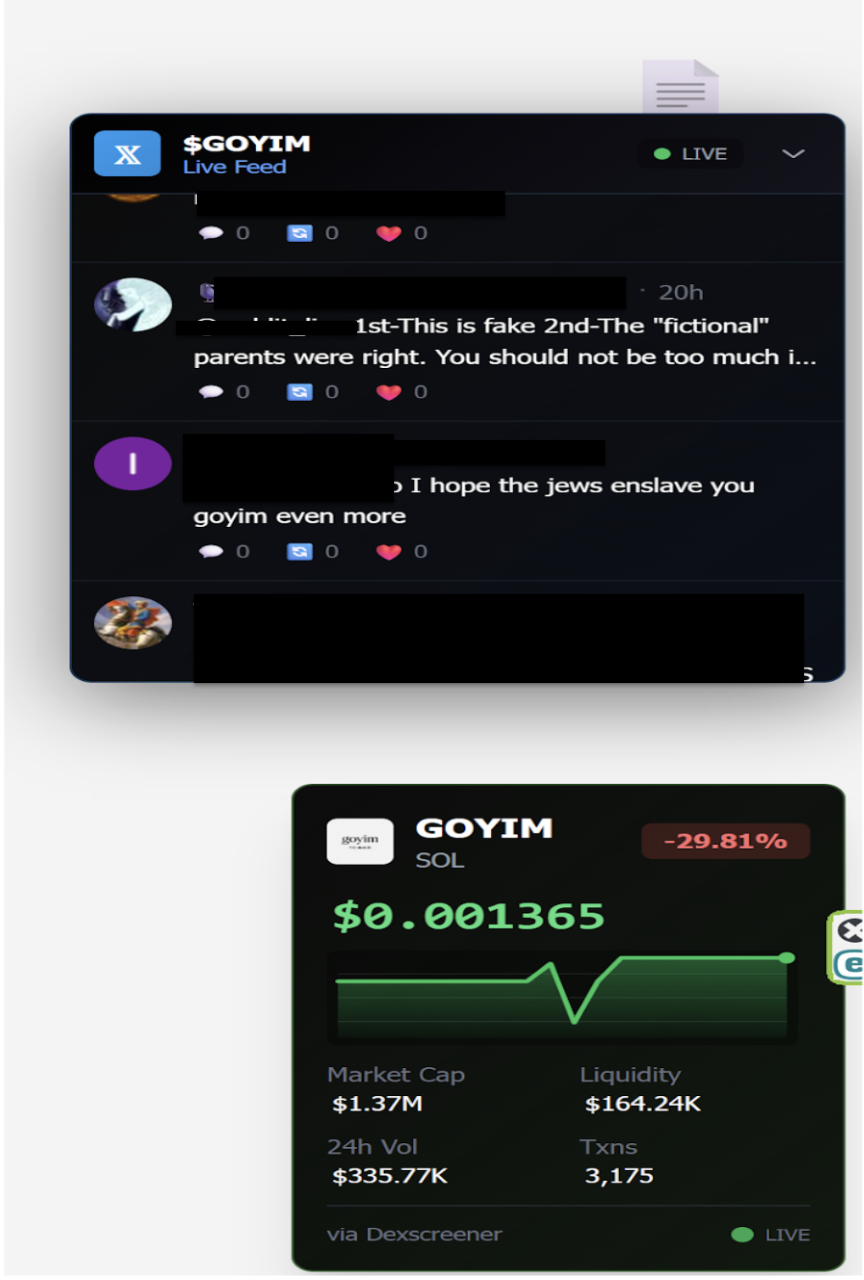
Figure 5: GOYIM Live Feed interface displaying embedded X posts alongside real-time token price data.
This design presents a structural risk. The token’s antisemitic framing remains explicit on the project’s site, while its market data signals legitimacy and activity. The interface allows users to engage with ideological content and speculative trading without encountering a clear boundary between the two.
When Ideology Enters the Market Infrastructure
When GOYIM was launched on 1 February on the Solana blockchain, like many meme tokens, it became tradable immediately through a publicly available contract address. Anyone with access to a crypto wallet could buy or sell it within minutes of launch. This decentralised phase imposes no constraints on naming or ideological framing, since tokens enter the system through a technical process and are not evaluated as ordinary products are.
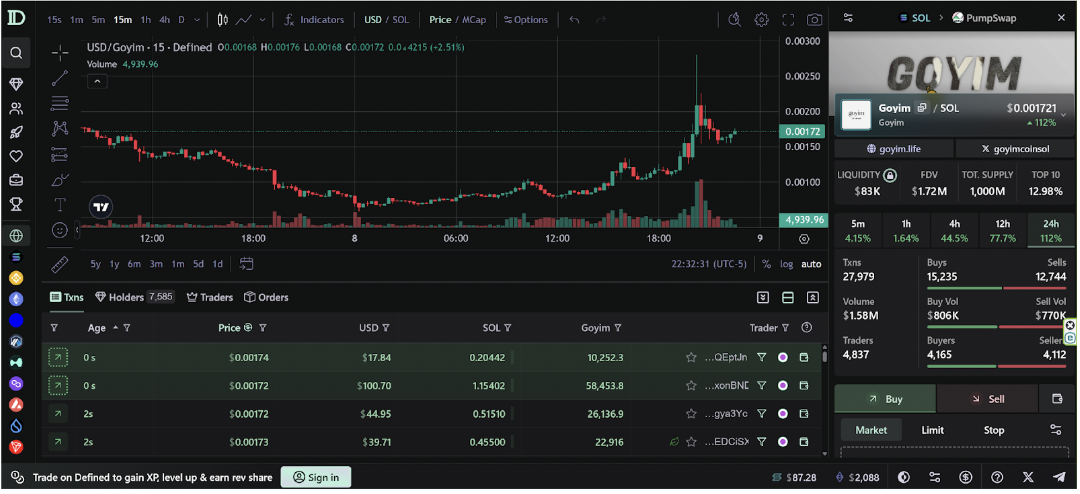
Figure 6: Solana-based decentralised trading platform.
This dynamic changed once GOYIM moved to a centralised exchange infrastructure. On 2 February 2, the token was listed on Bilaxy and traded on BitMart against USDT, a dollar-pegged stablecoin commonly used in crypto markets. Listing on a centralised exchange places a token within a familiar trading environment: users encounter it alongside thousands of other digital assets, displayed through price charts, trading pairs, and liquidity data.
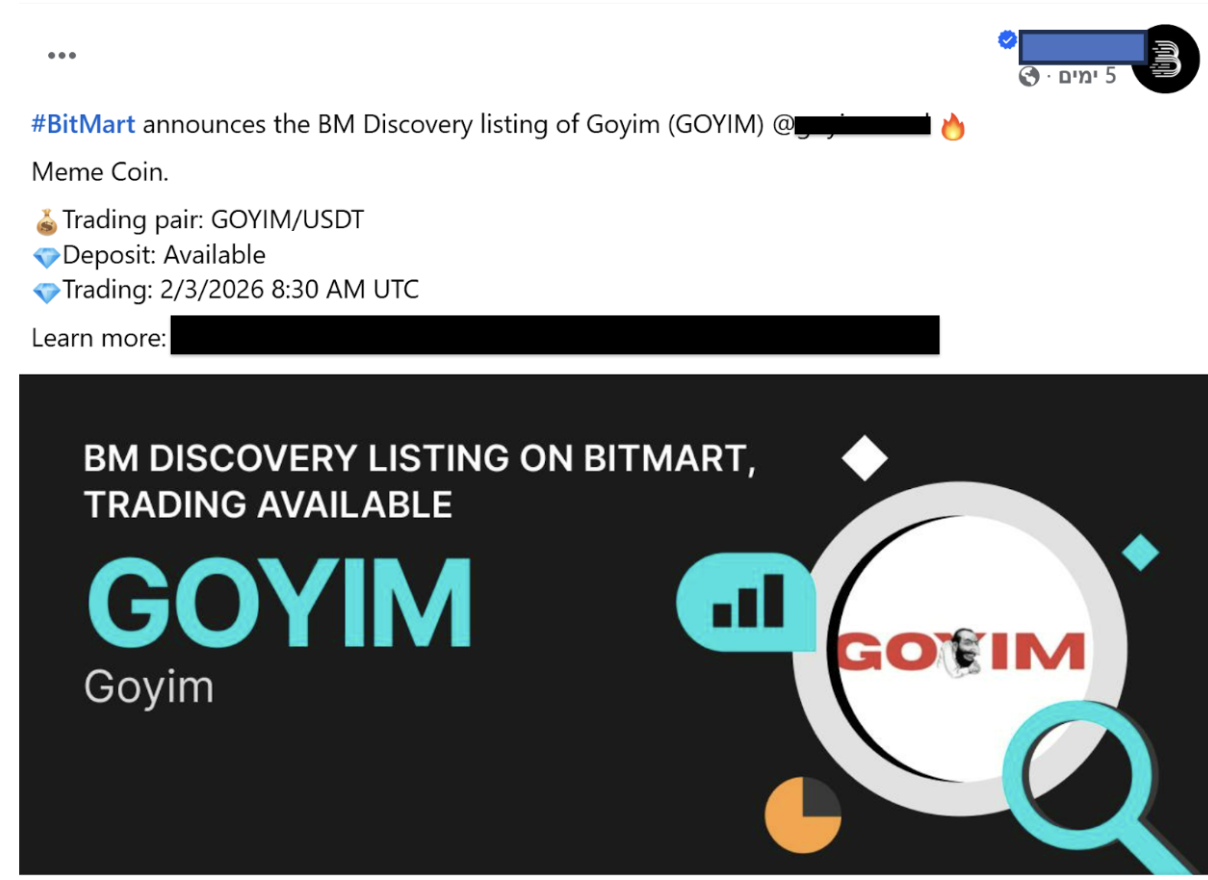
Figure 7: BitMart announcement listing GOYIM under the BitMart Discovery program, enabling trading against USDT.
On centralised exchanges, the decision-making process differs. Users trade within platforms they already use and trust; if GOYIM appears on a centralised exchange, many infer it has met a basic threshold of legitimacy. In this context, attention shifts away from the token’s name or symbolism and toward price, liquidity, and opportunity.
To understand how the token circulated after launch, five of the largest holder wallets were reviewed using publicly available Solana data. The top ten holders account for approximately 16% of the total supply, with the largest positions linked to liquidity pools rather than identifiable individuals. The distribution resembles that of a typical speculative meme token, with holdings spread across multiple addresses and participation extending beyond the launch phase.
These findings show how GOYIM moved from an explicitly ideological website into routine speculative infrastructure. Market mechanisms do not remove the token’s ideological framing. They situate it within ordinary trading environments, where extremist-coded assets can circulate alongside standard crypto-market activity.
Cross-Platform Circulation
Once listed on exchanges, GOYIM began circulating beyond its own website. The project maintained an X account that shared the token’s contract address and linked directly to the project’s site, connecting social media visibility with on-chain trading access.
On X, posts invited users to join live discussion spaces while simultaneously directing them to trading dashboards and liquidity trackers. The language mirrored standard meme-coin promotion rather than political mobilisation. Replies focused on volume, timing, and accumulation, with calls to “pump” and requests for reposts. Ideological references remained largely absent from these trading exchanges.
Replies followed patterns common to newly launched meme tokens: requests for reposts, calls to “pump,” and attempts to attract additional buyers. The conversation centred on liquidity, timing, and accumulation. Ideological references were present in the branding but largely absent from trading discussions.
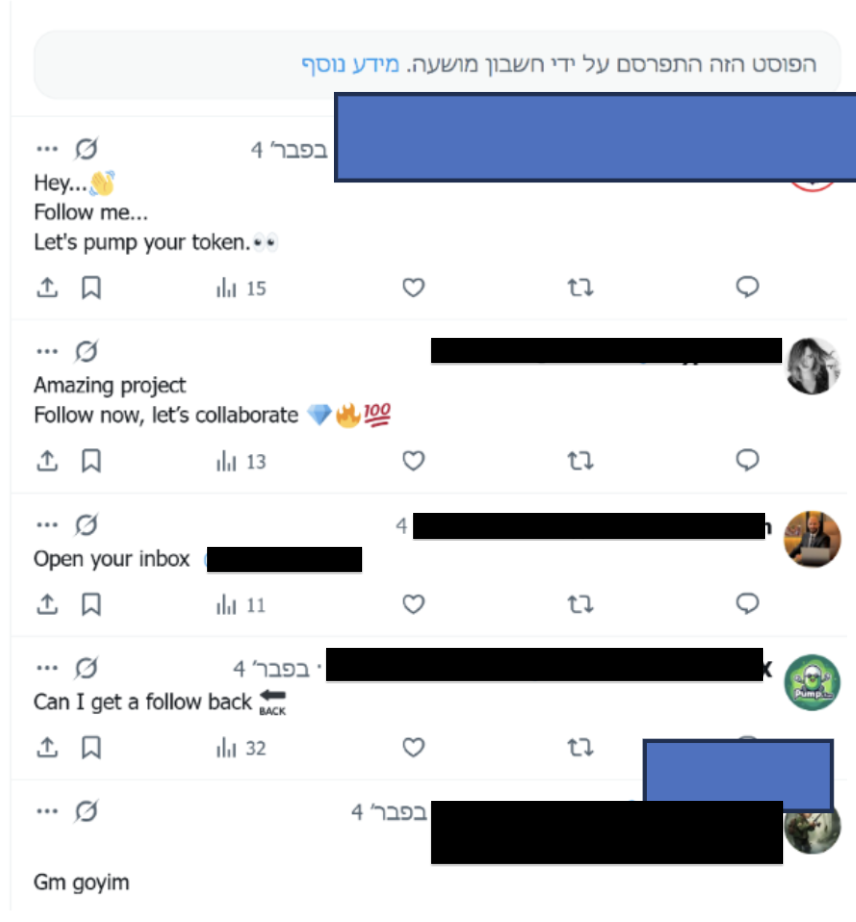
Figure 8: Post inviting users to join a live discussion space and linking to trading dashboards for GOYIM.
In other threads, GOYIM appeared alongside other conspiracy-themed tokens such as EPSTEIN. In one example, the phrase “world order” was written directly next to GOYIM. The coin symbol marks the post as part of trading talk, while the adjacent language draws from conspiratorial vocabulary. The two are placed side by side, without explanation or separation.
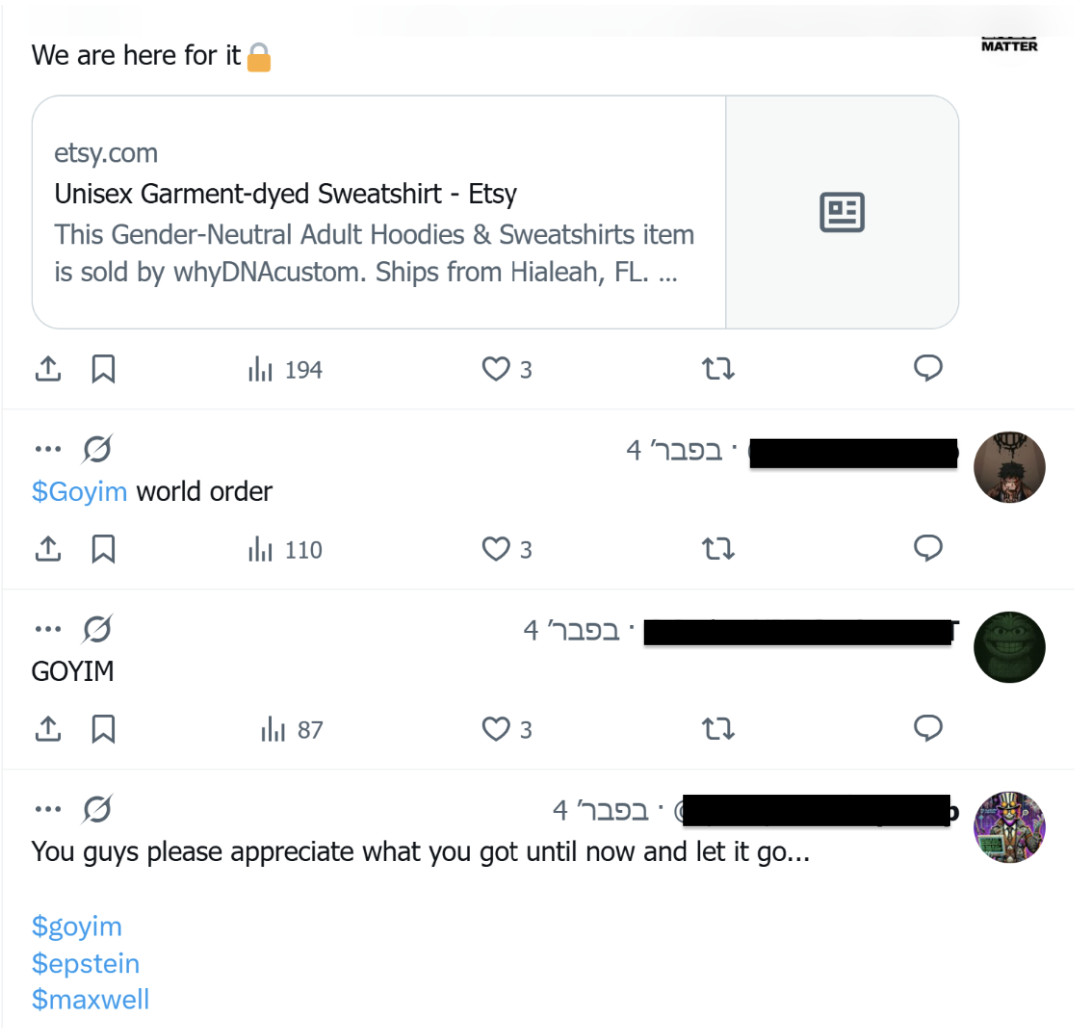
Figure 9: Thread combining GOYIM with the phrase “world order” and other conspiracy-linked coin symbols.
Some accounts were later marked as withheld or suspended. Even so, the token continued to circulate through reposts, chart screenshots, and external trading dashboards.
The movement between the website, exchange platforms, and social media is continuous. Circulation across platforms reinforces its presence as a tradable asset, even as its ideological branding remains visible in the background.
The Decoupling Moment
In early February 2026, the resurfacing of Epstein-related files was followed by a visible rise in antisemitic rhetoric online. Previously private correspondence and references to Jewish figures circulated widely on social platforms and were repeatedly used to support conspiratorial claims. GOYIM emerged during this period, drawing on the same language and symbols narrative.
This connection appears explicitly on the project’s website. In a section titled “The Revelation,” the release of the files is described as the exposure of concealed evidence. The text refers to encrypted transmissions and hidden systems. The focus shifts from an individual case to the idea of a broader hidden order. Within this, the token’s launch is presented as a response to that exposure.
Epstein functions primarily as an entry point rather than the focus of the story. The site uses the documents release to justify the creation of GOYIM and placing it on the Solana blockchain. The site’s repeated use of the language of protocols and ledgers, and by the project’s self-identification at the bottom of the page as “© 2026 The Nations Protocol.” This way, GOYIM is presented as a system intended to persist beyond the Epstein files that initially brought it to attention.
The ideological framing is explicit on the project’s website. The name, imagery, and narrative leave little ambiguity about intent. Once GOYIM begins circulating within trading environments, the context changes. A post published on 4 February analyses $GOYIM using a Volume Profile chart. The discussion focuses on trading volume, buying pressure, and potential support levels. The central question is technical: whether the level will hold and how traders should position themselves. There is no reference to the token’s name or to the narrative attached to it. GOYIM appears as one ticker among many, alongside $SOL, $ETH, or $DOGE.
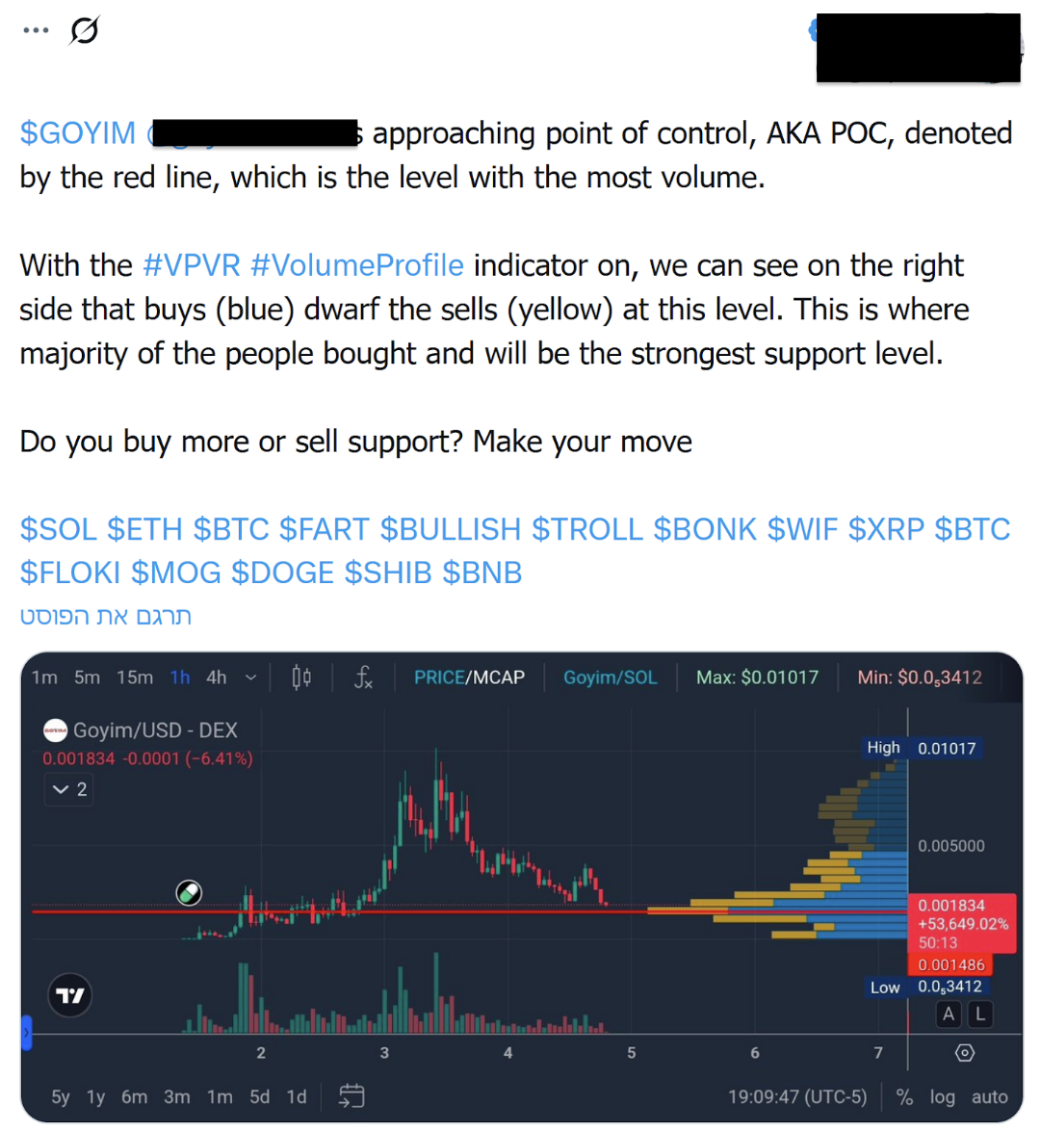
Figure 10: Technical trading analysis of $GOYIM discussing volume concentration and support levels.
The ideological narrative remains visible on the project’s website. In trading spaces, however, engagement becomes functional. The token is treated as a price instrument. The suspension is situational. Within market analysis, ideology is backgrounded while price becomes the primary reference point.
Conclusion
The launch of the GOYIM meme token shows how generative AI, platform design, social media circulation, and crypto market infrastructure operate together within a single project. The token’s website integrates a meme-generation tool that enables users to produce antisemitic content directly on the platform. The same interface provides access to live trading data and exchange services. An affiliated X account connects social media promotion to the token’s contract address and website, allowing users to move quickly from posts to trading.
Once listed on centralised exchanges and paired with USDT, the token entered standard trading environments. There, it appeared alongside thousands of other digital assets and was analysed through conventional market tools. Technical discussions on X focused on price levels, volume concentration, and entry zones, without reference to the ideological framing presented on the project’s website.
This marks a structural shift. Extremist-coded content is produced by AI, circulates across social media, and is sustained by financial infrastructure. Each layer reinforces the others: exchanges treat the token as an asset, social platforms amplify its visibility, and the website maintains its ideological narrative.
The GOYIM case points to a broader pattern: extremist ecosystems increasingly span technological layers rather than single platforms. As such, monitoring efforts that focus only on content risk missing how infrastructure, AI tools, social media, and market systems together enable circulation and normalisation.
This dynamic also suggests that responses to cross-platform abuse cannot remain limited to individual posts or accounts. When a digital asset is embedded within a wider ecosystem, isolated enforcement actions have limited reach. Exchanges and technology companies may therefore need to incorporate contextual review processes when evaluating newly launched assets, including consideration of how they are presented and promoted across platforms.
The analysis also found that several X accounts linked to the project were later suspended, indicating that platform enforcement is active and can reduce exposure. While this is an important step, action taken at a single layer may not fully address systems that operate across platforms and markets at once.
–
Dr. Liram Koblentz-Stenzler is Head of the Extremism and Antisemitism Desk at the International Institute for Counter-Terrorism (ICT), Reichman University, and a Visiting Researcher at Brandeis University. Her work focuses on antisemitism and extremist ideologies, and the ways they adapt to digital platforms and emerging technologies. She examines how narratives shift and consolidate online, identifying early signals of radicalisation before they escalate into public or security crises.
–
Are you a tech company interested in strengthening your capacity to counter terrorist and violent extremist activity online? Apply for GIFCT membership to join over 30 other tech platforms working together to prevent terrorists and violent extremists from exploiting online platforms by leveraging technology, expertise, and cross-sector partnerships.