

Introduction
Against the backdrop of the 2026 Iran War, a strand of militant accelerationism has rallied—with varying sincerity—behind the Islamic Republic. Some actors have expressed admiration for Iranian resistance; others remain indifferent, viewing both Washington and Tehran as enemies of the white ethno-state they seek to construct from the ruins of liberal order. What unites these positions is not affinity for the Islamic Republic but a shared anti-systemic logic, whereby war between the United States, Iran, and Israel is cast as a productive force to undermine the supposed ‘Zionist Occupied Government’ (ZOG). However, these responses to the Iran War cannot be understood in isolation.
This Insight situates the discourse within a wider, under-analysed pattern of accelerationist fascination with authoritarian regimes across the Global South. Iran is the latest in a line of objects of qualified admiration that spans regimes as disparate as Pol Pot’s Khmer Rouge and the Democratic People’s Republic of Korea (DPRK), states whose defiance of liberal international order and capacity for totalitarian rule generate vicarious attraction. First, it unpacks the evidence for this most recent surge of support for Iran amongst accelerationist milieus. Section two contextualises this discourse by situating it within a wider pattern of accelerationist ideological praise for and alignment with authoritarian movements and regimes in the Global South. Section three appends necessary qualifiers in order to clarify the nature and extent of support.
Cheering for the Ayatollah
A sizeable volume of pro-Iranian content was unearthed across publicly accessible accelerationist Telegram channels (Fig. 1). Several images were identified that blended depictions of Islamic Republic figureheads with the ‘Siege Culture’ visual aesthetic, whilst others merged Nazi symbolism with Hamas iconography. Another channel with self-described links to the accelerationist Sturmjäger Division shared an image symbolically lauding the rich history and civilisational contributions of Iran, whilst juxtaposing this against Israel. Alternatively, one channel belonging to a prominent accelerationist publication with links to former Atomwaffen members conjured an elaborate conspiracy theory that the conflict is being prolonged to destabilise Iran’s economy and topple its place as a global supplier of oil and key agricultural commodities—particularly pistachios, pomegranates, and mandarin oranges—thereby benefiting supposed Jewish-controlled American agricultural corporations.
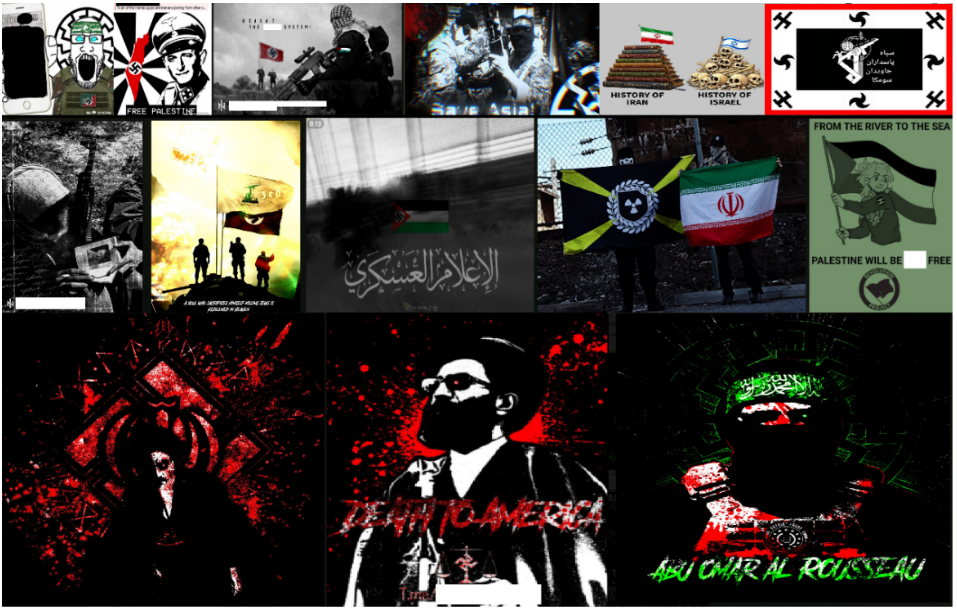
Fig. 1: Screenshots of pro-Iranian and Axis of Resistance content.
For some, this support moved beyond aesthetics to an ostensible welcoming of Iranians as kindred brothers. As one Telegram channel posted in English and Arabic: “To all of the Hamas guys and Iranians joining from other channels, American Nationalists stand with you! Death to Z.O.G.!” Another antisemitic channel associated with the Asia-based accelerationist group New Co-Prosperity Sphere (NCPS) likewise espoused its commitment to “closely aid Iran” and its “National Socialist comrades”. Across these varied expressions of support is a central theme, one aptly captured in the phrase carried by one graphic (itself an alteration on a much earlier image released by Atomwaffen Division): “WE ARE WITH YOU IRAN! FROM THE BELLY OF THE BEAST!” (Fig. 2).
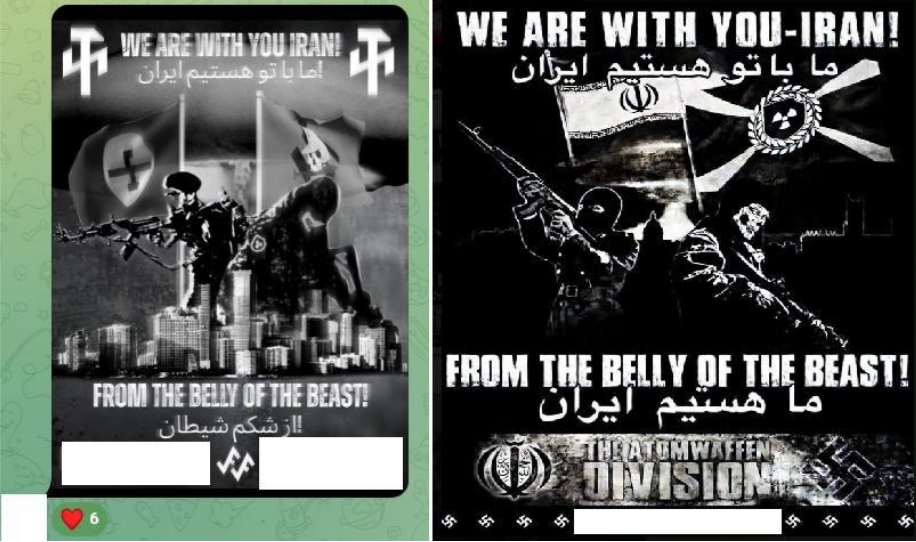
Fig. 2: Edits based on an Atomwaffen Division image, which had originally glorified North Korea.
Notably, even amongst this pro-Iranian milieu, the sincerity of support differs across individuals. The response of the aforementioned NCPS channel is revealing. While siding with the Islamic Republic, this is not to suggest its support is absolute. Not only did the channel mockingly contend that a lack of “common sense” was the norm for “radical Islamic clerics”, but it admonished Ayatollah Khamenei for apparently funding “cultural Marxist organizations”, tolerating “Jews who claim to be “Non-Zionist”’, and engaging in supposed rhetorical friendly fire against factions of the extreme right sympathetic to the Islamic Republic (i.e., by comparing Nazis to Zionists).
There are others within the accelerationist communities who vocally oppose the Islamic Republic. As one extremist remarked: “neither iran nor israel are your allies, they’ll persecute white Christians equally […]. Just pray trump recalls his German ancestry and nukes israel and Iran both lmao [sic]”.
While there is a strand of accelerationist discourse that depicts Iran as a counterpart in a common fight against a supposed Zionist world order, this should not be taken as the majority position. It coexists with virulent racism directed against Jews and Iranians alike. What arguably unites these positions is an anti-systemic logic, whereby war between the United States, Iran, and Israel is viewed as a productive force to undermine the supposed ‘ZOG’.
Beyond Jihadism: Authoritarianism in the Global South
In many respects, recent support of Iran constitutes the latest instance in a more protracted convergence between militant accelerationism and Islamist extremism (Fig. 3). In fact, this discourse may even be found in the canonical accelerationist text itself, Siege. As its author, James Mason, wrote: ‘We wish the people of the Middle East good luck in regaining control over their homelands, through whatever means it may take to accomplish’. This type of discourse, including the language of ‘white jihad’, has already been subject to much scholarly attention. Yet less has been written on accelerationists’ praise for other authoritarian and totalitarian regimes across Asia.
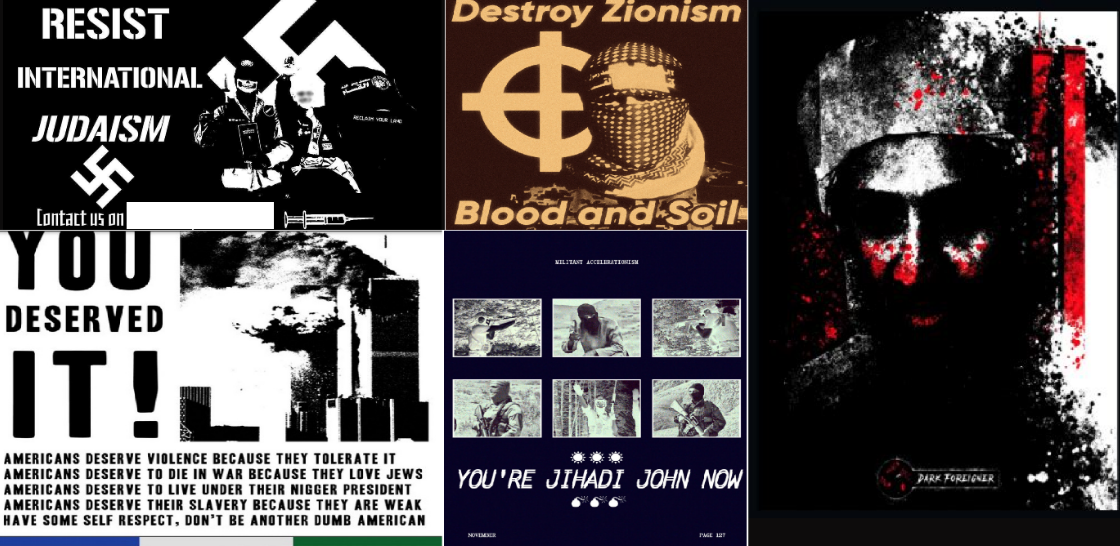
Fig. 3: Illustrative examples of neo-Nazi content glorifying or otherwise drawing on Salafi-jihadist referents.
North Korea is illustrative; pinned upon the wall of one Atomwaffen Division member’s home raided in 2018 was the North Korean flag. In the late 2010s, the group even released an online poster depicting the Juche hammer and sickle side-by-side with the swastika. This was accompanied by the mantra: “WE ARE WITH YOU KOREA! FROM THE BELLY OF THE BEAST!”
This adulation for the DPRK—its xenophobia, militancy towards America and its allies, and societal isolationism from supposed Jewish machinations—remains identifiable across neo-Nazi forums, accelerationist Telegram channels, and even the manifesto of the San Diego Mosque attackers (Fig. 4). The regime’s ideology of Juche, a creed which prioritises totalitarian state control and autarkic autonomy, is also commonly praised. On a prominent neo-Nazi platform, one user praised the supposed ‘beauty’ of Juche’s racial purity and strong national identity, while also lauding the state’s self-sufficiency and workers’ rights, which they argued make it the best existing system of government. For another, Juche was tantamount to a Korean model of fascism, a racially supremacist autonomous form of socialism that, if applied to a white country, would be “identical to Fascism”.
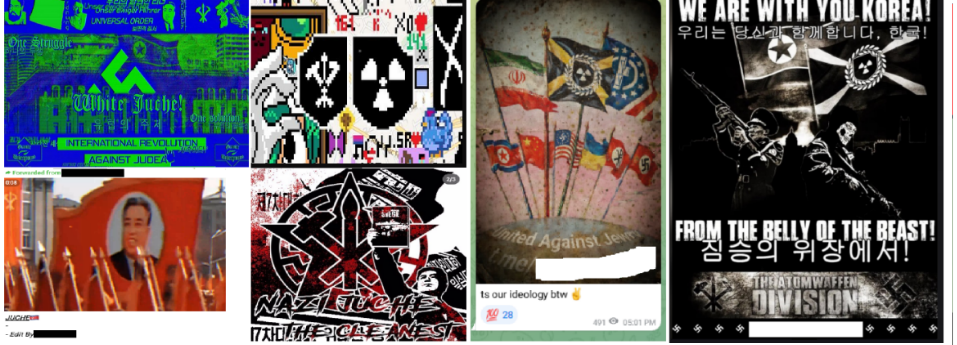
Fig. 4: Screengrabs of accelerationist content expressing support for North Korea.
Beyond North Korea, laudatory remarks about China’s President Xi also make occasional appearances, commending his strong leadership vis-à-vis a hostile supposedly Jewish-controlled West, his treatment of the Muslim Uyghurs, and anti-corruption purges. Strangely, qualified praise can be found for Pol Pot, who in the 1970s led the Khmer Rouge to orchestrate a genocide that resulted in the death of approximately one quarter of Cambodia’s population. One neo-Nazi speculated that had Hitler been willing to embrace the ruthlessness of Pol Pot, he may well have been victorious in the Second World War.
While these ideological referents are wide-ranging, they have evidently found support, discretely or collectively, amongst a subset of accelerationists. Using a popular meme format, one extremist posted and made light of their ostensible views, comparing themself in 2016 as an independent who believed that both Democrats and Republicans had valid points, with their 2026 stance of lauding Hitler, Mao, and Pol Pot, and championing Harold Covington’s neo-Nazi vision of a white republic in the American northwest.
What unites these discordant references is arguably the same animating drive behind the most recent support for Iran, a deep anti-systemic logic opposed to liberal order and perceived Jewish control thereof. One forum user suggested that their personal ideology was more closely aligned with the People’s Liberation Front, Vietcong, or North Korean fighters than it was with ‘Jewish’ Wall Street bankers, and further indicated an allegiance with any nation opposed to the US and Israel.
Against Third Worldism
Despite these examples, support for these regimes should not be overstated or misunderstood. Even those who sympathise with the People’s Republic of China (PRC) or DPRK are not above deriding the Chinese or North Koreans with anti-Asian slurs. One user, for example, expressed a deep reverence for Xi, yet coupled this with an admonition against ‘glazing’ Chinese as equal or superior. Admiration for the DPRK, like China, is not uniform among accelerationists. Its deployment of troops to fight for Russia’s ‘de-Nazification’ campaign has turned some former admirers into critics, with the DPRK framed as both ‘anti-white’ and ‘anti-fascist’. Others’ disdain predates the war, rooted in racial-ideological opposition to the DPRK as a communist, Asian, dynastic state.
A similar disdain typifies the views of many accelerationists when it comes to Hamas or Islamist and/or Arab regimes. A National Socialist forum user argued that Palestinians are more valuable dead than they are alive, because of the negative public response when civilians are killed in Israeli strikes. Furthermore, some neo-Nazis dismiss the discourse of ‘white jihad’ as an edgy meme, nothing more than an aesthetic adopted by the likes of Atomwaffen Division, rather than a concept of ideological substance.
The extent to which accelerationists support authoritarian regimes in the Global South—whether past or present—is not borne of a sincere respect for such leaders and their peoples’ opposition to perceived Western imperialism. Rather, they are portrayed as, at most, a racially inferior group worthy of qualified praise and tactical alignment in a supposed common fight against global Jewish machinations, or at the minimum, a racial enemy who, while holding a shared opposition to the United States government, ought not be actively praised. Indeed, the idea of ‘Third Worldism’—an ideological current that emerged in the Global South during the Cold War, linking anti-colonial struggles with opposition to Western imperialism and capitalist domination—is actively derided in such milieus. For one extremist to label another as a ‘Third Worldist’ is to levy a serious charge against their ideological beliefs. One National Socialist user stressed that they did not identify with Third Worldism but nevertheless viewed its proponents as potential allies on a realpolitik basis, united by a shared antisemitic perception of a common adversary.
Conclusion
Neo-Nazism, including its militant accelerationist fringe, is an ideologically heterogeneous camp. Individual extremists often amalgamate seemingly discordant beliefs and ideological currents to produce syncretic worldviews. As the memeified survey below illustrates, one such position entails support for “brown anti-western dictators”. In this case, ousted Syrian President Bashar al-Assad is taken as the prospective figurehead (Fig. 5).
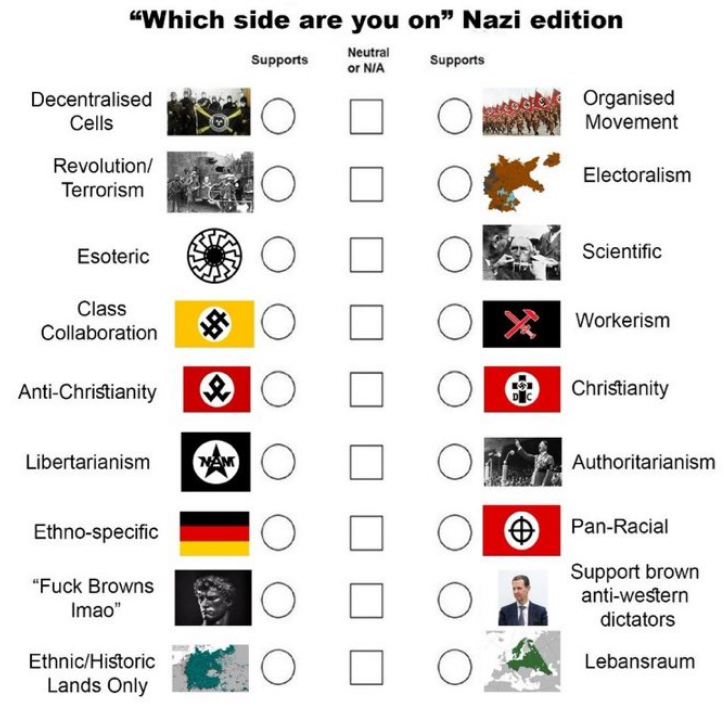
Fig. 5: Memefied survey shared in a neo-Nazi forum.
This Insight has explored accelerationists’ admiration for authoritarian and totalitarian ‘anti-Western’ regimes in the Global South, unpacking several of its manifestations, core motivational drivers, and points of division. While Iran constitutes the latest example of this phenomenon, this piece has contextualised it against a wider range of cases across Asia.
Two implications may be gleaned from this. Firstly, researchers and practitioners should resist reading expressions of support as evidence of a durable geopolitical alignment, let alone genuine solidarity towards the Global South. As demonstrated above, accelerationist affinity for Iran, the DPRK, or the PRC is neither uniform nor stable, and even when present, it coexists with the same racist sentiment these actors direct at Jews, Asians, and Arabs alike. In this respect, it is worth distinguishing it from a superficially similar but fundamentally distinct ideological current: the right-wing Third Worldism espoused by neo-Eurasianists such as Alexander Dugin. Unlike the tactical convergence between accelerationists and those whom they perceive as racial inferiors, Dugin casts his anti-liberal and anti-Western alliance between Russia and the Global South as a revisionist project to realise a ‘multipolar’ international order comprising large civilisational units. While this is not to depict Dugin’s deeply illiberal vision in a positive light, the disconnect between the neo-Eurasianist right and the accelerationist extreme right is itself illustrative of the deeply qualified and often superficial nature of accelerationists’ support for anti-Western regimes in the Global South.
Secondly, and notwithstanding the above, this should not breed complacency. The recurrence of the ‘belly of the beast’ framing—first applied to North Korea by Atomwaffen Division, and subsequently to Iran by like-minded National Socialists—illustrates a durable interpretive template: accelerationists slot new state antagonists of the liberal international order into a pre-existing antisemitic, anti-systemic worldview, almost irrespective of the specific regime in question. This points to an antisemitic, anti-systemic logic elastic enough to accommodate future conflicts and regimes, whatever ideological daylight might separate them from their newfound sympathisers. Accordingly, researchers and practitioners should recognise that accelerationist content promoting the Islamic Republic or Hamas is not a curiosity tied to the Iran War, but a reflection of this extremist milieu’s narrative adaptation to geopolitical flashpoints and capacity to recast almost any adversary of Washington, or of the perceived Jewish-controlled West, as an ally. Just as the first implication cautions against overreading the sincerity of such support, the second cautions against underestimating its recurrence: both point towards the same need for sustained attention to this corner of accelerationist discourse.
The views and opinions expressed in this Insight are the authors’ own and do not necessarily reflect those of GNET or any of its partners.