

Introduction
In December 2025, Spanish authorities dismantled a cell linked to The Base, an accelerationist white supremacist group designated as a terrorist organisation in several countries. Between 2019 and 2021, The Base gained widespread attention following a series of high-profile incidents and arrests across the United States and Europe, which led to a period of decline. However, since 2023, the organisation has experienced a resurgence, marked by acts of sabotage and killings in Ukraine, as well as arrests across several European countries, including in Spain.
Building on the investigation into the Spanish cell, this Insight takes a broader perspective to examine how The Base operates online. The group and its leader remain active on platforms such as VK (VKontakte) and RuTube, where they post images of members from different countries and discuss their ideological positioning within the wider white supremacist movement. This analysis aims to identify the narratives promoted by the group and to understand how its online activity supports processes of radicalisation and potential mobilisation to violence. It also highlights what distinguishes The Base from other far-right movements in terms of discourse, goals, and operational approach.
The Origins of The Base
Founded in 2018 by US-born Rinaldo Nazzaro, who is based in Russia, The Base was included in the European Union’s official list of terrorist organisations in 2024. It operates as a decentralised structure based on “leaderless resistance”, in which regional cells share a common ideology and purpose but maintain limited direct contact in order to protect the broader network if one cell is compromised.
The group is an example of militant accelerationism, seeking to accelerate societal collapse through violence, including terrorist attacks, to trigger a “race war” and ultimately establish a white ethno-state. The Base is inspired by Siege, a collection of writings by neo-Nazi ideologue James Mason, which advocates for the destruction of the existing system and the creation of a national socialist regime.
The group has organised paramilitary-style training camps, combining a survivalist focus on self-defence and preparation for societal collapse with an increasing capacity for violence against perceived enemies. These include ethnic minorities, Jewish people, liberal democratic institutions, law enforcement, and what are framed as elite or conspiratorial actors, often linked to narratives such as the “Great Replacement” or “red pill” awakening.
The Spanish Cell
In December 2025, three individuals were arrested in Castellón for their alleged membership in The Base. They have been charged with membership in a terrorist organisation, as well as recruitment, indoctrination, and training for terrorist purposes, in addition to illegal possession of weapons. During the operation, Spanish authorities seized bladed weapons, firearms, ammunition, tactical military equipment, accelerationist material, neo-Nazi paraphernalia, and documents glorifying other terrorist organisations. The police also stated that the leader of the cell was in direct contact with Rinaldo Nazzaro, and that the individuals used social media to recruit new members.
In a Q&A video published on RuTube and VK, Nazzaro addressed the case of the Spanish cell, describing its members as “political prisoners” and claiming that their only crime was “caring about the wellbeing of Europeans who are being systematically replaced by racial aliens.” He also denied that The Base engages in grooming or radicalisation, arguing instead that the group recruits individuals who are already radicalised, as reflected in the Spanish case.
The case illustrates a shift from online radicalisation to operational preparation, as members were engaging with assault tactics, homemade weapons tutorials, and maps of potential targets. According to Spanish intelligence sources, their training and objectives indicated an intention to maximise the impact of potential violent actions, including targeted killings and the sabotage of critical infrastructure, such as electricity and telecommunications networks, as well as attacks against individuals labelled as “traitors” and immigrants.

Figure 1: Material seized by the Spanish police from the cell of The Base. Source: La Vanguardia.
This is not the first case in Spain involving white accelerationist activity. In 2024, two individuals who had met on Telegram were tried in the province of Lleida for preparing for a race war, with plans to create white militias and establish rural white enclaves. Although no direct link to The Base was confirmed, the case demonstrates that Spain is not isolated from transnational neo-Nazi networks and that violent accelerationism has found pathways into the local digital ecosystem.
The Base’s Online Presence and Digital Strategy
The Base’s online presence was previously concentrated on Telegram, but its designation as a terrorist organisation in the European Union led to the removal of its main channels and a shift in its digital activity. Its current presence is mainly concentrated on Russian platforms such as VK, the most widely used social network in Russia, known for hosting far-right content due to less restrictive moderation policies, and RuTube, a Russian alternative to YouTube.
The Base differs from other Siege-inspired groups, such as Atomwaffen Division (AWD), which focuses primarily on digital propaganda, whereas The Base places greater emphasis on offline organisation and paramilitary-style training. This distinction is explicitly addressed on its VK account, where AWD is criticised for its lack of strategy and planning. In contrast, The Base presents visibility as a calculated tool for recruitment rather than an end in itself, while the group’s leader also notes that members may simultaneously belong to other accelerationist groups.
Content shared across VK includes photos and videos of members often depicted in natural environments or in abandoned buildings in different countries, displaying group symbolism and firearms, and performing Nazi salutes. In total, the account features images from different regions of the United States and 13 European countries, including content linked to the Spanish cell, which shows members with firearms and references a now-deactivated local Telegram group. The group also posts announcements of activities presented as camping or hiking events, which function as paramilitary training.
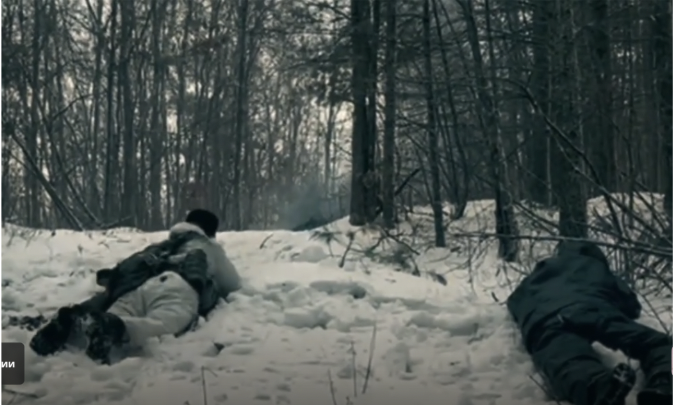
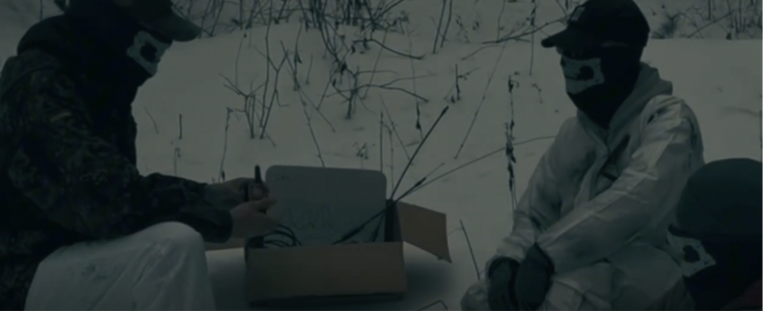
Figure 2: Images from the video of The Base’s paramilitary training posted on RuTube and VK.
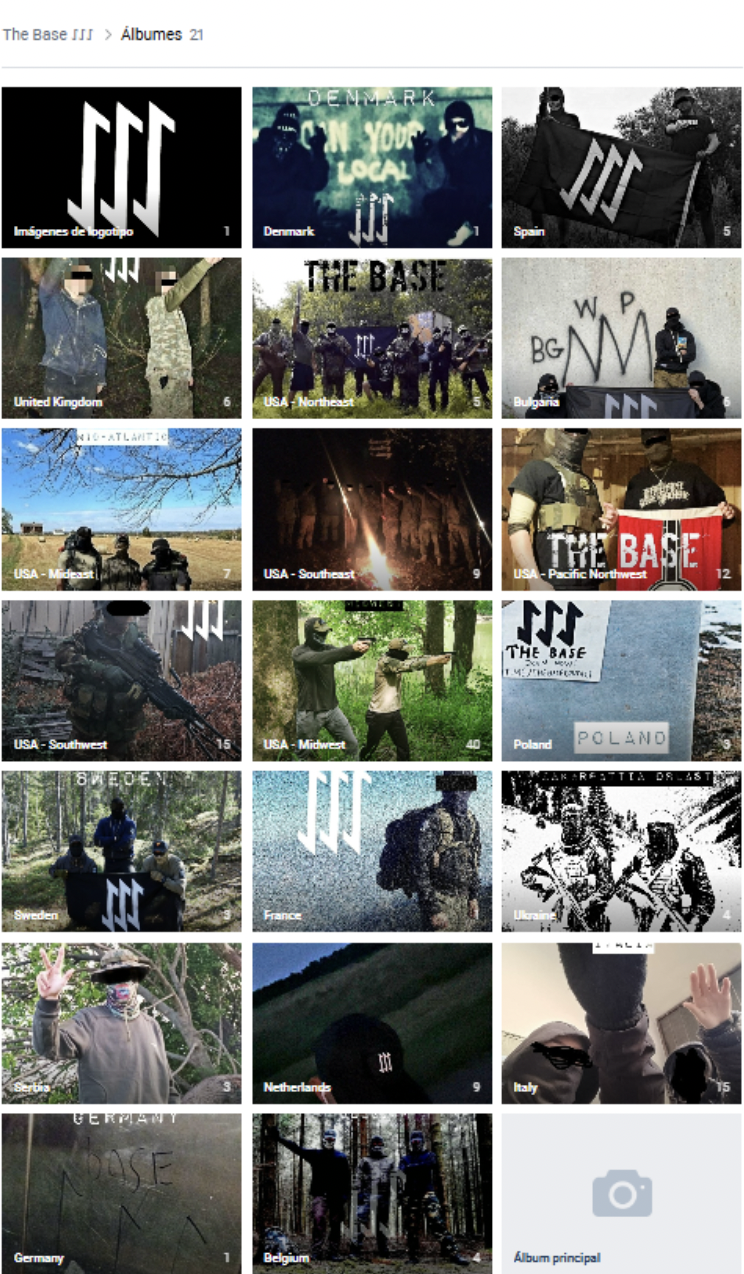
Figure 3: Photo albums of different cells of The Base on the VK platform.
The Base also uses its platforms to share operational and organisational information. This includes explanations of the process of joining the organisation, calls for donations, detailed guidance on contributing using cryptocurrencies, and the circulation of tactical manuals on small-unit tactics. The concept of “Acceleration Teams” (A-Teams) is presented as a model of small, covert units of up to twelve members, designed to carry out targeted attacks on infrastructure and authority structures. It presents an accelerationist strategy focused on generating continuous crises, normalising instability, weakening state legitimacy, and encouraging copycat movements. The accounts of the group and its leader highlight their inspiration from the jihadist group Al-Qaeda, focusing on its ability to mobilise individuals across different countries, secure financial resources, and operate in conflict zones.
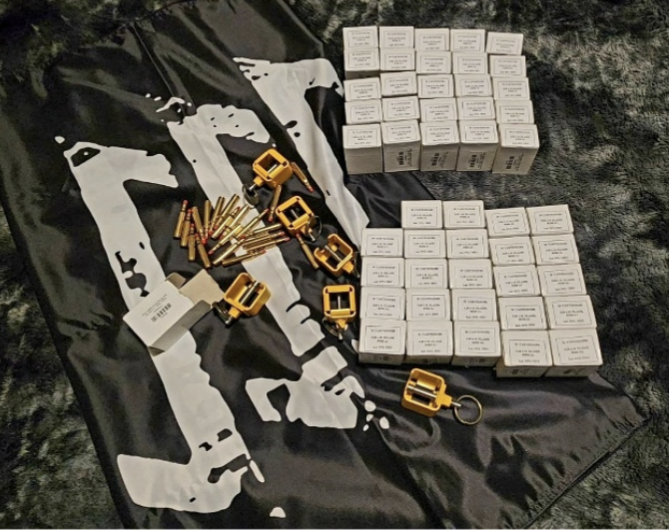
Figure 4: Photo of equipment and accessories purchased with donations (VK).
The account of Rinaldo Nazarro plays a central role in the group’s online presence. He publishes ideological propaganda alongside content addressing his personal background, in which he denies allegations about links to the Russian Government. He frequently shares videos discussing ideological aspects of white supremacism and the positioning of The Base in relation to other far-right and nationalist movements, rejecting nationalism, patriotism, and historical restorationism in favour of a transnational “pro-White” framework, summarised in his statement: “Our race must be our nation now.” In this context, he advances the idea of “White Globalism,” arguing that the survival of the white population requires a global response to what is framed as ‘replacement’ and ‘genocide’. He also rejects the concept of remigration embraced by several far-right groups, arguing that Western countries are no longer recoverable due to immigration and that only a “real white revolution” can achieve the group’s objectives.
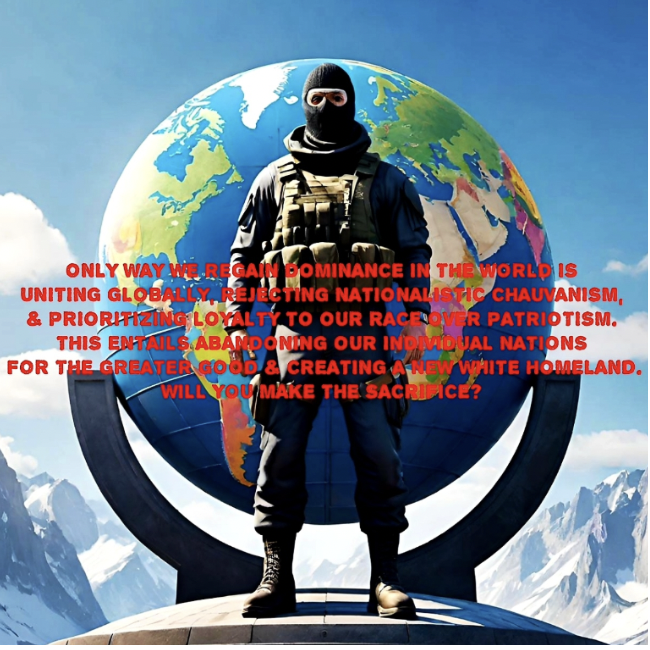
Figure 5: Image posted on Rinaldo Nazarro’s VK account highlighting the pillars of The Base’s ideology and goals.
A statement published on VK by a member of the Spanish cell reinforces this rejection of nationalist movements in the local context. It argues that a conventional national revolution is no longer possible in Spain, portraying the country as already lost, occupied, and beyond political recovery. The author, who acknowledges his prior involvement in Spanish nationalist groups, dismisses existing far-right movements as ineffective, manipulative, and part of the system, with the author warning followers to “stay away from the reactionary sectors and false white nationalists who make you believe that a national revolution is still possible.” Instead, the statement calls for a strategic shift towards small, and highly committed groups capable of driving change through more radical and decentralised means. It advocates for “white secession” through active involvement, encouraging participation in organisations such as The Base and in the formation of “ethnovillages.”
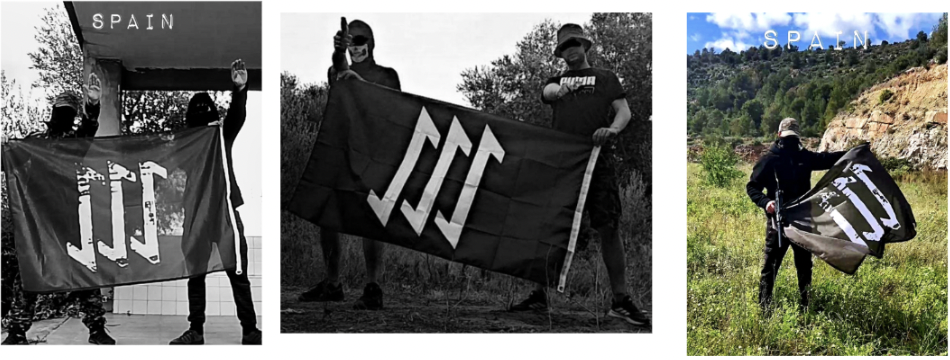
Figure 6: Photos of the members of the Spanish cell on the group’s VK account.
The ideological framework of The Base emphasises that it is impossible to “save” all nations, and that efforts should therefore concentrate on establishing a single territorial stronghold to serve as a base for future expansion. According to the group’s leader, creating this ethno-state requires a relatively large contiguous landmass that includes at least one substantial area of rugged wilderness, ready access to firearms, whether obtained legally or illegally, and ongoing civil unrest or military conflict within its territory. These conditions are envisioned primarily within “traditionally White nations” with at least 20% of support from the local population.
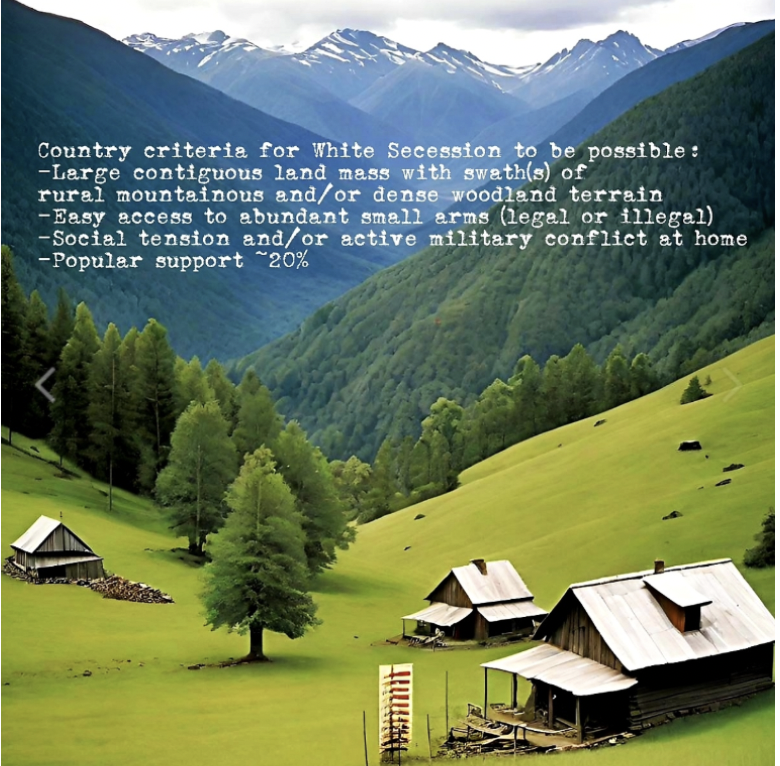
Figure 7: The image with the criteria necessary for White Secession posted on Rinaldo Nazarro’s VK account.
Project White Phoenix
A significant portion of The Base’s current online content focuses on “Project White Phoenix,” which aims to establish a “white homeland” in Zakarpattia Oblast, a region in the Carpathian Mountains of Ukraine. Different cells express support for this project through shared imagery and graffiti symbols. The group’s leader has confirmed on social media that The Base is actively involved in Ukraine, which aligns with reports of killings and acts of sabotage carried out by the group in the country. Nazzaro argues that only the United States and Ukraine currently meet the criteria for establishing a white ethnostate, identifying Ukraine as the preferred option due to the ongoing turmoil.
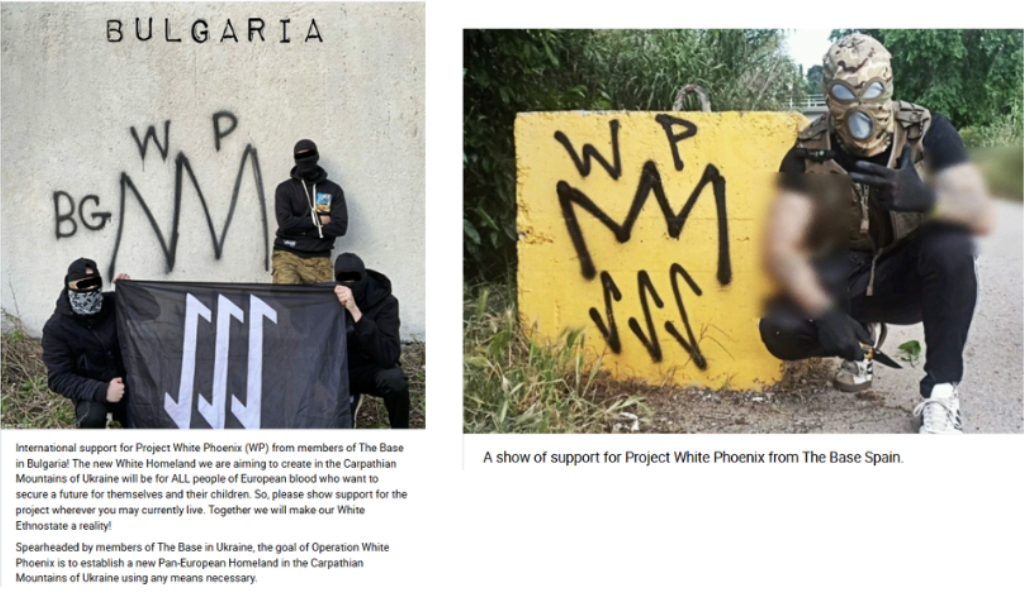
Figure 8: Expressions of support for Project White Phoenix from the Bulgarian and Spanish cells (VK).
He has also addressed claims that the group’s actions benefit Russia by destabilising Western countries. He rejects these accusations, stating that all governments promote what he describes as anti-White policies. In this context, he presents the group’s actions as independent of state interests, taking advantage of existing instability. This instability is framed as beneficial for achieving the group’s objectives: in Ukraine, by enabling the creation of a “white homeland” that would be achieved “by any means necessary”; and in Europe, by facilitating radicalisation and the recruitment of new members.
Conclusions
The analysis shows that The Base’s recent activity reflects a broader resurgence of this accelerationist group in Europe. The case of the Spanish cell demonstrates that Spain is not immune to violent accelerationist networks, which can move from online radicalisation to coordination of terrorist attacks, highlighting the need for continuous monitoring of digital ecosystems.
Despite the closure of the organisation’s Telegram channels, The Base has adapted its digital strategy, exploiting undermoderated platforms such as VK and RuTube to disseminate messages, seek funding, recruit new members, and coordinate around its central project of establishing a white ethno-state in Ukraine, which has already involved real-world violence. This migration highlights the limits of content moderation alone and underscores the importance of cross-platform monitoring and identifying linkages between digital ecosystems. It is also important to monitor whether the group shares links to new Telegram channels on other platforms, as this could indicate a resurgence of its activity despite prior removals.
Given the group’s transnational nature, strengthening cooperation between European law enforcement, research centres, and intelligence services, as well as cross-platform collaboration, is essential to track networks, financial flows, and recruitment patterns. Efforts must extend across social media to monitor far-right groups beyond accelerationism, including neo-Nazi and neo-fascist networks, focusing on early detection, since The Base recruits individuals who are already radicalised and can infiltrate and expand within these extremist ecosystems.
–
Urszula Mrozowska has worked as an online safety analyst, specialising in hate speech, extremism, and disinformation, including climate-related and electoral disinformation, on social media. She has worked in the tech industry, focusing on investigating these issues across Spain, Latin America, and Poland. She holds a Bachelor’s in Linguistics from the University of Barcelona and a Master’s in Latin American Studies, completed between the University of Warsaw and the Andean University Simón Bolívar of Ecuador. Previously, she conducted research in Business and Human Rights, investigating corporate human rights violations and their social and environmental impacts.
–
Are you a tech company interested in strengthening your capacity to counter terrorist and violent extremist activity online? Apply for GIFCT membership to join over 30 other tech platforms working together to prevent terrorists and violent extremists from exploiting online platforms by leveraging technology, expertise, and cross-sector partnerships.
The views and opinions expressed in this Insight are the authors’ own and do not necessarily reflect those of GNET or any of its partners.