

On 31 January, the Baloch Liberation Army (BLA), a designated Foreign Terrorist Organisation, launched the so-called Operation Herof-2 (Herof is a Balochi word meaning Black Storm) across 12 districts of Balochistan. Though Herof-2 marked a vivid shift in BLA’s kinetic activity against state forces, the integration of violence and propaganda by Hakkal – BLA’s media arm – was highly advanced, well coordinated and tactically impactful in controlling Balochistan’s digital terrain. Hakkal media strategically synchronised battlefield and operational information in an offensive way.
On 6 February 2026, BLA announced the end of Phase Two of Herof, claiming that 362 Pakistani security personnel were killed and 17 were captured alive. In these integrated attacks, they stated that 93 of its fighters were also killed; amongst 50 from Majeed Brigade, 26 from Fateh Squad, and 17 from Special Tactical Operation Squad—STOS.
This Insight aims to critically analyse how Hakkal media projected BLA’s coordinated attacks, narrative dominance, strategic visualisation of leadership, and symbolic gender escalation to shape perception and orchestrate narrative during the operation.
In the environment of Balochistan, mainstream media is controlled, and journalists are threatened. Hakkal tactically uses social media platforms to portray BLA’s insurgent activities and exacerbate its psychological impacts on Pakistani security forces. This Insight examines the strategic and operational framework of Herof-2, while situating Hakkal within broader analytical debates on the coercive use of technology by terrorists and the centralisation of narrative control in modern asymmetric conflicts.
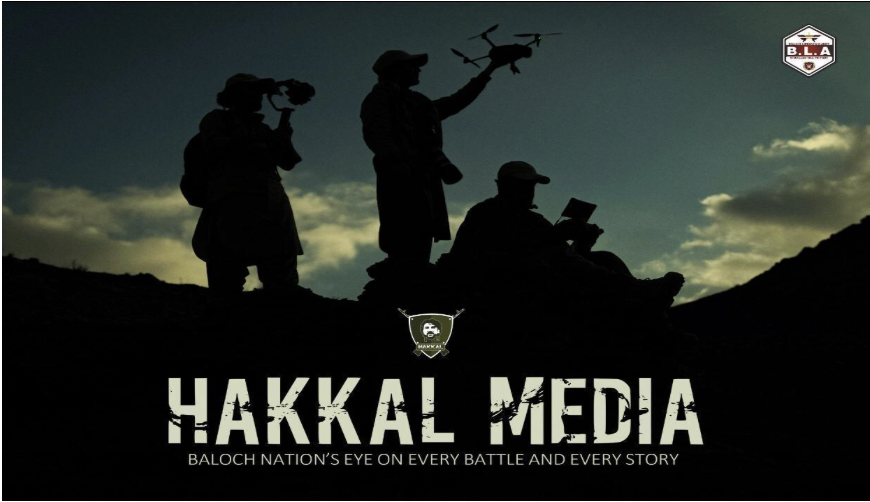
Figure 1: Hakkal Media, BLA’s media wing, primarily operates on Telegram to provide information related to BLA.
Narrative Ecosystem
The media landscape in Pakistan faces multiple challenges: censorship, firewalls, internet shutdowns, controlled reporting, and credibility issues. For real-time information, the majority of Pakistanis rely on unofficial media sources, particularly social media platforms (p. 322). Media censorship creates a gap in the information domain, which militant groups like BLA often exploit for digital propaganda and ideological operations to strengthen their narrative against the target. The digital campaign organised by BLA during Herof-2 must be interpreted as a continuation of Herof-1, which was conducted on 26 August, 2024, when BLA demonstrated its capacity to carry out multiple coordinated attacks across several districts of Balochistan.
In Herof-2, Hakkal foregrounded the same strategy for controlling the digital battlefield, albeit one that was more advanced and coordinated. As the operational units of BLA, like Majeed Brigade, STOS, Zephyer Intelligence, Research and Analysis Bureau—ZIRAB—and Fateh Squad, carried systematically coordinated attacks, Hakkal projected all these in a more nuanced and organised way, while casting the operation as a centralised phase of incidents rather than a cluster of disintegrated attacks. This mechanism had significant implications for public and media perceptions. On social media, pro-BLA accounts further solidified this narrative by amplifying incidents and projecting female fighters and suicide bombers.
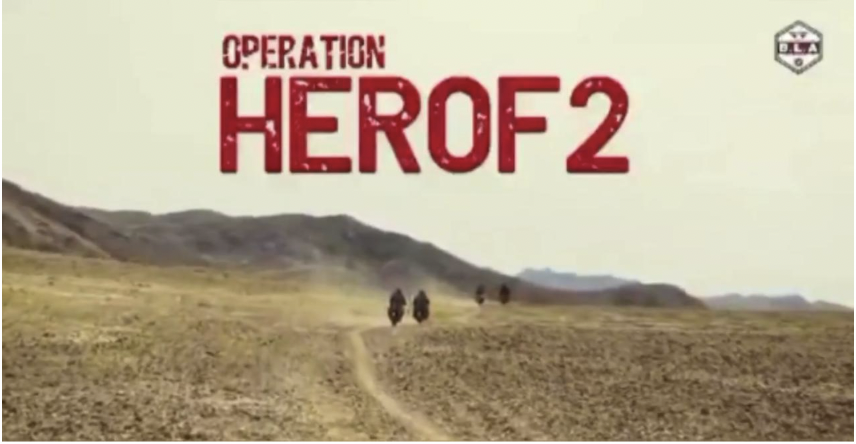
Figure 2: The image is a screenshot from a video released by Hakkal Media in which attacks of 3 January 2026 were named as part of Operation Herof-2.
Information Pre-Emption
Hakkal’s framing initiative ensured that messaging during Herof-2 remained dominant over mainstream media. As soon as BLA started attacking security forces and government buildings, swarms of images, audios, and videos instantly appeared on Telegram and were then disseminated through social media, such as X and Instagram (Figure 3). Images of female suicide bombers and videos of fighters claiming control of land were spread to amplify the insurgent narrative that the struggle transcends gender. The government’s lack of prompt response benefited BLA, enabling it to make international media headlines and control social media.
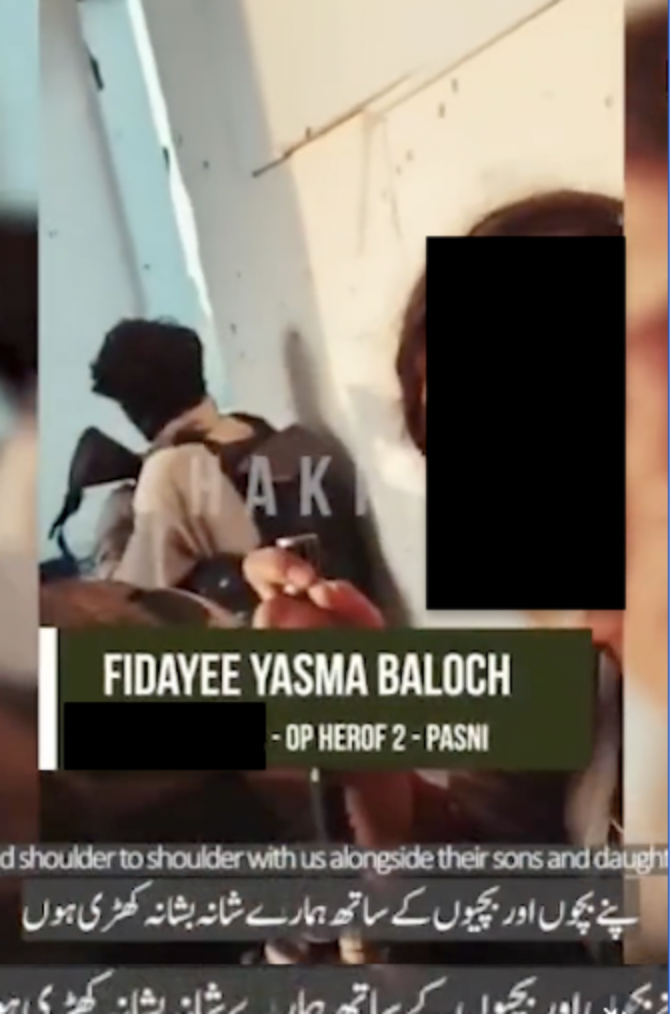
Figure 3: An Instagram Reel highlighting a female fighter from Operation Herof-2.
Simultaneously, Hakkal termed Herof-2 as a province-wide operation against state forces in several districts—Quetta, Nushki, Mastung, Kalat, Kharan, Panjgur, Washak, Turbuat, Kech, Gwadar—to construct an environment in favour of Baloch militants and vulnerable for Pakistani security forces. In asymmetric conflicts, such as in Balochistan, a first-mover strategy often gives the advantage of authenticity and accuracy. Before releasing final details of the operation, BLA kept its audience updated on its attacks. Hakkal media was persistent in releasing updates on coordinated attacks during the operation, claiming control and heavy losses to security forces. This was intentionally done to gain first-mover advantage and strengthen the narrative, which cannot be easily deconstructed in areas such as Balochistan, where there is a complete lack of authentic reporting. Hakkal exploited this gap effectively.
Symbolic Escalation of Gender
Representation of female fighters in Herof-2 was the most staggering development in BLA’s combat capability. The rampant emergence of female fighters and their direct participation in combat operations alongside male militants leaves serious social, psychological, tribal and political implications. While the BLA deployed its first female suicide bomber, Shari Baloch, in April 2022 in an attack against Chinese nationals at Karachi University, Herof-2 marked a significant escalation of this tactic in the Baloch insurgency, with multiple female suicide bombers and fighters deployed. Details and images of these operatives were released sporadically to sustain pressure and shape an environment of heightened vulnerability for security forces.
The framing of women’s participation in insurgency and the release of their details serve primarily to construct images through symbolic escalation. In other words, it is a behavioural act that establishes a narrative and portrays the ongoing conflict as more intense and expanded. The purpose behind this move was obviously to show that Baloch women are equally joining the war, irrespective of age, gender, and region. For instance, Hakkal released details of a 60-year-old Baloch female fighter who joined the Majeed Brigade in January 2023, and then carried out a suicide attack in Nushki on 2 February 2026.
For the first time in the Balochistan conflict, female fighters have been seen with male insurgents participating in combat operations. Their glorification and portrayal on digital media were meant to deconstruct established patriarchal norms of Baloch society and move beyond traditional definitions of Baloch insurgency. The rise of female suicide bombers in BLA’s kinetic operations not only challenges security assumptions made about Balochistan but also endorses the militant and ideological rhetoric of BLA.
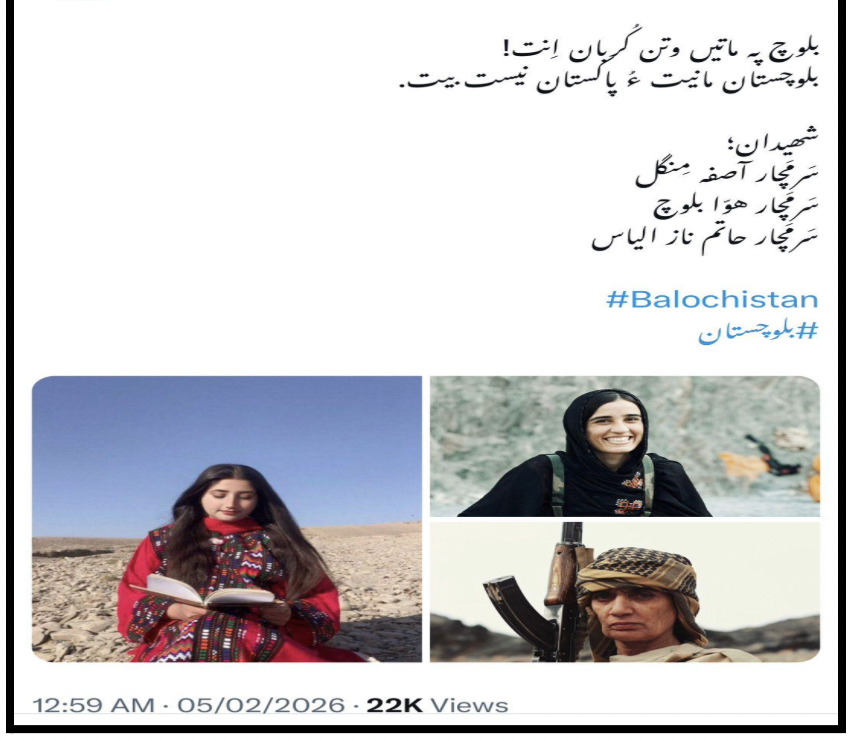
Figure 4: Asifa Mengal (in red dress), Hawa Baloch (Black dress) and Hatam Naz Baloch
Digital-Kinetic Synchronisation
Synchronising kinetic actions with the digital campaign supported BLA’s warfare narrative, helping it gain attention and shape public perception. The purpose of the operation was not to control territory, but to instil fear and exert attitudinal impact. The dissemination of video clips and images was not intended to contest digital space alongside kinetic operations. The circulation of clips, such as firing, marching on bikes, roaming inside government buildings, interacting with the public, while posting images of confiscated weapons and vehicles, served to reflect organisational skills and sophisticated use of technology and digital platforms.
BLA uses Telegram as a primary channel for distributing materials, enabling its supporters to mobilise propaganda and strengthen the narrative ecosystem. In Herof-2, Balochi, Urdu, and English were used to reach out to and influence local, national, and international audiences. Recorded speeches, operational updates, and claims of control over areas were strategically delivered. The media and kinetic operations helped Hakkal frame its own narrative before a counter-narrative emerged.
Conclusion
Coordination and framing of Herof-2 indicate the digital and operational reach of Hakkal as one of the most sophisticated insurgent media groups operating in South Asia. The real-time fusion of operational activities, visualisation of leadership, symbolic escalation of gender, and depiction of kinetic activities in videos, audios, images and posts categorically underscored its hybrid warfare capabilities.
Contrary to Hakkal’s ability to project the group’s core tenets, the campaign also exposed some structural flaws. First, the uncensored visualisation of fighters, leadership, and terrain is vulnerable to surveillance and harsh crackdowns, and second, the credibility of the information remains questionable. Claims of casualties contradict the number stated by the Pakistani military’s Director General Inter Services Public Relations—DG ISPR—that 22 security personnel and 36 civilians succumbed to their injuries during the operation. This can risk trust, sabotage narrative momentum, and disrupt the durability of digital mobilisation. Finally, BLA leader Bashir Zaib’s call for public mobilisation to join the insurgent space is an invitation to intelligence sweeps and collateral damage.
Pakistan’s security mechanism and its outcomes remain unproductive in Balochistan. The fragile digital narrative, lack of intelligence integration, absence of media access, and failure to disrupt militant media frameworks require a comprehensive review and strategic focus.
Militant groups are fusing coercive practices with digital platforms to maximise impact. The role of technology companies remains pivotal in tackling digital terrorism and the networking strategies that sustain it. Countering and disrupting narrative saturation requires accurate identification of militant platforms and extremist content. Moreover, suppressing virality can help counter propaganda campaigns during coordinated militant attacks. This strategy reduces uncertainty and debunks militant narratives.
–
Rahim Nasar is a PhD American Studies researcher at Area Study Centre, Quaid-i-Azam University, Islamabad. Rahim focuses on regional political, security, & strategic affairs. He also appears on National and International media as a security & political analyst. He posts on X/ @RahimNasari.
–
Are you a tech company interested in strengthening your capacity to counter terrorist and violent extremist activity online? Apply for GIFCT membership to join over 30 other tech platforms working together to prevent terrorists and violent extremists from exploiting online platforms by leveraging technology, expertise, and cross-sector partnerships.