

In Spain, hostility toward immigrants is one of the most prevalent forms of online hate, and it disproportionately targets people from North Africa. Digital hate is frequently amplified through disinformation and conspiracy narratives rooted in the white supremacist imaginary, including the “Great Replacement” theory, the “Kalergi Plan”, and “White Genocide”. According to these narratives, the European white population is being systematically replaced by non-European populations through mass immigration and declining European birth rates, both allegedly being orchestrated by governing or Jewish elites. While immigrants from North Africa are the primary targets, based on explicit Islamophobia, these narratives are also extended to other racialised migrant communities.
In recent years, far-right and neo-Nazi circles in Spain have increasingly embraced the concept of “remigration”. This ideology advocates the mass forced deportation of immigrants in order to create an ethnically and culturally homogeneous society. In the Spanish context, it has been translated into far-right political campaigns that symbolically distribute “return tickets” for immigrants. These narratives are commonly justified through repeatedly debunked claims, such as the alleged link between migration and crime, sexual violence, or the abuse of public welfare systems.
Over the past year, multiple episodes of anti-migrant hostility, both online and offline, have been linked to far-right networks like Deport Them Now and Núcleo Nacional (NN), (National Core), that strategically exploit digital platforms to disseminate hate narratives, mobilise supporters, and translate online radicalisation into real-world violence.
This Insight examines the narratives and communication strategies of Núcleo Nacional in online spaces, whose digital activity has gained significant visibility in Spain. While the primary focus is on Núcleo Nacional, the analysis also addresses episodes of far-right mobilisation linked to the online group Deport Them Now. The Insight examines Núcleo Nacional’s online ecosystem, including its Telegram channel, official website, online shop, associated podcast posted on YouTube, and content on Instagram, TikTok, and X (based on a sample of 30 accounts in total, with 10 on each social network).
Torre Pacheco: A Laboratory of Extremist Violence
In July 2025, Spain experienced two major episodes of racist violence linked to online mobilisation, which were accompanied by a very high increase in hate speech on social media. The first episode used the issue of sexual assault as a pretext for protests near the Immigrant Centre in Alcalá de Henares, in the Community of Madrid. This involved protests organised by far-right groups such as Núcleo Nacional and Democracia Nacional (National Democracy), where Nazi and Francoist symbols were displayed alongside banners and chants promoting racist messages centred on the idea of remigration. The second, and most serious incident, occurred in mid-July in the town of Torre Pacheco, in southern Spain, where an elderly man was assaulted by a group of young people of North African origin. Following this incident, there was an intense spread of hate messages and disinformation on social media. False narratives and manipulated images were shared to promote and coordinate violent citizen patrols against the immigrants, including explicit calls for “manhunts.” In the days that followed, and despite increased police presence, riots, acts of vandalism, assaults, and attacks on businesses owned by Muslims took place.
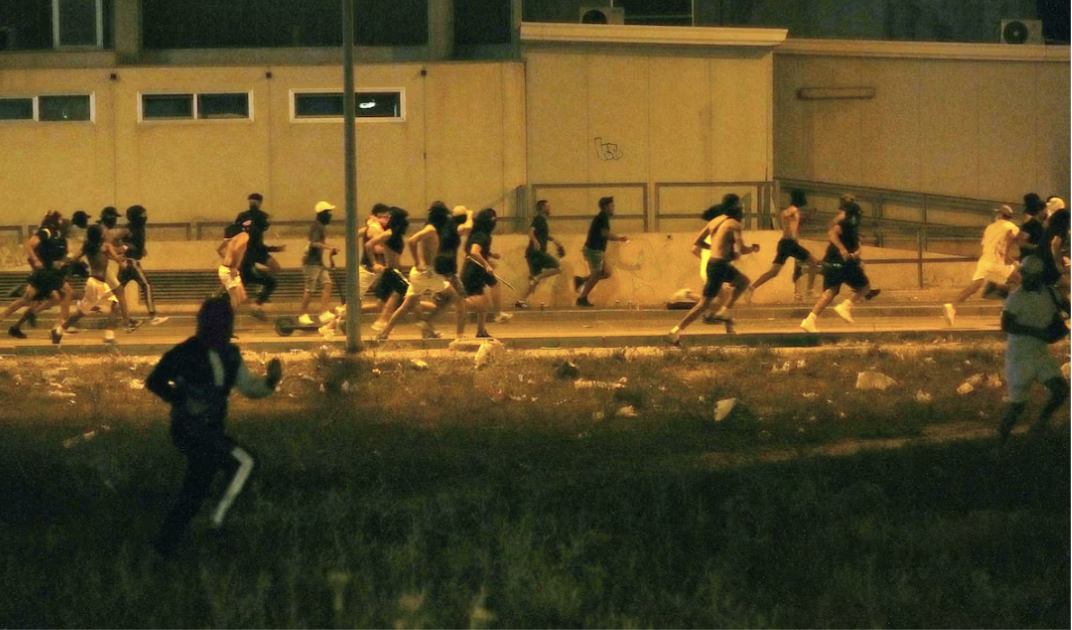
Figure 1: Riots in Torre Pacheco; participants escaping from the police. Source: El País, Alfonso Durán.
The organisation of these patrols was managed mainly through Telegram channels, particularly those linked to the white supremacist movement Deport Them Now (DTN). Its leader was arrested for incitement to hatred, and several of the DTN channels were shut down at the request of the Prosecutor’s Office. Within these spaces, messages were identified that called for “the hunting of migrants”, expressed wishes for them to end up in “gas chambers,” or urged to “apply direct justice to reunite them with Allah,” as well as laudatory references to white supremacist terrorists such as Payton Gendron, the perpetrator of the 2022 racist attack in the United States.
Deport Them Now Spain was the national branch of a broader European remigration movement. A key moment of visibility for the group occurred during the Remigration Summit 25, held in May 2025 in Italy, which brought together far-right groups from several European countries. DTN Spain operated as a group with a diffuse hierarchy, whose activities primarily developed on Telegram. In Spain, it managed at least 17 regional chats, although the movement’s physical presence was also observed at anti-immigration demonstrations organised by the far-right party VOX, and in racist graffiti left in Catalonia.
The unrest highlighted the limited response of digital platforms. A monitoring system run by Spain’s Ministry of Inclusion detected, during the days of the incidents, a 1,500% increase in racist content compared to usual levels on Facebook, Instagram, TikTok, YouTube, and X. Of the hate messages identified, 65% included direct incitement to violence, with terms such as “hunt,” “sticks,” “machetes,” or “beating” appearing in more than half of the cases. The Ministry’s Observatory identified more than 138,000 hate messages on the analysed platforms between July 6 and 22, of which only 22% were removed. As a result of these events, the Spanish government agreed to create, together with the previously mentioned companies, a monitoring group to analyse hate speech.
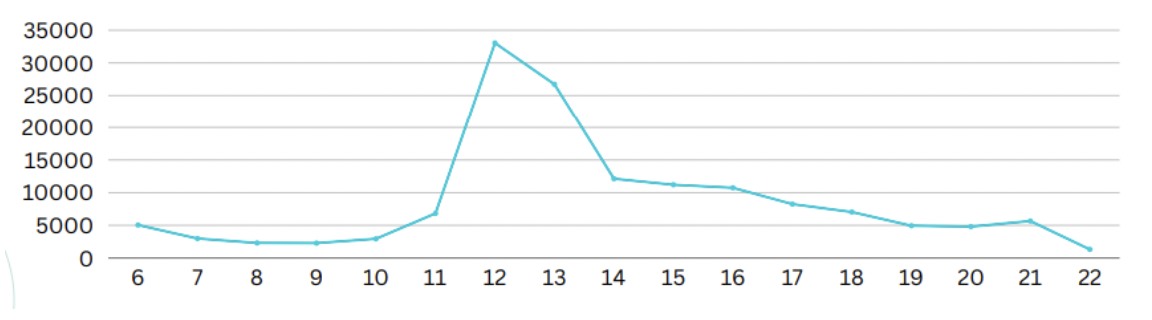
Figure 2: Image from the report by the Spanish Observatory against Racism and Xenophobia, which monitors hate speech on social media in Spain, shows the peak of messages that coincides with the events in Torre Pacheco in July 2025. Source: OBERAXE
Núcleo Nacional: A New Key Neo-Nazi Player in Spain
These violent episodes highlighted the rise of a significant new actor in Spain’s white supremacist landscape: Núcleo Nacional (National Core), a group with notable organisational and propaganda capabilities across digital platforms. It is a neo-Nazi organisation that, according to police sources, currently has around two thousand members, many of whom come from various neo-Nazi or Francoist groups and ultra movements that had lost their mobilisation capacity. In February 2026, the group registered its political party as Noviembre Nacional (National November), named after a series of protests opposing the amnesty granted to Catalan politicians and officials involved in the independence movement.
The group has experienced very rapid growth and already has four regional branches. In just over a year, it went from being a marginal group to being evaluated as an actor capable of coordinating far-right extremist sectors on a national scale and with high potential to establish networks with other European actors. On its social media, the group publishes photos with displays of support from other European neo-Nazi groups, such as Group 1143 from Portugal, Legio Hungaria from Hungary, or National Legion of Bulgarian Youth from Bulgaria, among others. Núcleo Nacional is currently under investigation for a hate crime for having shared a video on X calling for “a joint fight against the invasion,” referring to immigration. Several of their videos call for the “active defence” of the streets and the organisation of citizen patrols, which shows their capacity to promote direct violence.
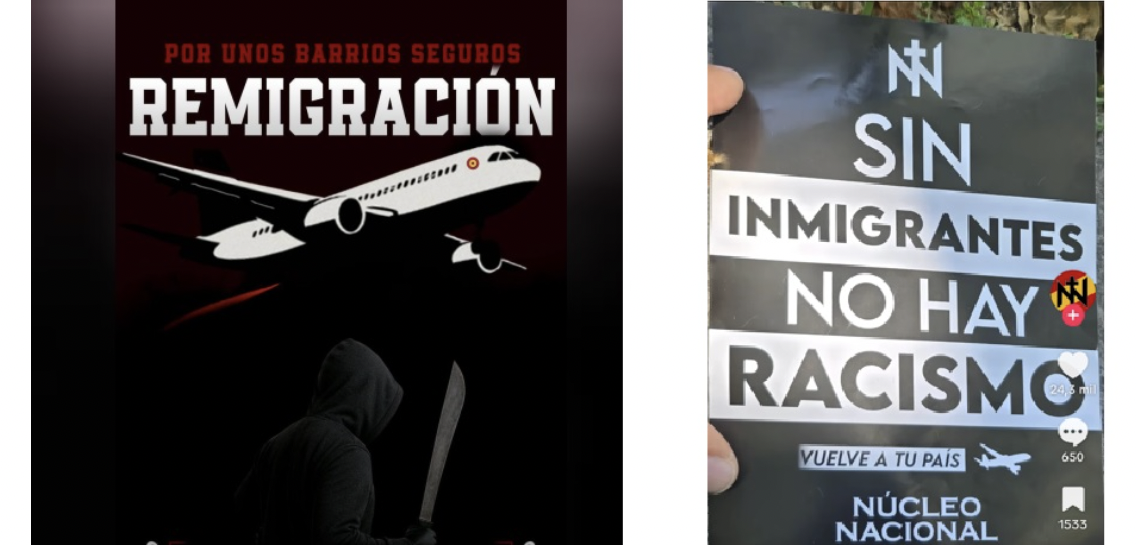
Figure 3: Telegram and TikTok content referencing remigration. On the left: an invitation to a demonstration: “For safer neighbourhoods. Remigration.” On the right: “There is no racism without immigrants. Go back to your country.”
Digital platforms and encrypted messaging channels are crucial for the group´s expansion strategy. They use social media for ideological dissemination, recruitment, and coordination, combining formats such as videos, memes, graphics, and podcasts. The group is active on X, TikTok, Instagram, YouTube, Telegram, and reposts content between them. The communication structure is decentralised: alongside official accounts, numerous associated accounts amplify their message, especially among young audiences. Their ranks include far-right influencers, known figures from Spanish fascism and neo-Nazism, and Rock Against Communism (RAC) musicians, some of them convicted of hate crimes.
Núcleo Nacional is organised around ethnically based ultra-nationalism and white supremacism, with strong antisemitic elements, and presents itself as a defender of race, culture, Christianity, and Spanish and European tradition. The group promotes a narrative of existential threat, portraying Spain as besieged by internal and external enemies—from immigration, internal independence movements, and gender diversities to the “globalist elites”—and describing Spain as a country in advanced historical decay that, without a nationalist struggle, is condemned to ruin. This rhetoric, which blames minorities and ideological adversaries for the alleged national decline, aligns with the propaganda tradition of fascism, and the group glorifies the era of fascist Francisco Franco’s dictatorship.
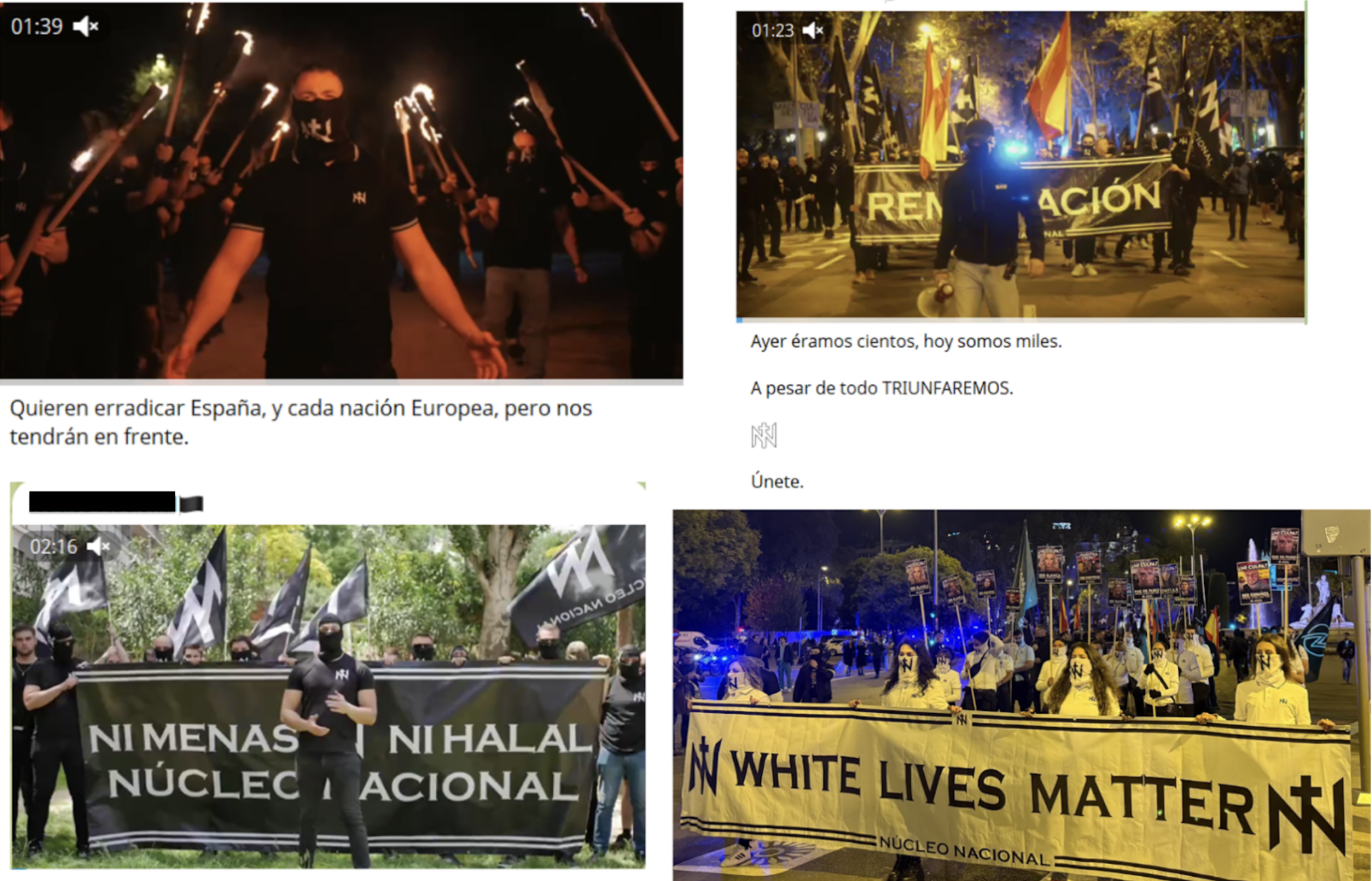
Figure 4: Propaganda material compiled on Telegram. The captions read: “They want to eradicate Spain and every European nation, but they will have us to contend with.” “Yesterday we were hundreds, today we are thousands. Despite everything, we will triumph. Join us.” The banner at the bottom left reads: “Neither menas nor halal.” Menas is a derogatory expression to refer to unaccompanied minor immigrants.
Historical references are very common in the group’s social media content. They extend beyond Francoism and often include the period of the Reconquista, drawing parallels between the Christian campaigns against the Caliphate of Al-Andalus and their current mission.
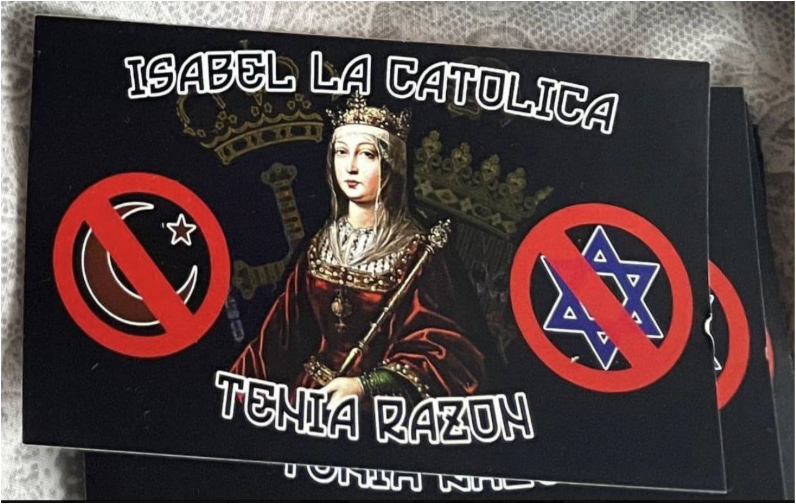
Figure 5: Photo of stickers “Isabella the Catholic was right” with historical references related to the expulsion of Muslims and Jews from the Iberian Peninsula.
The group systematically exploits the socioeconomic concerns affecting young people in Spain, including high unemployment rates, delayed economic independence, and a housing access crisis. Recent studies indicate that young Spanish men show a marked inclination toward far-right ideologies, often accompanied by a strong attraction to the period of the fascist dictatorship. Together, these factors create a fertile environment for radicalisation, which Núcleo Nacional exploits very effectively, adding messages that appeal to youth concerned about their future. This strategy is exemplified by its periodic gatherings outside the headquarters of BlackRock, where NN denounces the concentration of housing in the hands of investment funds and incorporates this concern into its broader ideological framework, connecting it to its supremacist rhetoric.
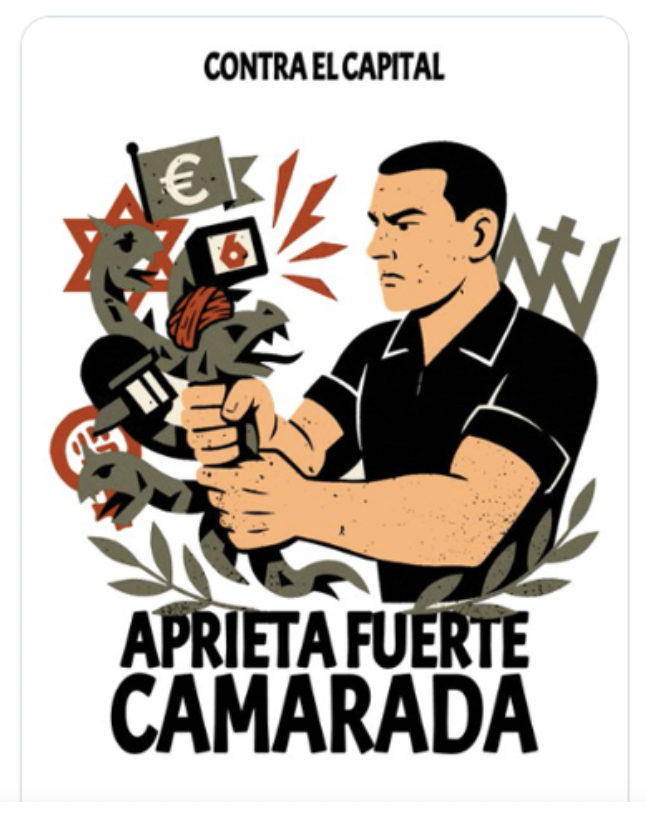
Figure 6: Image posted on the organisation’s official account on X: “Against capital. Tighten up, comrade.”
NN employs a paramilitary aesthetic: most members dress in black and cover their faces with scarves featuring the group’s logo, reinforcing an image of discipline, anonymity, and confrontation. Sport is a core recruitment pillar: the organisation promotes physical strength, muscle development, and contact sports, organising strength competitions and mixed martial arts events attended by neo-Nazi militants from other European countries. These practices are linked to the recovery of a masculinity they consider threatened, described as “testosterone in a feminized world”, and serve multiple purposes: physical preparation for violence, ideological reinforcement, promotion of toxic masculinity, and fundraising through gym fees and event tickets.
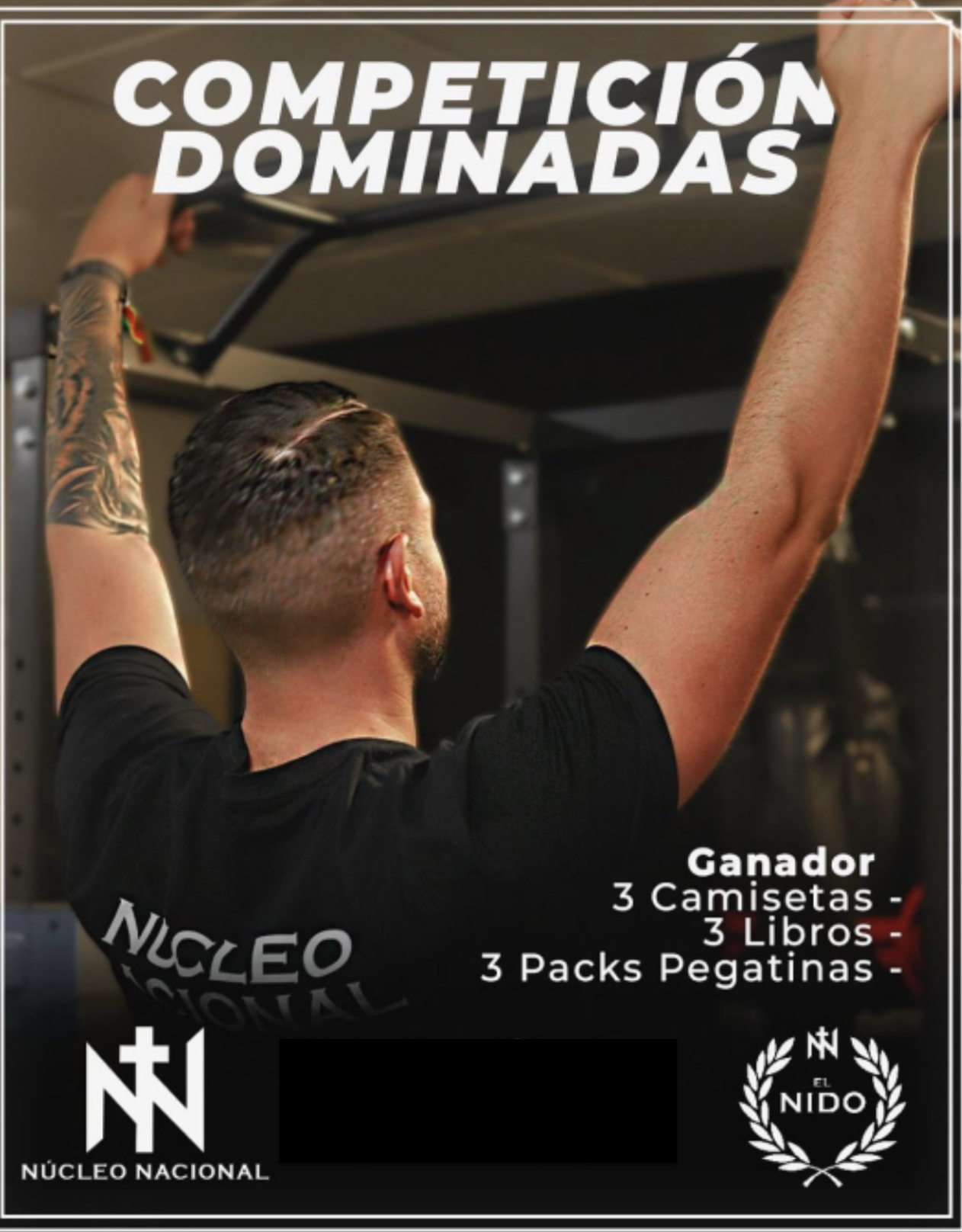
Figure 7: Invitation to a strength training competition at the organisation’s headquarters. The prizes include t-shirts, books, and stickers.
Merchandise sales are another key activity. Through social media and a dedicated website, Núcleo Nacional sells products with its logo and clothing with racist and white supremacist messages. Iconography includes Nazi references, calls for armed national defence, and antisemitic content. Promotional images show members performing Nazi salutes and pictures of the Blue Division, a Spanish volunteer unit that fought alongside the German army, which is a recurring reference in the group’s imagery.
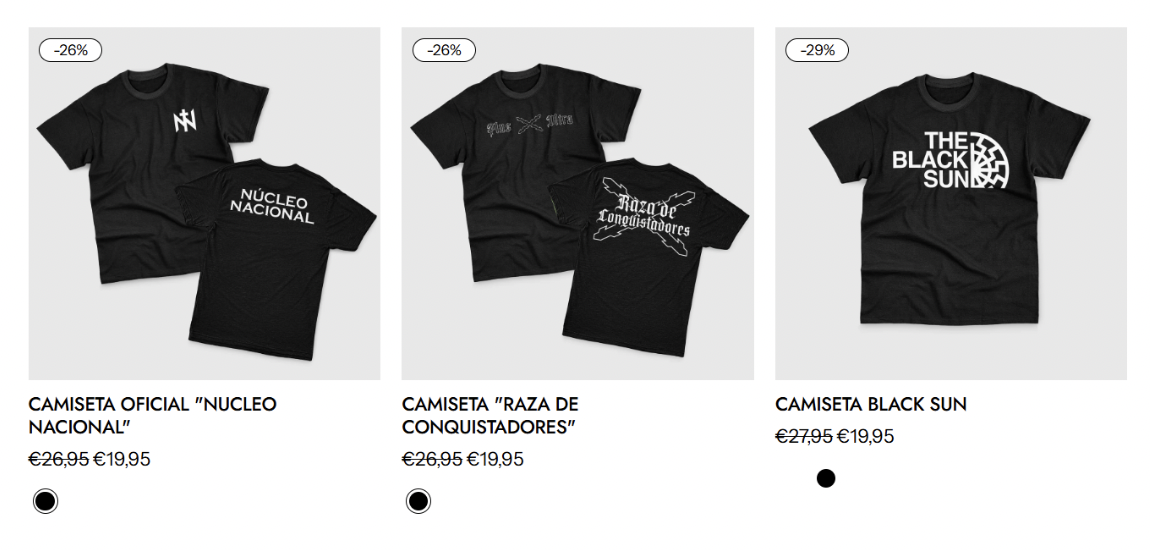
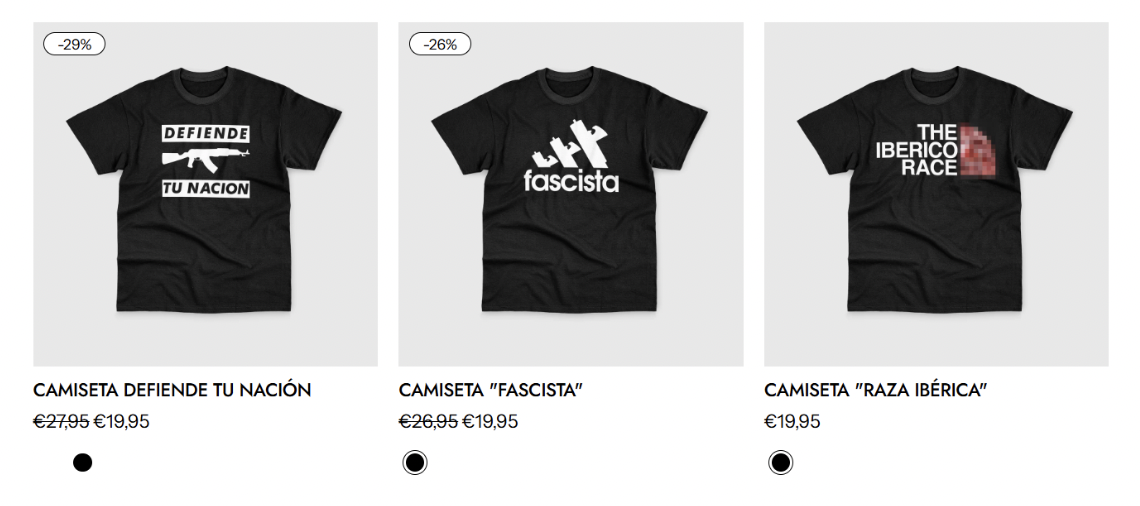
Figure 8: Example of the merchandise that the organisation sells.
Symbolically, on its social media, Núcleo Nacional makes explicit use of Nazi and fascist iconography, including symbols like the Sonnengrad (Black Sun) or Falange emblems. Considering that under the Digital Services Act, all Very Large Online Platforms (VLOPs) are required to address illegal hate speech, and that their community policies formally prohibit the use of hateful symbols associated with Nazism, the sustained circulation of this iconography raises critical questions about the role of digital platforms in the normalisation of this symbolism.
References to Nazism extend beyond the symbolic level. Slogans like “Blood and Soil” directly reference the völkisch imagery that inspired Nazism, and analysis of their Telegram channel shows that for its reading club, Núcleo Nacional distributes works historically used to indoctrinate Hitler Youth, such as Faith and Action. Book of National Socialist Virtues by Helmut Stellrecht. Moreover, the name of their Madrid headquarters—a large, modern space with a conference room, audiovisual room, library, and gym—called “el Nido” (“the Nest”), directly alludes to Hitler’s Eagle’s Nest in Berchtesgaden. Google Maps images also show photos of Hitler on shelves within the space, reinforcing the centrality of Nazi imagery in the organisation.

Figure 9: Photo of NN headquarters with a picture of Adolf Hitler on the shelf. Source: Google Maps
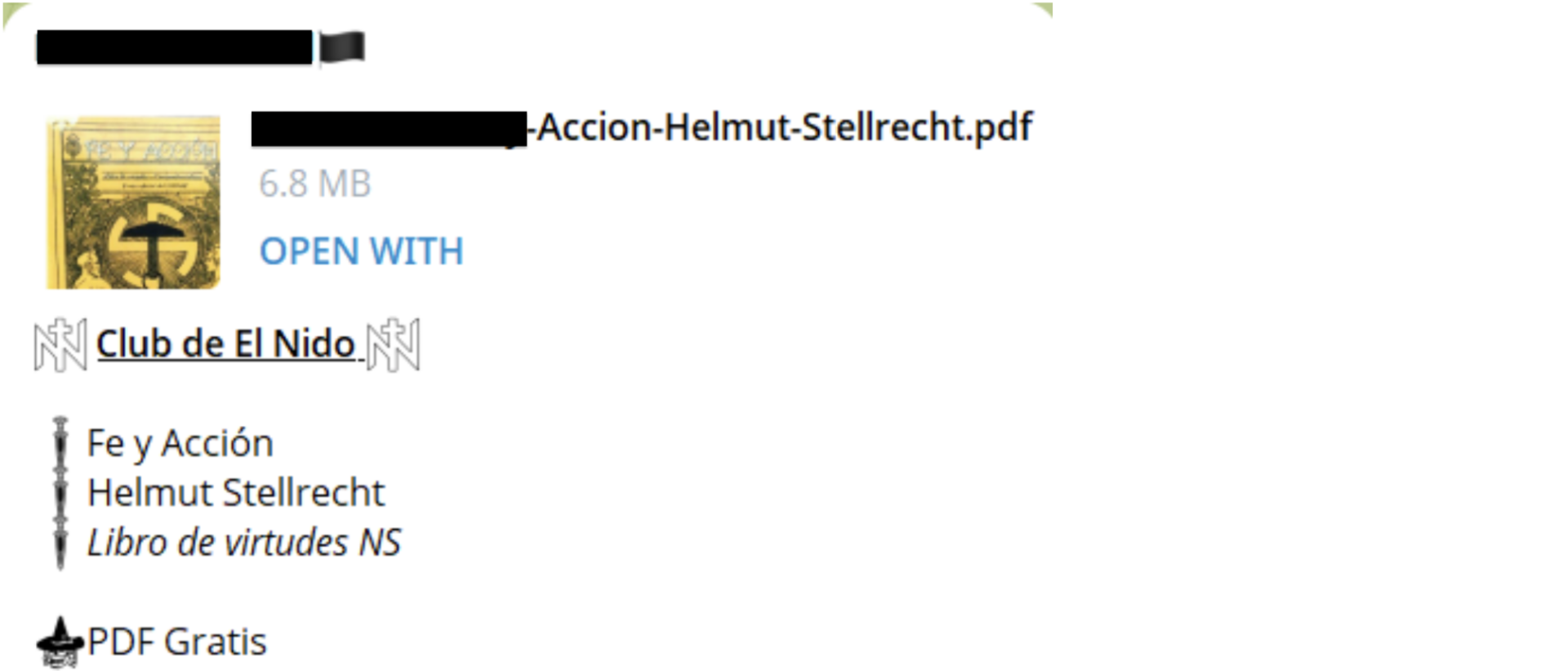
Figure 10: Message from the Telegram channel sharing the Nazi manual for the book club.
Conclusion and Recommendations
This analysis illustrates how the idea of remigration is increasingly gaining prominence among white supremacist and neo-Nazi groups in Spain. The groups discussed have perfected the use of social media and encrypted messaging platforms for their operational, propaganda, communication, and recruitment objectives. Núcleo Nacional exemplifies this new generation of far-right actors that combines the ideological bases of Nazism with a very effective digital model that is targeting young male audiences. Their rapid growth highlights the emergence of new recruitment models for which digital platforms are crucial, such as recruitment through sports, podcast creation, online historical revisionism, and the sale of products with supremacist messages and symbols. On the other hand, the racist riots that shook Spain last year underline the connection between radicalisation in online spaces and real-life violence. Telegram channels and other platforms acted as accelerators of disinformation, coordination, and incitement, underscoring the limitations of these platforms’ responses and coordination in contexts of rapid escalation.
Based on this context, the following recommendations are formulated for digital platforms:
- Improve the implementation of crisis protocols when a risk of real-world mobilisation is detected due to increased hate speech activity that incites violence. Adapt the operational design of content moderation systems to manage potential crises and enhance collaboration with government entities.
- Collaborate closely with research centres, government entities, and fact-checking organisations to develop preventative or pre-bunking campaigns and to coordinate actions in the event of actual violence.
- Review guidelines and moderation processes regarding the approach to the remigration ideology and conspiracy theories rooted in white supremacy, with a comprehensive approach including minority languages.
- Review guidelines and databases related to the moderation of Nazi and fascist symbols to better identify malicious actors within the extremist ecosystem. Reflect on the role and approach to Francoist symbols, which are not legally prohibited in Spain.
- Review internal policies regarding the publication of product sales links containing discriminatory messages, Nazi references, and hate symbols.
- Enhance the monitoring of decentralised extremist ecosystems. Monitoring efforts should extend beyond official accounts and focus on network amplification patterns and affiliated profiles that repost content. Improve cross-platform collaboration in addressing the problem of white supremacist organisations, considering that the same content is reposted across platforms.
–
Urszula Mrozowska has worked as an online safety analyst, specialising in hate speech, extremism, and disinformation, including climate-related and electoral disinformation, on social media. She has worked in the tech industry, focusing on investigating these issues across Spain, Latin America, and Poland. She holds a Bachelor’s in Linguistics from the University of Barcelona and a Master’s in Latin American Studies, completed between the University of Warsaw and the Andean University Simón Bolívar of Ecuador. Previously, she conducted research in Business and Human Rights, investigating corporate human rights violations and their social and environmental impacts.
–
Are you a tech company interested in strengthening your capacity to counter terrorist and violent extremist activity online? Apply for GIFCT membership to join over 30 other tech platforms working together to prevent terrorists and violent extremists from exploiting online platforms by leveraging technology, expertise, and cross-sector partnerships.