

On the 22nd of January 2025, Solomon Henderson (17) opened fire inside Antioch High School. He killed fellow student Josselin Corea Escalante (16) and injured one other before turning the gun on himself. Police concluded Henderson “acted alone and had no co-conspirators”. Nevertheless, Henderson was radicalised, at least in part, by the extremist communities online that he took part in and can be understood through them. This Insight investigates one such community: the Incelcore/Shootercore music community on the popular music streaming platform SoundCloud.
In his online manifesto, Henderson claims ownership of around two dozen social media accounts, including two on SoundCloud. These accounts reposted hundreds of songs from a small number of interconnected artists; together, the lyrical themes, visual aesthetics, and commenter behaviour reveal ideological patterns examined in this Insight. Studying these patterns reveals a particularly nihilistic worldview that is important to understanding the attacker’s mindset leading up to the Antioch High School shooting. Following notification, SoundCloud removed both accounts. One account had been banned a week after the shooting, but was later potentially cloned as a shrine by another user. Although not a one-to-one recreation, archived material from the original profile suggests the clone reposted much of the same content. Due to its similarities with the original account – and its apparent status as a shrine to Henderson – this Insight incorporates the recreated profile into its data, alongside archived materials from the original accounts.
This Insight adds to a growing body of work demonstrating the intersection between extremist art and extremist violence, and ultimately seeks to help curb the spread of similar communities elsewhere by proposing practical solutions that SoundCloud and other online platforms can implement.
Methodology
There are three primary modes of self-expression on SoundCloud: music, imagery, and comments. Music is uploaded (or re-uploaded) to the platform, which can then be liked and/or reposted by other users. Every song has cover art, and most users upload a profile picture. Comment sections are available under every song, where users may share their thoughts and interact with one another. This Insight surveys each of these modalities to identify ideological patterns, considering them both in isolation and in context.
The focus of this Insight is the music Henderson engaged with on SoundCloud; this engagement includes song uploads and reposts, and excludes merely ‘liked’ songs. ‘Liked’ songs do not appear in a profile’s main feed, whereas reposts and uploads do. This increased visibility is a deliberate form of emphasis that this Insight considers significant.
For this survey, each song and its corresponding webpage were downloaded; each song was listened to in full, and key lyrical themes were tracked. The images associated with each page were downloaded and manually searched for thematic patterns. Each comment section was copied into a series of text documents; each thread was reviewed, both manually and by keyword search. Most materials were collected in September 2025, with the rest of the process taking place in January 2026. Comment sections archived in September were re-archived in January to account for new comments.
Hate speech, terrorist, and extremist content all breach SoundCloud’s community guidelines and may result in the deletion of these materials and their respective accounts. As such, the results of this Insight should be understood as a contemporary snapshot of an ever-changing community space.
Music
244 songs were analysed over the course of this study. Of these, 241 were reposts, two were reuploads, and one was a cover Henderson apparently recorded himself. Over 150 artists were represented in this survey, with most of the music coming from a select few: 46% of the music is from just 10 artists, and the top 20 constitute 70% of the total share. One year after the shooting, the median song has 6,984 plays, 139 likes, 8 reposts, and 7 comments. With very few exceptions, all artists appear to be male-presenting.
Approximately 75% of this music is tagged by the uploader as some form of conventional Rock genre, with ‘Alternative Rock’ being the most common. ‘Incelcore’ is the second most common tag, applied to nearly 15% of all music.
‘Incelcore’ is a novel Rock subgenre, characterised by a harsh, DIY aesthetic and a lyrical speaker who expresses strong frustration with their quality of life. Despite the name, ‘Incelcore’ often has nothing to do with ‘involuntary celibacy’; rather, the term conveys a more generalised sense of failure and inferiority. The vast majority of music surveyed is emotionally negative, with the most prominent lyrical themes being suicidal ideation, wanton/nihilistic violence, and social isolation. Current research suggests that a focus on loneliness and violence, as opposed to sexuality, is consistent with contemporary Incel culture and rhetoric.
Lyrics pertaining to violence are seldom justified by the speaker; rather, they seem to be a redirection of inner hate. Where violence is justified, it is often shown to be the product of nihilism and/or misanthropy.
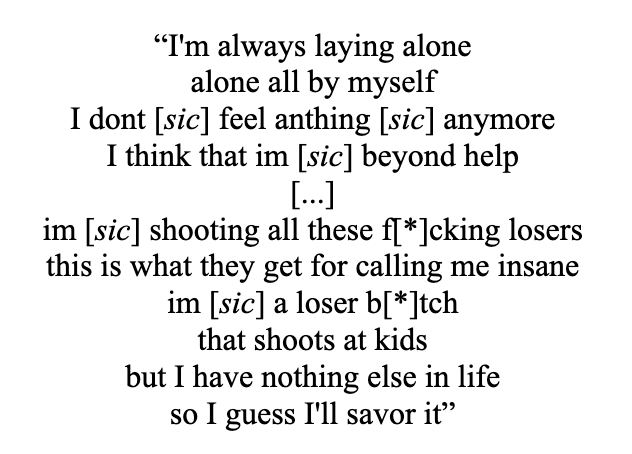
Figure 1. A typical representation of violence as observed in this study.
In what can be considered a sub-genre of ‘Incelcore,’ ‘Shootercore’ makes violence a central theme. Often, these songs are either about or from the perspective of a mass shooter – often real, though sometimes (apparently) imaginary. Songs written from such a perspective are particularly instructive as the artist must imagine the shooter’s state of mind. This often results in a realignment or outright invention of the killer’s ideology to better fit Incel ideology. Consider the above excerpt, which is from the perspective of the perpetrator of the Sandy Hook Elementary School shooting. The attacker’s motives remain unconfirmed; nevertheless, these lyrics depict him as an archetypal incel.
‘Shootercore,’ however, is not always clearly in praise of its subject. The prevalence of self-deprecatory language in this music makes it difficult to identify genuine condemnation, let alone lyrical devices like irony. As will be discussed later, this complicates the moderation of such content.
Beyond sharing hundreds of songs on SoundCloud, Henderson demonstrated his affinity for this music and community in several ways. In his diary, Henderson lists his “Top 10 Incelcore artists,” all of which he reposted considerably. He even goes so far as to claim the music “mentally prepared [him] for murder,” though the extent to which he was being ironic is unclear.
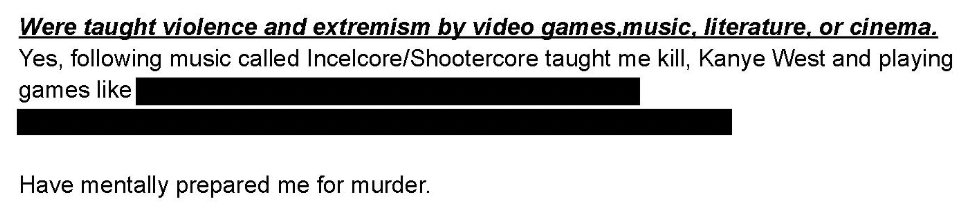
Figure 2. An excerpt from Henderson’s Manifesto.
Henderson also had a number of band tees from related artists that he seemed to wear regularly, taking many pictures of himself in these shirts. He used these pictures in a number of online profile pictures, and they featured prominently in his online diary.
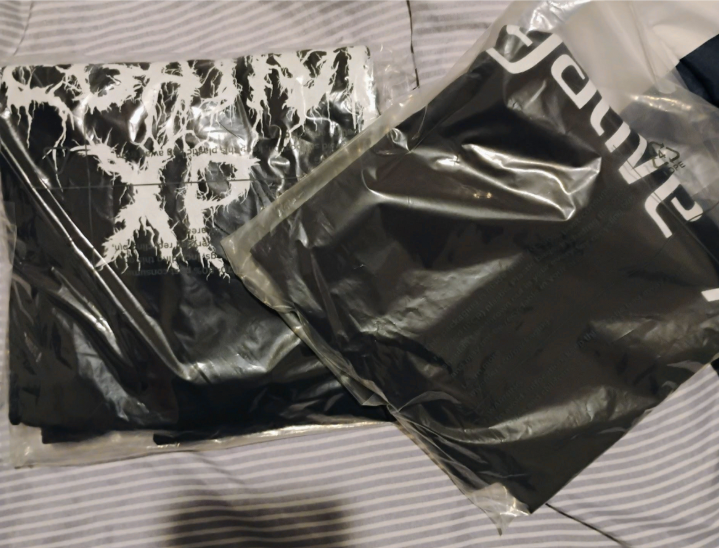
Figure 3. “I may wear the Arial version because it clearly shows the words. I don’t know the metal font looks better [sic]” – Henderson’s diary.
Several patterns emerge when analysing the imagery used in this community, aligning well with the aforementioned lyrical themes, particularly nihilism and violence.
Firearms were common in both profile pictures and cover art. One typical depiction has the gun pointed directly at the viewer. Another common motif involves the subject pointing a gun at themselves – drawn depictions often added blood. This kind of visual has been used by numerous killers in the past; Henderson copied some such pictures in an apparent homage.
Another common visual theme is an allusion to real-world killers, often by directly depicting their likeness. The perpetrators of Sandy Hook and Columbine were the most commonly depicted, though over 20 killers were represented in this sample – including at least one reference to Henderson himself (uploaded after the shooting, of course). There appears to be an emphasis on those who have killed a relatively large number of people. Imagery referencing killers ranged from meme edits to mugshots to innocuous selfies and even childhood photos; many of these images were innocuous and would be hard for outsiders to understand. Explicitly violent or hateful imagery was present but scarce, suggesting users were either conscious of or directly affected by SoundCloud’s community moderation.
Other prominent visual themes include cigarette smoking, anime, memes, and depictions of blood – ranging from intense, (apparently real) gore, to a mild smattering.
Comments
Commenter activity is especially important for understanding this community’s culture and collective knowledge. For example, in the wake of the Antioch High School shooting, users demonstrated not only a knowledge of who Henderson was but an awareness of his activities on the platform. Commenters directly reference Henderson on the songs in his feed. Sentiments are mixed, though more often positive. Some users pay their (apparently sincere) respects, leaving comments like “RIP” and “RIP Solomon”. Others make jokes (usually to his favour): “HE DIED FOR OUR SINS!,” and “I love u Solomon plz reach me from the dead [sic],” are two examples. Still, others deride him for his actions. Notably, these comments were split, with some insulting Henderson for being a school shooter, whereas others insulted him for being an ineffectual one: “DIED FOR NOTHING AWARD,” one user writes. In the final song Henderson reposted, most of the comments are in reference to him: “1 kill award,” “last thing a subhuman shooter listens to award,” and so on. Most comments were made just after the shooting, typically within a few days. Over a year since the shooting, commenters still reference Henderson: “solomon [this sh*t] suck [sic] [crying laughing emoji],” to which another user responds “…and last post too”.
As previously mentioned, Henderson’s SoundCloud comments appear to have been mostly deleted by the platform; what comments can be found (via archives) are consistent with his writings elsewhere. For example, on a song pertaining to the Uvalde School shooting, Henderson labels the shooter a “saint”. This elevation to sainthood common, not just in Henderson’s writings but in the community overall. In fact, at least one username in the survey was observed to apply this title to Henderson as well.
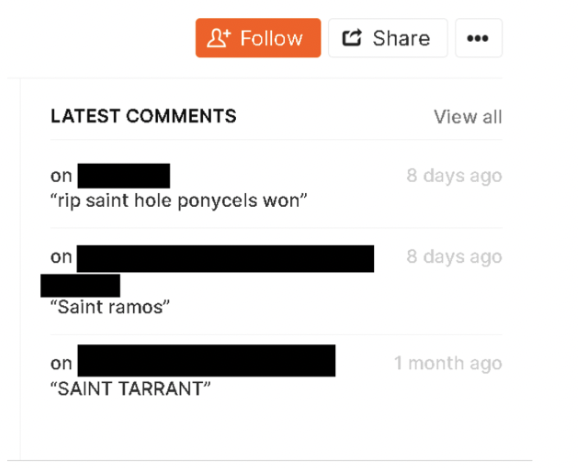
Figure 4. Examples of Henderson’s SoundCloud comments.
Recommendations
SoundCloud prohibits extremist content on its platform; however, the platform’s moderation efforts have mixed results. Of course, regulating artistic communities while maintaining liberal values like free expression is unavoidably tricky; artistic depiction does not itself constitute an endorsement, and artistic intent and audience interpretations are not always clear, consistent, or aligned. Accordingly, this Insight suggests three targeted reforms that online platforms could use to hinder radicalisation without significantly impacting regular users.
First, it should be made clear that this Insight does not advocate for banning music by genre, style, or theme. As shown, ‘Incelcore’ music is defined by its self-deprecatory lyrics and lo-fi production, and obviously neither warrants a ban. Even with ‘shootercore,’ the line between commentary, criticism, and praise is too unclear; mass shootings are a serious social issue that artists may want to cover, even from the shooter’s perspective, no less. This Insight makes the following recommendations in line with these facts.
- The online accounts of violent extremists, such as Henderson, should be immediately taken down, and their usernames should be made unavailable for future use. Leaving such accounts available online maintains a space for people to gather and mythologise real-world acts of violence. Even where an account is taken down, they are subject to being recreated if the usernames are made available again – as we see with Henderson. Like other violent extremists, Henderson’s writings suggest that the glorification of mass killers was core to his radicalisation, and we see such glorification in the communities these accounts were a part of. Removing every trace of a violent extremist’s presence from online platforms is critical, and platforms like SoundCloud should proactively find and remove such accounts to mitigate their influence.
- Bans on visual materials should better account for the way extremist communities use cryptic and seemingly innocuous imagery ─ particularly with the likeness of violent extremists ─ to signal their ideology. Like many other online platforms, SoundCloud participates in industry-wide efforts to remove extremist media from its platform. While such efforts are largely successful in removing explicit extremist media, the results of this Insight suggest that more subtle materials circumvent these measures. As such, greater effort should be put into investigating the origins of imagery associated with extremist communities and users. Non-explicit imagery found to originate from extremist materials should face increased scrutiny, if not be outright banned in certain contexts (for example, profile pictures).
- Online platforms should identify and monitor keywords associated with extremist ideology. This Insight found that the tag ‘Incelcore’ was both prevalent and closely tied to extremism. This makes finding extremist content trivial; this issue has been observed with other banned extremist content. In Soundcloud’s case, these keywords should not necessarily be banned, as this may hinder legitimate artistic expression; however, where an association is found between extremism and these keywords, increased scrutiny is warranted.
Conclusion
Solomon Henderson’s engagement with music is not unique; violent extremism has long intersected musical engagement. White supremacist musicians have committed mass murder, such as with the Wisconsin Sikh temple shooting; mass shooters have also livestreamed their killings to a soundtrack of extremist music, such as with the Halle synagogue attack and Christchurch mosque shootings. Like any art form, music resonates with people’s emotions and worldview and therefore provides an avenue through which we may understand them. Further work is necessary to better understand music’s role in radicalised communities.
–
Jake Kalender is an early-career researcher with a professional and academic background in music. His main area of focus is studying the musical practices of far-right extremists, particularly regarding neo-Nazi and neo-fascist musical groups. He holds a Bachelor’s degree in Music from the University of Sheffield and a Master’s degree in Sound Design and Audiovisual Practice from the University of Glasgow.
—
Are you a tech company interested in strengthening your capacity to counter terrorist and violent extremist activity online? Apply for GIFCT membership to join over 30 other tech platforms working together to prevent terrorists and violent extremists from exploiting online platforms by leveraging technology, expertise, and cross-sector partnerships.
The views and opinions expressed in this Insight are the authors’ own and do not necessarily reflect those of GNET or any of its partners.