

In the last year, the visibility of Han ethnonationalism in China has been on the rise. Described by scholars as “Han Supremism” or “Imperial Han Nationalism,” this movement includes adherents with varied agendas but is broadly united by the pursuit of a Han-superior social, cultural, and political order in China. The movement should be considered extremist as it promotes an exclusionary ethnonationalist ideology, legitimises violence against perceived (non-Han) out-groups, and seeks to destabilise China’s sociopolitical status quo under the rule of the current state.
This Insight surveys the Han ethnonationalist movement and its growing visibility in China. It examines the movement’s historical narratives, media practices, and organisational forms, while also tracing its connections to international extremism, particularly its growing ideological and visual affinities with Western right-wing extremist movements. Drawing on digital observational research, this study analyses 109 online posts collected in late 2025 and early 2026 across several Sinophone platforms, including Douyin, Kuaishou, Bilibili, Red Note, and Douban, as well as conversations from six group chats on WeChat, QQ, and Telegram, and two private forums. Materials were gathered through platform observation and by following recruitment pathways shared by Han ethnonationalists.
Publicising Through Digital Discourses: Rising Visibility in 2025
Han ethnonationalism has been on the rise over the past two decades, yet its narratives have reached a broader audience only very recently. Starting in late 2025, Sinophone social media (such as Weibo, Douyin, and Kuaishou) users have encountered a barrage of content that denounces Manchus and the Manchu-led Qing dynasty (1644–1911) and commemorates the Han-led Ming dynasty (1368–1644) that preceded it, which BBC Chinese describes as “The Ming Nostalgia”.
The Manchus, a culturally and linguistically distinct group native to present-day Northeast China (Manchuria), conquered China in 1644. Although neither the Ming nor the Qing dynasty understood ethnicity in contemporary terms and both included multiethnic ruling elites, Han ethnonationalists today portray the Manchu-ruled Qing dynasty as a foreign power that oppressed the majority Han through ‘colonization’ and a system of deliberate oppression.
While the claims advanced by Han ethnonationalist adherents rely on conspiracy theories and distorted, presentist readings of Ming-Qing history, the agenda behind “Ming Nostalgia” in 2025 is clear: to detach non-Han histories from Chinese history and, ultimately, to exclude non-Han groups from the category of the “Chinese”: a distinctive approach from the current state’s super-ethnic project.

Figure 1: A comment posted on Douban under the discussion of Ming Nostalgia: “… Han culture is the stem of Chinese culture… We just realised that we must separate the stem (Han) from the branches (non-Han)”.
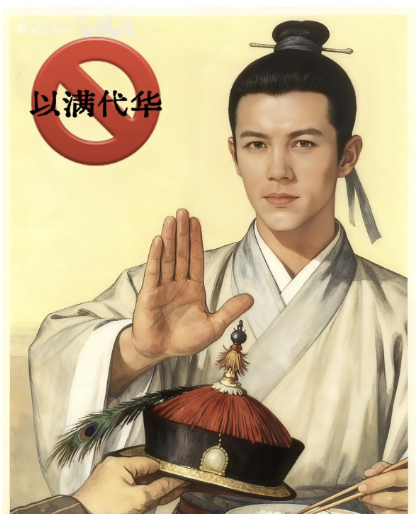
Figure 2: A Han ethnonationalist poster shared in a WeChat group chat repurposes visual cues of Viktor Govorkov’s poster Неt! It shows a male in Ming attire rejecting a Manchu-inspired Qing official hat. The text reads “Replacing China (华) with Manchu (满),” echoing “great replacement” rhetoric that frames Manchus and other non-Han groups as threats to a Han-centred Chinese identity.
The 2025 “Ming nostalgia” trend reflects the latest effort by adherents of this movement to appropriate Chinese digital historical discourses to introduce their extremist agenda to a broader public. Re-narrativising history serves as both the bedrock of Han ethnonationalism and a tool for propagating and desensitising audiences to its extremist agenda.
Ethnic Politics in Contemporary China: from the 1950s to the Digital Era
To understand contemporary Han ethnonationalism, it is necessary to situate it within the context of ethnic politics in the People’s Republic of China since 1949.
Ethnic identity became politically relevant in the 1950s following the Chinese Civil War as the PRC consolidated power in non-Han areas such as Tibet and the Northwest. The party-state adopted a relatively inclusive framework, in comparison to the overthrown nationalist government during this time: the party was particularly open to the grievances they believed were caused by “Han-chauvinism,” which the Han, under the nationalist assimilative rule, exploited other groups, causing inter-group hostilities (Weiner, P. 16, 21).
As part of its post-war nation-building effort, the state dispatched experts to identify the minzu: the ethnicity of its people.¹ Influenced by the nationality model of the USSR, the state officially “identified” 56 ethnicities in its ethnic identification project. Not all groups benefited equally from this process, as some were merged into broader ethnic categories despite claiming distinctiveness (Mullany, P. 120-133). As a result of this state-driven project, every Chinese citizen has been assigned an ethnicity and the social-cultural meaning associated with it. While the Han is one of the ethnic groups in a multiethnic China, they largely occupy important political positions and comprise the vast majority of the population, 91% today.
The PRC under Mao (1949-1976) promised non-Han groups ethnic equality and political autonomy, although these guarantees were sometimes violated (Weiner, P. 66-68, 74-75). During the reform era (starting in the 1980s), in part to redress wrongs committed against non-Han people under Mao, certain affirmative action policies were implemented. These “ethnic preferential treatment policies” allowed bearers of “ethnic minority” (non-Han) identities to access various benefits. This “preferential treatment” subsequently became a major source of grievances for Han ethnonationalists. Since the 2010s, the state promotes an arguably Han-centred, super-ethnic identity: the “Chinese Nation,” often through assimilation.
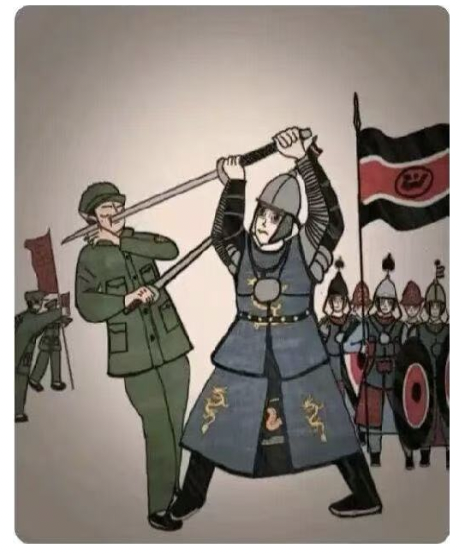
Figure 3: Image shared by a Han ethnonationalist in a WeChat group chat depicting an ancient Han warrior piercing a figure in Mao-era attire. Behind them stand Red Guards with banners and armoured warriors bearing the Black Dragon Flag, a modern invention appropriating historical motifs. The violent imagery expresses hostility towards the Maoist China that opposed “Han chauvinism” and to contemporary leftist critics of Han ethnonationalism, both online and off.
Today, the Chinese party-state is alarmed by the rise of Han ethnonationalism. In December, 2025, the Zhejiang Provincial Propaganda Department released a commentary critiquing “the attempt to deconstruct historical narratives for denying China as a[n] … unified multi-ethnic country and agitating ethnic (minzu) division”. This commentary is a rare high-level Party criticism of Han ethnonationalism in post-Mao China, responding to its growing visibility both online and off. Just as the propaganda department circulated the aforementioned commentary on the digital platform, Han ethnonationalists have likewise spread their extremist views extensively in digital spaces.
Propaganda Memes on Social Media
As in other linguistic contexts, a repertoire of Han ethnonationalist memes in Chinese digital spaces serves to normalise extremist ideas, identities, and acts (P.6). Many of these memes are inspired by Western extremist visual styles. The Han ethnonationalist memes analysed here can be classified as non-violent and violent.
Non-violent memes are designed for circulation in public areas of social media, such as comment sections, reply threads, or as standalone posts. They function to desensitise viewers and attract interest, ultimately recruiting individuals drawn to Han ethnonationalist ideology and/or aesthetics.
An example of a non-violent meme in this space is the Black Dragon Flag, one of the most prominent visual motifs used by Han ethnonationalists. Similar to European-American right-wing movements appropriating visual motifs from ancient art, Han ethnonationalists appropriate ornamentation from traditional roof tile ends to design a novel, ahistorical flag that seeks to evoke traditional aesthetic forms.
The flag is widely used to arouse interest, convey Han ethnonationalist messages to potential recruits, and identify fellow adherents. Alongside memes, QR codes for joining groups on messaging apps (such as QQ or WeChat) are sometimes shared, enabling interested recruits to join conveniently.
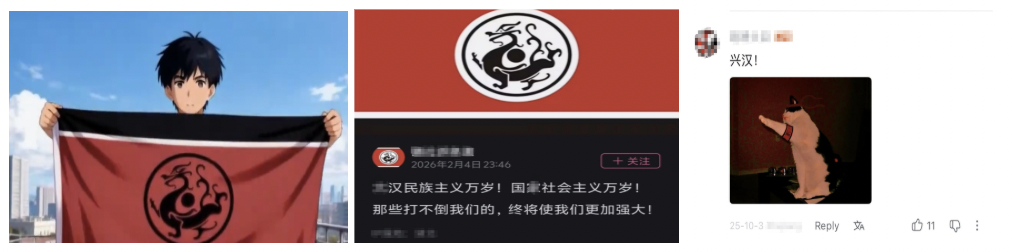
Figure 4: Black Dragon Flags shared on Bilibili and Douyin.
Left: AI-generated Animation showing a figure holding the Black Dragon Flag.
Middle: A Han Ethnonationalist posted: “Hail to Han Nationalism! Hail to National Socialism!”
Right: A cat performances NAZI salute wearing the armband of a variation of Black Dragon Flag: “Han rises! (Xing Han! )”. Note that “Xing Han” is phonically similar to “Sieg Heil”.
While some non-violent memes were created by self-claimed non-adherents for so-called entertainment, these memes desensitise Han ethnonationalist motifs, increase their exposure, and are often repurposed by adherents in comment sections for recruitment.
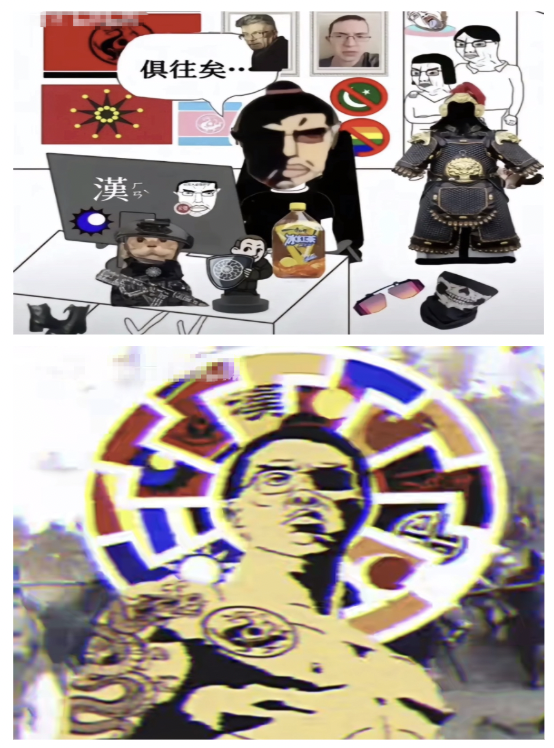
Figure 5: Memes on Bilibili and Douyin that include a glorified presentation of Patrick Crusius (“Chud” ). Note visual elements of or influenced by Western extremist motifs, such as the black sun (P. 134), and Brenton Tarrant. “Chud” is usually used to mock right-wing extremists, yet in these memes, it does not appear to serve a mockery purpose.
Memes that are not explicitly violent also function as visual identification devices among adherents (p. 27). Some Han ethnonationalists change their profile pictures and post flag images to identify with fellow adherents.
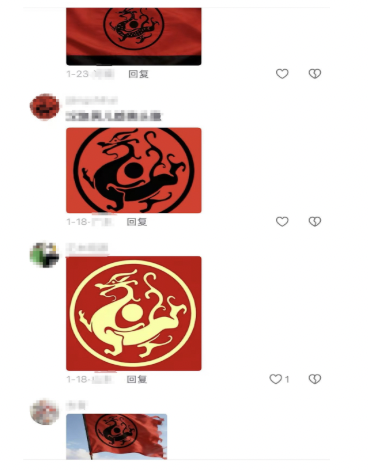
Figure 6: A group of adherents post Black Dragon symbols to confirm identity on Bilibili.
Violent memes circulate messages that glorify and desensitise inter-ethnic violence (such as ethnic cleansing and systematic repression) with humorous phrasing. Given China’s internet surveillance, violent memes are shared in more covert spaces, specifically social media group chats. Even so, to avoid censorship, violent memes tend to be implicit (see below).
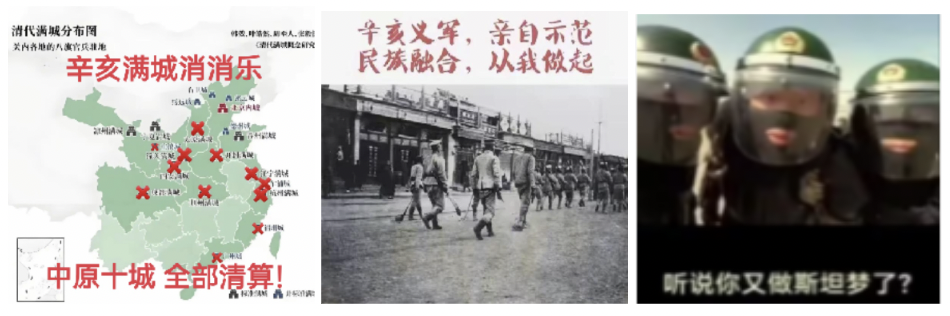
Figure 7: Violent memes shared in group chats. Left: A Map indicating the cleansing of the Manchu people in the 1911 revolution: “Manchu-Cruash during the Xinhai revolution (referring to the mobile game “Candy-Crush”)”; Middle: Revolutionaries during the 1911 revolution decapitated non-Han people: “…Ethnic solidarity begins with me”; Right: 3 Masked People’s Armed Police in Xinjiang: “Dream about your ‘[East Turki]stan’ again?”
Following recruitment from public digital spaces, sympathisers often join group chats on messaging applications such as WeChat or QQ, where bolder, more inciting, and more violent discourse takes place. These group chats are also where the aforementioned violent propaganda is usually shared. In these group chats, hate speech, bold propaganda, and conspiracy theories circulate. Group chats thus serve to further desensitise participants to hateful content and construct a Han ethnonationalist worldview, transforming them from interested individuals into movement adherents.
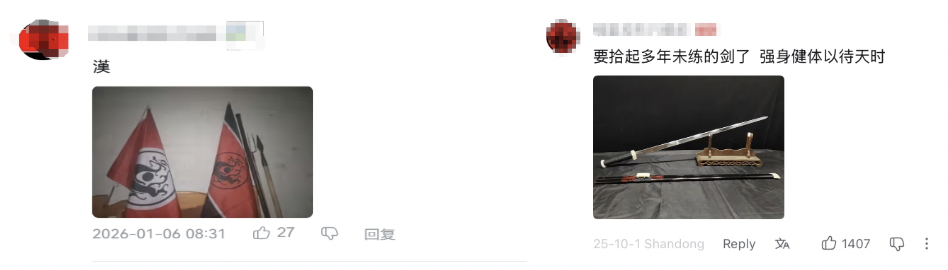
Figure 8: Pictures with display of weapons shared by adherents on Bilibili. Left: “Han”. Right: “Time to take up the sword again after years, build up my strength, and patiently wait for the right time.”
In private forums and encrypted group chats such as Telegram, the most enclosed digital spaces, one can observe the glorification of and incitement to real-life violence. Sometimes operating on an invite-only membership basis, these forums are typically small, hosting fewer than 100 users. They serve as spaces where violent ideologies are reinforced, practical knowledge for real-life violence is exchanged, and peer recognition and justification are provided. These forums constitute the most radical adherents organised around violent extremism.
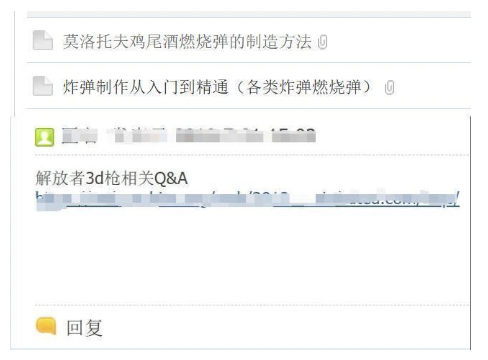
Figure 9: Han ethnonationalists in a private forum sharing the knowledge of explosive-making, Molotov cocktail (improvised napalm) recipes, and instructions for 3D-printing firearms. Many of these materials were translated from Western extremist groups.
Lastly, some Han ethnonationalists organise in real life under the cover of special-interest clubs. For example, Han ethnonationalists meet in military simulation groups and in Hanfu clubs that celebrate the allegedly traditional Han clothes. Offline organisations range from those that embrace an ethnonationalist worldview and seek a Han-dominated nation (often arguing that the current political order denies the Han a “fair” status) to groups that claim to be attracted only to Han ethnonationalist aesthetics.
Under the influence of North American extremist militia groups, some military simulation groups in China adopt extremist iconologies (such as Black Dragon Flag) to strengthen community identity. That said, not all members of military simulation groups are Han ethnonationalists, yet they frequently find the visual motifs (such as the Black Dragon symbol) used by Han ethnonationalism attractive, or at least interesting.
Hanfu groups have attracted numerous participants (especially among younger generations), and their networks have grown nationwide. While Hanfu groups are diverse and should not be understood as uniformly ethnonationalist, many members indicate approval of ethnonationalist agendas. In this case, real-world activities involve rituals (such as homage to Ming emperors), codes of conduct (such as rejecting conventional clothing and normalising wearing traditional clothing), and discourses that form collective identity and reinforce ethnonationalist agendas.
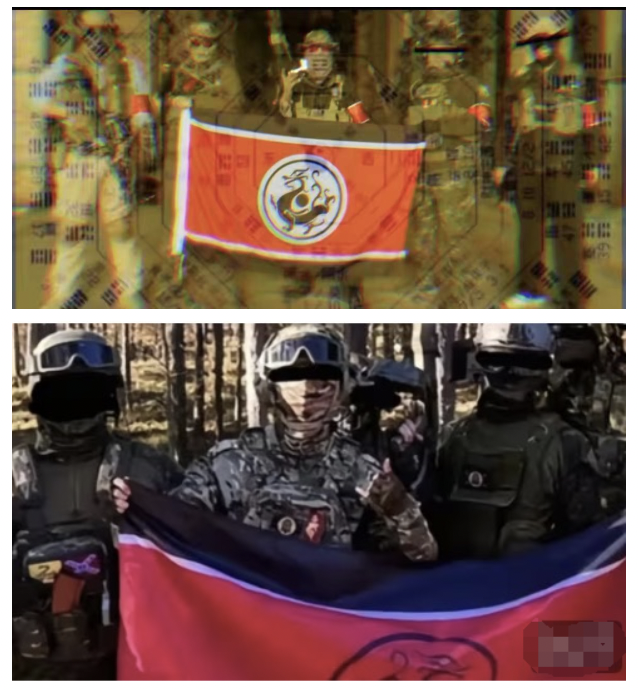
Figure 10: Military simulation groups displaying the Black Dragon Flag in posts on Bilibili. If the picture was taken in China, the firearms displayed are likely replicas, given China’s strict gun control rules.
Information on Han ethnonationalist hate groups prepared to carry out real-world attacks is largely unattainable due to the nature of the state’s (increasingly) tight control over legal and policing information. However, evidence suggests that offline hate groups continue to operate (see figure 11). Overall, the understanding of real-world Han ethnonationalist activities remains very limited and requires further study.
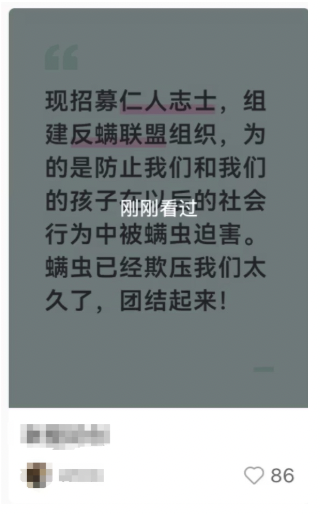
Figure 11: A Han ethnonationalist posting a recruitment notice on Red Note for his offline group. It prepares for “resisting Manchu persecution”. According to his cosmology, a Manchu “deep state” is behind the current Chinese government.
Conclusion
This Insight demonstrates the rising visibility and influence of a Han ethnonationalist movement in China. Unlike adherents of state-sponsored Chinese nationalism, those in this fast-growing ethnonationalist movement are united by their rejection of China’s status quo as a “multi-ethnic socialist country.”
Post-Mao China is no stranger to ethnic violence. Although no publicly known attack by Han ethnonationalists has occurred, the movement’s most radical wing has the potential to turn violent. Its continued popularisation and radicalisation raise the risk of ethnic conflict, undermining the state’s project in building a super-ethnic “pluralistic and integrated (duoyuan yiti) Chinese nation.”
Another particular risk is the movement’s interaction with Euro-American extremism empowered by digital technologies, as my research shows significant influence from Western extremist visual motifs, extremist narratives, and violent knowledge.
Ultimately, this research suggests that technology service providers, particularly those with cross-lingual and cultural user bases, should develop greater familiarity with transnational extremist cultures and media. Extremism manifests differently across cultural and linguistic contexts. Service providers, including providers located in China, should collaborate with researchers and acquire the linguistic and cultural expertise necessary to identify transnational extremism that may not be recognisable if applying existing moderation strategies.
Endnote:
- The term minzu may refer to ethnicity, race, nation, or a combination thereof, depending on context. In this insight, it is translated as ethnicity.
–
Zhuoheng Li holds an MA in East Asian Studies from Columbia University and is pursuing his PhD in History at Carnegie Mellon University. His current research examines technology and media culture in modern Asian borderlands, especially regarding modernity, ethnic politics, and the making of 20th-century Asia. His broader interests include ethnonationalism, frontier developmentalism, state-local relationships, and their transnational implications. He specialises in analyses across multilingual materials and draws on interdisciplinary methods from history, digital media studies, science and technology studies (STS), and Open Sources Intl’ analysis (OSINT).
–
Are you a tech company interested in strengthening your capacity to counter terrorist and violent extremist activity online? Apply for GIFCT membership to join over 30 other tech platforms working together to prevent terrorists and violent extremists from exploiting online platforms by leveraging technology, expertise, and cross-sector partnerships.
The views and opinions expressed in this Insight are the authors’ own and do not necessarily reflect those of GNET or any of its partners.