

Popular social media platforms have become central to Islamists’ ability to reach mainstream audiences, particularly youth. As these actors continue to adapt to content moderation efforts, it is essential to understand how ostensibly neutral search behaviours can inadvertently steer users toward extremist content online.
A 2025 study found that when searching for general terms like ‘Islam’ on TikTok, it is almost impossible not to encounter Islamist extremist content. While TikTok has made strides to limit the presence of violent and terrorist content on the platform, including the removal of such videos and accounts following flagging, it is still possible to discover IS content on the platform. Most of this content is not posted by the terrorist organisation’s media outlets but by sympathisers who copy material from other platforms (p. 99). To evade content moderation, most jihadist accounts conceal their calls for violence on TikTok. For instance, by using blurred images or colours and aesthetics not typically associated with jihadist propaganda, they make their videos more appealing to mainstream audiences (p. 5). So-called ‘borderline content’ or ‘lawful but awful’ content “still has the potential to cause harm” and can further the creation of “a toxic online environment for those vulnerable to radicalisation”. As this content is less likely to be deleted from social media platforms, it can normalise violence, polarisation and stereotypes, and can negatively impact democracy.
Instead of focusing exclusively on jihadist content, approaches to prevention and countermeasures on TikTok should adopt a broader framework that addresses pathways to radicalisation, including engagement with non-violent Islamist ideologies that may contribute to, or legitimise, violence. Islamism is a form of extremism that understands Islam “not only [as] a religion, but also a social and political system” (p.2). Throughout this Insight, the term ‘Islamism’ therefore always refers to ‘Islamist extremism’ while ‘jihadism’ refers to violent extremist Islamism.
This Insight highlights three examples of German-language accounts that serve as useful models in preventing and countering jihadist radicalisation on TikTok, using a broad approach that addresses both Islamist (non-violent) and jihadist (violent) content.
Islamists on TikTok
Islamists aspire to unite the Muslim community (umma) in an Islamic caliphate and to substitute democracy with a state governed by Islamic law. Islamists understand themselves as a superior in-group aiming to obliterate the out-group of non-Muslims and liberal Muslims who do not agree with their worldview. J.M. Berger stresses that extremists “can oscillate between violent and non-violent phases”; therefore, only including violent manifestations of Islamism would leave out part of the problem. Sources caution that non-violent Islamism is difficult to prevent and counter, since Islamists may use legal methods to achieve their aims; for instance, by attempting to convince recruits that, due to its corruption and Islamophobia, democracy should be rejected (p. 218).
By employing platform-specific aesthetics and pop-cultural references, Islamist TikTok creators aim to “lower the entry threshold” and “access barriers” to introduce young viewers gradually to an Islamist worldview in which “jihadi propaganda can flourish”. As Islamists on TikTok address grievances like racism and Islamophobia, the content resonates with the viewers’ problems, and they feel understood by the video creators (p. 1578). This builds trust in the Islamist creators, making their claims more convincing to their audiences and increasing the likelihood that viewers will continue to follow the accounts. Furthermore, it has been noted that links on Islamist TikTok accounts may direct viewers to other platforms like Discord and less regulated ones like Telegram, thereby serving as a “gateway” to more violent manifestations of Islamism and jihadism. Because much of this content is produced by individuals without direct links to terrorist organisations, its ideological positioning is often deliberately or structurally ambiguous. As a result, it is not always immediately evident that such accounts may support Islamist extremist, and in some cases jihadist, ideas, even as they may function as entry points to more overtly violent content elsewhere.
Islamists often conceal their identity on TikTok and create videos on mundane topics such as celebrities (p. 1578), resulting in viewers, especially youths, not always being aware that they are watching extremist content. Additionally, Islamists have incorporated the strategies of TikTok influencers into their approaches on the platform (e.g., “direct eye contact”, “relatable language”, simplification of complex concepts), strengthening their arguments, for instance, by using emotionalised language and by reframing current events to fit their narratives and to provoke strong reactions.
PCVE Accounts on TikTok
It remains challenging to measure the effectiveness of preventing and countering violent extremism (PCVE) approaches on social media, as well as to determine whether such content reaches its intended audiences. The three examples outlined in this Insight employ strategies such as alternative narratives and redirection, aiming to provide viewers with positive, non-extremist content that diverts attention away from radicalising pathways. Their potential effectiveness stems from producing authentic content that closely mirrors familiar TikTok formats, while engaging with topics that resonate with viewers’ everyday experiences. By avoiding explicit reference to their PCVE agenda, they seek to preserve credibility and cultivate trust among their audience.
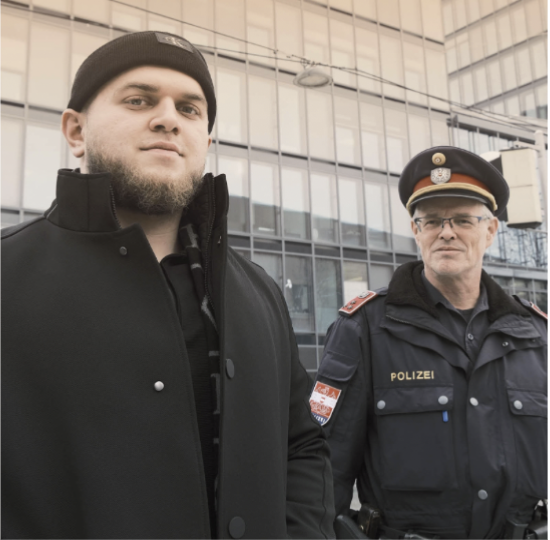
Figure 1: Cop & Che.
The first example is ‘Cop & Che’, which started in 2022 and has accounts on TikTok, Instagram and YouTube. The account, which has over 41,000 followers and 1.8 million likes on TikTok, features Ahmad Mitaev, a Chechen former IS recruit (‘Che’) and Uwe Schaffer, an Austrian policeman (‘Cop’). Most of the videos produced by ‘Cop & Che’ have tens of thousands of views, with their TikTok account reaching over 30 million views at the time of writing. Mitaev has previously also worked with youth workers to create PCVE projects such as ‘Jamal al-Khatib’. ‘Cop & Che’ deconstructs stereotypes and presents alternative narratives to extremist content by focusing on dialogue and promoting tolerance and democracy. On TikTok, ‘Cop & Che’ uses the Q&A format, which is a frequent feature on the platform in general. Similar to Islamist accounts, they reply to questions sent in by their audience, regardless of how absurd they are, such as whether it is allowed to hug a policeman.
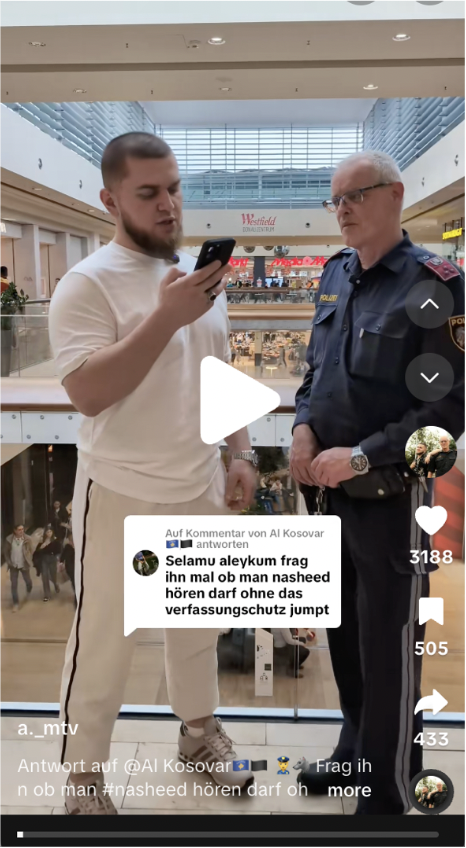
Figure 2: A video of ‘Cop’ & ‘Che’ discussing whether it is allowed to listen to a nasheed without immediately being put under surveillance by intelligence services. ‘Cop’ says that if the songs are not prohibited, it is allowed, while ‘Che’ argues that if one does not exactly understand the lyrics of the songs or who posted them, one should be careful, as listening to anasheed posted by Islamist groups can result in prison sentences.
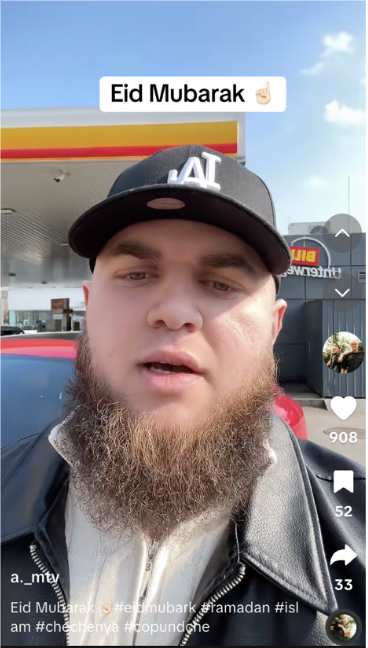
Figure 3: A recent video of ‘Che’ wishing his viewers ‘Eid Mubarak’ at the end of Ramadan.
In their replies, ‘Cop’ and ‘Che’ often disagree, but they discuss their disagreements without prejudice and talk to each other as equals. For instance, when asked if it is legal to run away from the police, ‘Cop’ replies that it is allowed but might raise suspicion, while ‘Che’ says that it is always a good idea to run from the police if one wants to or is scared of them. This makes the account’s creators seem authentic and approachable to their viewers, increasing the audience’s trust in them. As mentioned above, ‘Che’ is a former IS supporter. A 2015 study found that including former extremists in PCVE approaches increases the credibility of the content.
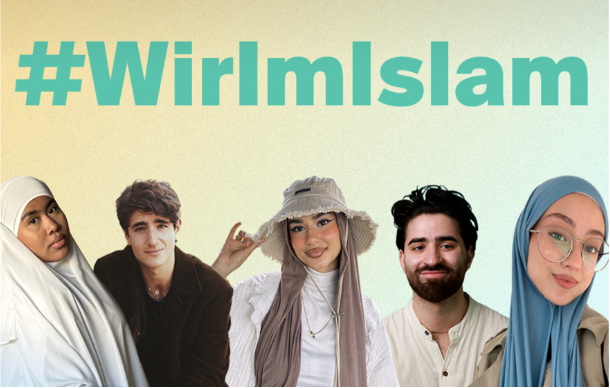
Figure 4: The #WirImIslam Project.
The second example is the project #WirImIslam (German for ‘We in Islam’), a collaboration among five popular German TikTok creators, the Federal Agency for Civic Education, the Centre for Applied Research on Deradicalisation (modus|zad), and the media agency MESH Collective. Individually, the participating influencers have between 1.9 million and 250.7 million likes, and up to 2.7 million followers. In total, they produced eight videos for the project #WirImIslam in 2024, deconstructing stereotypes both within the Muslim community and outside of it, and showing that extremist interpretations fail to reflect the complexity of Islam.
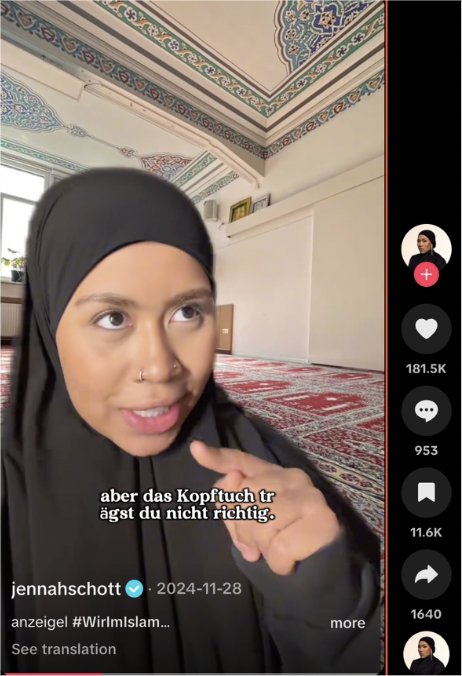
Figure 5: One of the videos posted for the project #WirImIslam describing the life of a newly converted Muslim. In the video, the new convert is subjected to several berating comments and questions from others. It ends with the new convert stating that they first have to get used to their new religion and they do not want to be pressured by others who claim they only want the best for them.
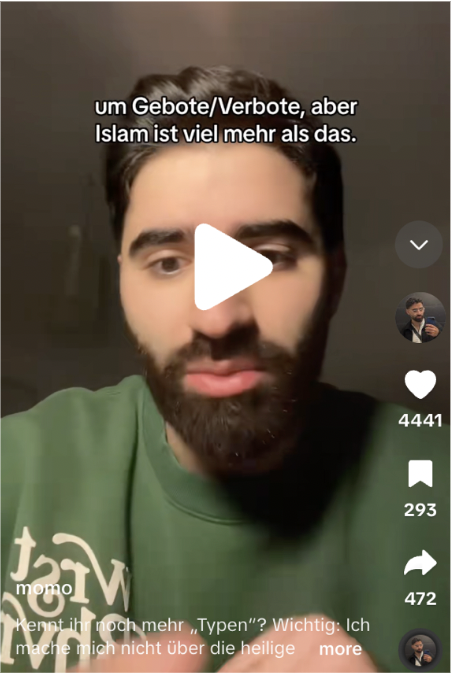
Figure 6: Another video by the project #WirImIslam in which the influencer simulates 5 different types of Muslims and how they would respond to random questions. It ends with the creator noting that much of the content on TikTok focuses only on what is allowed or forbidden in Islam, although Islam is about much more than that. He states that there will always be several different answers to almost everything in Islam.
As the accounts discuss similar issues to those covered by Islamists (such as debates around headscarves or the lives of Muslim converts) and problems youths are dealing with in a non-extremist manner, viewers can follow these influencers to find answers to their questions without watching borderline or extremist content. Several studies found that for counternarratives and alternative narratives to be successful, the content should not seem educational (p. 7) or appear to be produced for PCVE purposes (p. 27). Instead, the videos should be authentic, emulating the content youths are used to on the platform.
The videos produced by #WirImIslam use aesthetics and challenges popular on TikTok in general (such as the ‘put one finger down’ trend), so youths recognise these formats and are more likely to identify with the content. Research also found that professionally produced videos (p. 141) with strong “narrative quality” (p. 7) are more likely to persuade audiences. Because the videos for #WirImIslam are created by influencers adept at using the platform, the project produced professional videos with strong narratives that appeal to TikTok users. Additionally, by being created by individuals of the “target audience”, i.e. young Muslims in Germany, the content of the videos resonates more with the viewers, and they are more likely to continue to follow these accounts. As the strategy of inviting popular influencers to their accounts is also employed by Islamist creators to increase the reach of their content, it is essential that influencers are included in efforts to prevent and counter Islamist extremism online.
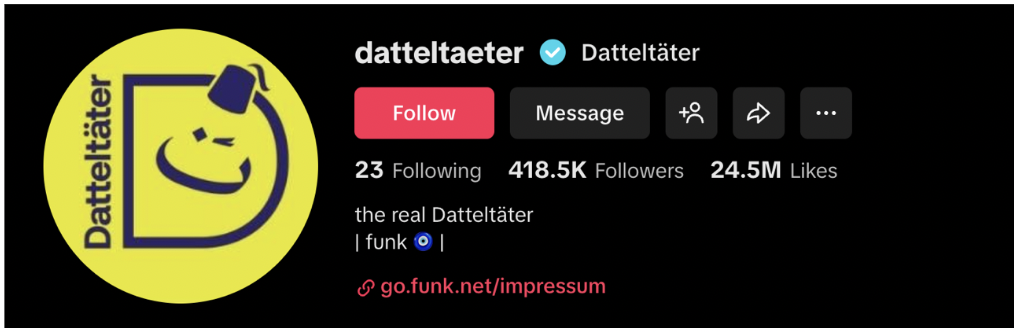
Figure 7: Datteltäter’s profile.
‘Datteltäter’ initially started as a YouTube channel in 2015 and later added Instagram and TikTok accounts. The TikTok account ‘Datteltäter’, which has more than 400,000 followers and 24.5 million likes, addresses Islamism, prejudices and grievances of Muslim youths like racism or discrimination in a fun and satirical way. Additionally, ‘Datteltäter’ showcases representations of everyday Muslim life in Germany that challenge the negative portrayals of democratic societies advanced by Islamist actors. The account presents an alternative to extremist content posted on TikTok and has the potential to “disrupt[ing] extremist narratives” (p. 236) by leading viewers to videos that address Islamic content in a positive and constructive format.
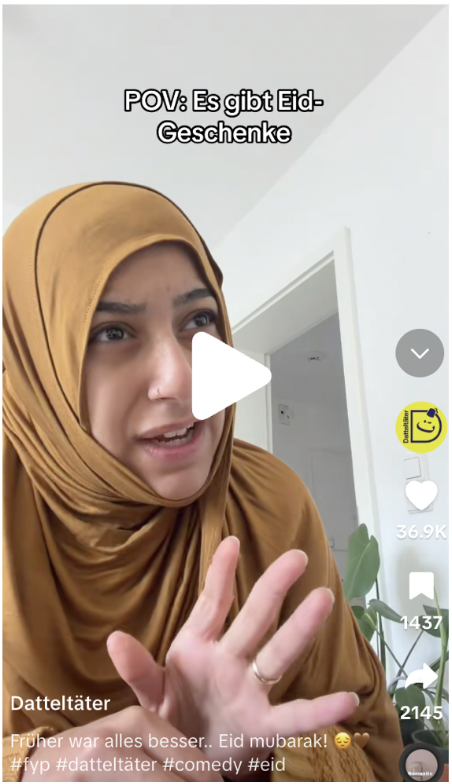
Figure 8: During Ramadan, ‘Datteltäter’ posted several Ramadan-related videos, such as this example discussing Eid presents. Islamist accounts tend to increase their posts during Ramadan, hence this is likely an attempt to counter-balance the content with non-extremist videos.
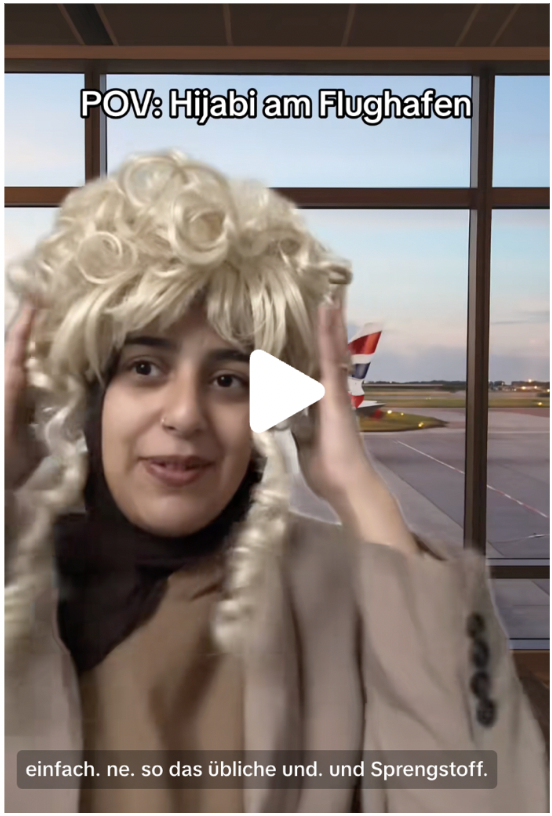
Figure 9: This video portrays being in an airport as a hijabi and the prejudices one faces, such as others assuming one does not speak German, is being deported or is smuggling explosives.
As the majority of the collective’s creators are Muslim themselves, they may be perceived as more credible by Muslim audiences, who are more likely to feel understood and identify with the content. The humorous framing of their videos further enhances the creators’ relatability (p. 11), an aspect that has also been identified in studies on counternarratives as contributing to the effectiveness of PCVE content. Research revealed intersections between followers of Islamist accounts and those who follow ‘Datteltäter’, demonstrating that ‘Datteltäter’ has the capacity to redirect viewers at risk of radicalisation to their platform’s content. Islamist accounts have repeatedly vilified ‘Datteltäter’ in TikTok videos (p. 11), suggesting that its critique of Islamism resonates sufficiently to provoke responses from Islamist creators. In addition to posting videos online, ‘Datteltäter’ also travelled Germany, Austria and Switzerland to present their content to audiences offline.
Conclusion and Recommendations
The three examples highlighted in this Insight share several aspects that seem promising for preventing and countering Islamist content on TikTok. All three take a broad approach to preventing radicalisation by focusing on both non-violent and violent extremist ideas present online. They aim to create authentic content that emulates that which young people typically watch and engage with on TikTok. Moreover, while the examples discussed in this Insight engage with the grievances and everyday experiences of Muslims, they do so to challenge stereotypes and promote values of equality and democracy, thereby offering relatable, non-extremist alternatives to Islamist content on TikTok. As the videos do not appear educational and do not explicitly mention a PCVE agenda, the accounts aim to maintain their credibility and increase the likelihood that youths will trust them and be persuaded by their content. As it is unlikely that a single counternarrative or alternative narrative will resonate with everyone, it is crucial to simultaneously deploy several PCVE approaches on social media to reach a wide range of people. An increased amount of content to counter Islamism on TikTok also increases the likelihood that youths will find these videos instead of merely encountering extremist content. Additionally, it is necessary to address the root causes (p. 4) of Islamist extremism and to improve media literacy (p. 242) to enable viewers to critically evaluate the content they watch online.
–
Lea Brost is a PhD Candidate at Royal Holloway University, looking at Islamist narratives on TikTok. She is also a Non-Resident Fellow at the Institute for Peace Research and Security Policy at the University of Hamburg (IFSH), and a member of VOX-Pol. Previously, she worked as a researcher at the IFSH and did an internship at the United Nations Office of Counter-Terrorism in New York. She studied International History and Politics at the University of Leeds and the Università degli Studi di Siena, and did the MA Intelligence and International Security at King’s College London.
Bluesky: @leabrost.bsky.social
—
Are you a tech company interested in strengthening your capacity to counter terrorist and violent extremist activity online? Apply for GIFCT membership to join over 30 other tech platforms working together to prevent terrorists and violent extremists from exploiting online platforms by leveraging technology, expertise, and cross-sector partnerships.
The views and opinions expressed in this Insight are the authors’ own and do not necessarily reflect those of GNET or any of its partners.