

Anti-technology and anti-artificial intelligence (AI) sentiments have proliferated, driven by legitimate grievances about the effects of tech on society. However, because technology grievances have led to violence in the past, and studies have found “evidence of a robust association between technological fear and support for political violence among U.S. adults,” it is vital to understand how this narrative is evolving. Part of this is the threat posed by extremists with anti-technology ideologies who utilise social media to spread anti-technology content, creating a salient radicalisation pathway that can lead to violence.
Ideologies with anti-technology sentiments generally view technology as “a ‘mega-machine’ in which all parts depend on one another, and humans are reduced to mere cogs.” AI, as a ubiquitous and powerful technology, is a newfound focus of anti-technology sentiments in the mainstream and within violent extremist spaces. However, anti-technology-motivated violence can exist on a sliding scale, from anarcho-primitivists who want to destroy the entire industrial system to targeted violence justified by actors due to their concerns with AI. Anti-technology sentiments that may lead to violence appear not only within single-issue movements opposing technology, but also within existing ideologies.
Thus, there are two dimensions of the violent anti-technology extremism phenomenon: one where the end goal of the ideology is completely technologically focused, such as destroying the entire industrial system or destroying a type of technology like AI, and the other, where anti-technology narratives are a flexible undercurrent in existing extremist milieus, but the end goal does not entirely focus on technology.
Despite anti-technology sentiments, both narratives use social media. As public opinion on AI sours, this Insight argues through exemplar cases that anti-technology social media content may create an opening for a salient radicalisation pathway toward either anti-tech-motivated violence or the co-opting of grievances from other violent extremist groups.
The Modern History of Anti-Technology Currents in Extremism
The ideological forefather of modern anti-technology extremism is Theodore Kaczynski, the Unabomber. Kaczynski’s core argument is fundamentally anti-technology: he argued that the industrial-technological system is beyond human control and that humans are maladapted to this type of society. His criticisms of industrial society foreshadowed anti-technology currents that now play a flexible role in other extremist milieus. Mauro Lubrano identified anti-technology currents in insurrectionary anarchist, eco-extremist, and eco-fascist movements. Although each milieu offers different reasons to destroy technology, they share a view of technology as a mega-machine that embodies and props up all aspects of society; thus, “the only solution is its total dismantlement.” While anti-technology currents in extremist movements may disagree on their end goal, they agree on the need to destroy technology that is inextricable from the current system they oppose.
Contemporary technological innovation has exacerbated anti-technology sentiments. Yannick Veilleux-Lepage expands on Lubrano’s framework to show how AI-related grievances may pose risks of political violence. While it is vital to emphasise that some form of concern about AI is held by vast swaths of the global population, recognising that concerns about AI may lead a small few to violence is important too. In the past year, several examples of violent anti-technology-motivated violence have focused on AI, including shots fired at a city councilman in Indiana over his approval of a data centre and a Molotov cocktail thrown at the OpenAI CEO’s house. This militant approach to eliminating AI is an evolution of the critiques of technology Kaczynski used to justify his attacks.
Kaczynski’s Anti-Tech Revolution
Kaczynski has become a mainstay in niche political cultures, finding a “post-partisan popularity” and becoming a “meme”. While a vast majority of people who have empathised with Kaczynski’s concerns about technology stop short of violence, those within anti-technology extremist milieus are inspired by Kaczynski in some capacity.
Following Kaczynski’s imprisonment for his nearly two-decade-long bombing campaign that killed three, he continued to write about the destructiveness of technology. In his book, Anti-Tech Revolution: Why and How, Kaczynski lays the groundwork for an anti-technology movement whose ultimate goal is to collapse industrial society. While the book echoes his more well-known treatise, Industrial Society and Its Future, it also guides the emergence of a revolutionary movement. In the final chapter, titled Strategic Guidelines for an Anti-Tech Movement, he outlines preparations the anti-technology movement should make to seize the right opportunity, with the “single ultimate goal of…the total collapse of the worldwide technological system” (p. 152).
The book’s key theme is patience and preparation. In his prediction, technology leads to societal issues like mass unemployment causing rioting, which revolutionaries must utilise by putting people’s anger to work “for purposeful action” (p. 158). Kaczynski proposes a long-term strategy that involves gaining practical leadership experience. To do so, he advocates for “the publication of a newspaper or journal devoted to anti-tech work,” which today “will likely be published not only in print but also on the Internet; or perhaps even on the Internet alone” (p. 170). Using social media for anti-technology propaganda thus does not diverge from the ideology, but adapts it to contemporary media landscapes.
Case Study: Italian Unabomber-Inspired Plotter and Instagrammer
In April 2026, a man in Italy was arrested for “training in terrorist activities” and “aggravated criminal advocacy for terrorist purposes.” Italian authorities found incriminating items such as masks and blades, but the investigation also focused on his Instagram page. The now-deleted account had over 200,000 followers. The suspect had posted detailed guidance on how to build firearms at home, including via a 3D printer, as well as content about producing C4 explosives.
The Instagram account demonstrated ideological adherence to Kaczynski’s worldview, including self-identifying as an “anprim [anarcho-primitivist]” in his bio. The Instagram account moved beyond propaganda to identifying potential targets, calling for revolution, and providing operational guidance. After authorities arrested the individual, others resurrected the (legal) content and kept disseminating it.
While this is only one social media account, it shows that violent anti-technology extremists are using technology and social media. Anti-technology content on social media allows the spread of propaganda which exploits grievances about technology into a potential radicalisation pathway to violence.
Anti-Tech Use of Social Media
Anti-technology extremists utilise social media to promote Kaczynski and his ideology, as well as reinforce the aggravation of modern life. Kaczynski’s writings are easily accessible for purchase or often available for free online; therefore, some social media posts can direct individuals to primary-source materials.
Memes often create a veneer of plausible deniability; if an extremist talking point is framed as “ironic” or a “joke,” people can often share it without consequences, such as removal from the platform. Anti-technology extremists have adopted this tactic. For example, coverage of the original plotter’s Instagram account notes that content included phrases such as “don’t-DIY”, although investigators believe these missives “did not reduce the scope of the instructions.” The directive is satirical and does not reduce the usability of the content.

Figure 1: TikTok post from an account imitating the Italian plotter’s content (captured July 29, 2026).
A TikTok account that mimics the plotter’s Instagram account (Fig. 1) uses a similar satirical style. For example, a post indicating that the user will conduct a “performance,” visually represented by two individuals with firearms and wearing balaclavas, if “corporations don’t chill”, has the caption “Not real officer.” These ironic statements allow the account to deny that its posts inspire violent action.
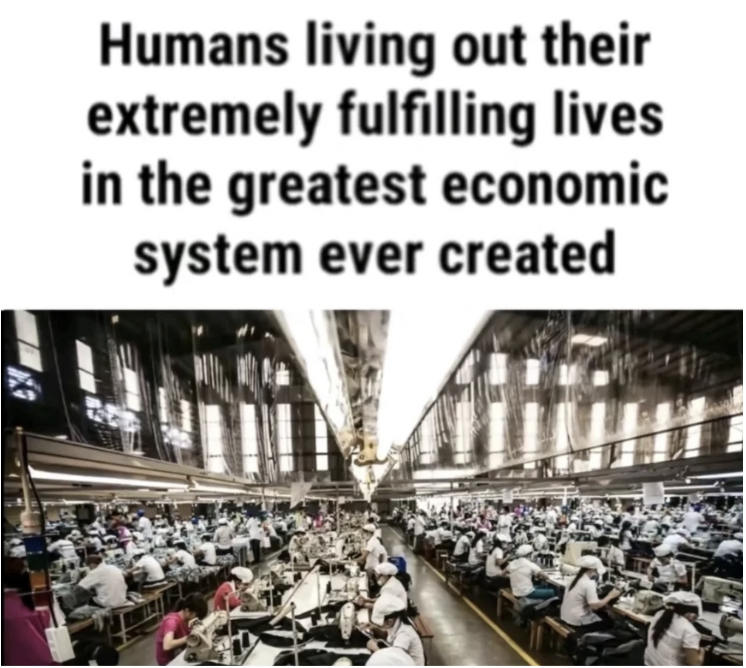
Figure 2: Instagram post from an account imitating the Italian plotter’s content (captured September 27, 2026)
Other memetic content on the accounts depicts the banality of everyday life, which is propped up by industrial society. This content cultivates a sense of nihilism, arguing that the post-industrial lifestyle curtails the human experience; thus, it is similar to being “black-pilled,” in which the individual progresses through a radicalisation process by accepting that “the system is too far gone to change.” The sense of nihilism rejects democratic and non-violent forms of redress for grievances, thereby pushing a more extremist mindset.
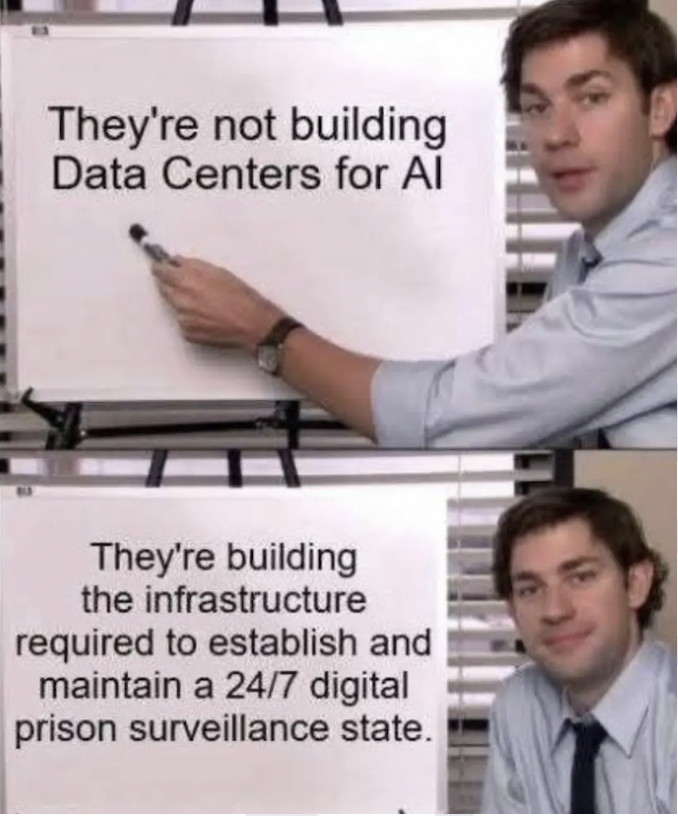
Figure 3: Instagram post from an account imitating the Italian plotter’s content (captured September 27, 2026).
The accounts also exploit more mainstream concerns about technology, such as data centres and Flock cameras. This type of content offers an accessible entry point for anti-technology extremism by using conventional concerns to funnel accounts toward more radical content.
Analysis of Anti-Technology Sentiments Online in Relation to Violence
It is important to acknowledge that both anti-technology extremists and those with anti-technology undercurrents within their extremist ideology, both operate online and exploit grievances about technology to offer a salient radicalisation pathway. The man charged with throwing the Molotov cocktail at Altman’s house, Daniel Moreno-Gama, had a notable online footprint. Before he attacked Altman, The Last Invention podcast hosts interviewed him while researching an episode about AI. They found Moreno-Gama on a Discord server called “Stop AI” and reached out to him after he posted about violence. He stated he was thinking of “Luigi’ing some tech CEOs”, a reference to the United Healthcare CEO killer, Luigi Mangione. His username was “Butlerian Jihad”, a reference to the plot in Dune where people are ruled by machines and eventually revolt.
Extremists inherently exist in a society they oppose; otherwise, they would find no need to use violence. Violent anti-technology-motivated attacks must contend with the same. Notably, after Moreno-Gama carried out his attack, parts of the public responded positively. Ordinary people’s legitimate concerns about technology create an entry point for grievances that, in a minority of cases, may escalate into violence.
Anti-technology sentiments now present a more salient part of radicalisation pathways to violence, even if not strictly anti-technology-related violence. Several recent examples show this connection between anti-technology sentiments and violence. Mangione may have been inspired by Kaczynski’s direct action. Similarly, the complaint against Tycen Proper, who, along with co-conspirators, plotted to attack the Freedom 250 event in June with the goal of sowing chaos at the event and killing high-value targets, mentions that he had been interacting with an online group, which, among other grievances, had concerns about “data centers taking up all the water in communities.” (p. 3). The plot not only intended to use drones, demonstrating an acceptance of some technology for operational success, but more recent arrests have uncovered details of a coordinated plot in California to target data centres, internet exchange points, and other technological infrastructure. Additionally, the 2026 San Diego Islamic Center shooters self-identified as ecofascist and included references to the relationship between Vice President J.D. Vance and Peter Thiel, as well as ‘AI slop’, in their manifesto. Although these plots and attacks did not target technology itself or symbols of technology, concerns about modern society and technology played a role in radicalisation processes.
Content supporting anti-technology narratives online offers an entry point to political violence. Indeed, researchers found a connection: tradwife content pushes people toward far-right ecosystems online. While not all far-right groups have anti-technology undercurrents, the rejection of modernity and retrotopic romanticisation of tradwives lends itself to ecofascist ideology. Similarly, researchers have found “three narrative talking points on far-right social media in 2026”—eminent domain and zoning laws, totalitarian, transhuman future, and antisemitism—“that could easily act as on-ramps to networked incitement, even without explicit calls to violence.”
When far-right provocateur Mike Mahoney, more popularly known as Mike Ma, attempted to create an ecofascist group in 2017, he established the Pine Tree Party through an Instagram post. Mahoney also self-published the novellas Harassment Architecture and Gothic Violence, which are popular among ecofascists for their themes of accelerationism and rejection of modernity. Anti-technology and ecofascist themes are also presented in decentralised networks, such as Terrorgram Propaganda. In the widely disseminated Terrorgram handbook Militant Accelerationism, some pages include text like “Aim for having your own homestead, or aim for a tech CEO’s head” (p. 73) and “Kill Jeff Bezos…This is the most significant thing you can do” (p. 70). From mainstream spaces to the darker corners of social media, anti-technology narratives appear.
While using social media is a prominent part of many extremist ideologies, what differs for anti-technology extremists is the ultimate goal. By extension of Kaczynski’s own logic, utilising social media allows anti-technology ideas to spread so that revolutionaries can exploit the right moment to bring about technological collapse.
Policy Implications
Countering anti-technology extremism requires a balanced approach. While criticism of industrial society, technology, and AI is understandable and legal, mobilising violence over these grievances is not. An invaluable step in mitigating anti-technology-related violence is addressing legitimate grievances, as doing so may prevent escalation against technology. Non-violent tech backlash is a matter of free speech and a healthy part of democracies, especially as technology and its effects play a larger role in society. In practice, policymakers can focus efforts on areas of bipartisan agreement. In the United States, several states have already enacted data centre moratoriums amid public backlash. The European Union has taken some of the most ambitious action globally to regulate AI systems. Notably, taking an aggressive, policing approach to anti-AI activism may further exacerbate extremist sentiments.
On content moderation, a balanced approach is also necessary. As always, protect free expression; however, when it creates opportunities or calls for violence, remove it. Content moderation of violent extremism is often a challenge, but awareness of anti-technology narratives as an entry point to direct action can support efforts. Because anti-technology extremism has not received much scholarly or practitioner attention, continued research will improve understanding of how anti-technology narratives on social media feed into radicalisation processes.
Ultimately, people have legitimate concerns about how technology will transform everyday life and society as a whole. These grievances—exacerbated by online content and only for a small few—may become a significant part of radicalisation processes, either to single-issue, anti-AI movements or other violent extremist groups.
—
Jordyn Abrams is a researcher at the Program on Extremism at The George Washington University. Her work centres on issues at the intersection of technology and extremism, with a focus on fringe groups. Jordyn is currently completing her Master’s degree in Security Studies at Georgetown University.
—
Are you a tech company interested in strengthening your capacity to counter terrorist and violent extremist activity online? Apply for GIFCT membership to join over 30 other tech platforms working together to prevent terrorists and violent extremists from exploiting online platforms by leveraging technology, expertise, and cross-sector partnerships.
The views and opinions expressed in this Insight are the authors’ own and do not necessarily reflect those of GNET or any of its partners.