


Since the advent of the Internet, extremists have exploited digital spaces to produce and spread their propaganda, creating functional online hubs for recruiting and radicalising new individuals. The Islamic State (IS) online ecosystem, in particular, has exploited a wide range of online communication platforms to conduct da‘wa (proselytism) by creating and sharing highly diversified propaganda material, ranging from institutional and non-institutional media production to more customised and edited ‘no-brand’ propaganda. Highly edited and deeply characterised by the most viral trends, the ‘non-branded’ content is particularly effective at catching the attention of the youngest users, finding its most efficient and effective ‘landing’ on TikTok. Such content that does not feature any logos from IS or pro-IS media organisations, but which instead depicts well-known figures or elements related to the Salafi-Jihadi movement, is common on these platforms.
This Insight analyses pro-IS non-branded material produced with CapCut by examining some common features of the detected audiovisual products and how they are shared within the editing platform. In particular, it will examine how CapCut has been used to create and customise IS-related audiovisual content shared on different social network platforms (such as TikTok) and/or directly within CapCut itself (Figure 1).
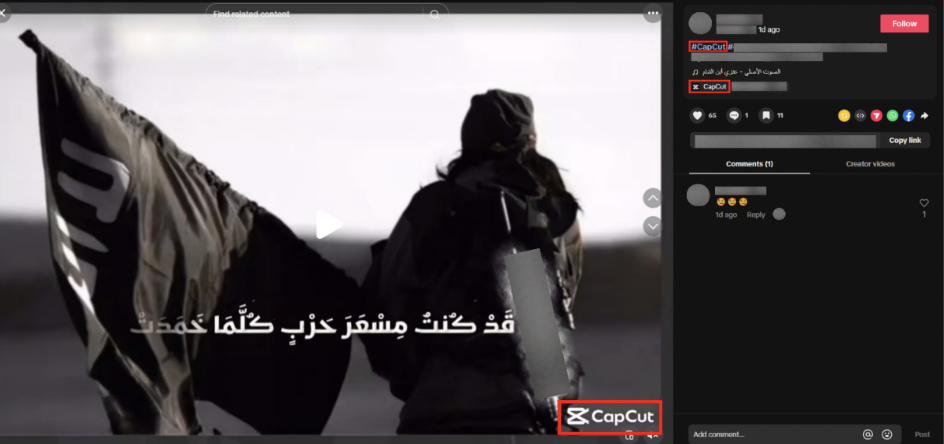
Figure 1: A post by a pro-IS user on TikTok showing CapCut’s logo and hashtag.
What is CapCut?
CapCut is a video-editing application developed by ByteDance, the same company that owns TikTok. The app launched in China in 2019, grew exponentially in 2023 after the web version launched, and reached 200 million active users, surpassing TikTok at one point in 2024. In 2026, with over 700 million monthly active users worldwide, CapCut has become one of the most influential tools for content creation and is widely used and appreciated by younger audiences for its ease of creating videos and short-form content for social media platforms such as TikTok and Instagram. TikTok and CapCut have therefore built a strategically close integrated relationship in a content ecosystem, wherein the latter functions as the creation environment while the former functions as the distribution space – to this end, CapCut offers “a suite of powerful editing features […] including advanced filters, real-time effects, and seamless transitions that are specifically designed for TikTok trends [allowing users to] benefit from CapCut’s trending hashtag integration and sharing options to maximise your reach and boost engagement”. Specifically, CapCut’s main features include traditional video editing, templates for social media formats, Artificial Intelligence (AI) tools including AutoCut, a music library and effects, multi-format export, and social profile synchronisation.
Although CapCut was specifically designed as an ‘all-in-one platform’ for video editing, it nevertheless incorporates certain ‘social’ features that create the semblance of a community. Content is generally accompanied by hashtags and can be saved, shared and/or commented on by other users. Indeed, CapCut’s main interface is characterised by the presence of a ‘For You Page’ – as in the case of TikTok – where users can view content, models and templates shared by other users which, according to the platform’s own algorithm, reflect the preferences of the user concerned.
Given its features and functionality, CapCut has become a tool for producing and disseminating propaganda material, as it facilitates the creation of content (videos or images), thereby removing potential barriers for IS supporters and sympathisers unfamiliar with editing software and applications. Combined with AI integration, these features streamline and accelerate production, making CapCut a platform of choice for creating non-branded pro-IS propaganda. Although CapCut is not one of the main social media platforms within IS’s online ecosystem, it nevertheless deserves attention because it facilitates the creation of propaganda material that is then shared on other social networks, particularly TikTok.
Pro-IS material on CapCut
On CapCut, much pro-IS propaganda falls into a category defined as ‘no brand’. This propaganda refers to ‘spontaneous’ production from IS supporters and sympathisers that cannot be attributed to institutional media houses or Ansar Production. Instead, it is characterised by individual users through images and symbols explicitly related to IS, such as its flag, images of mujahidin, and/or images depicting former IS leaders and ideologues. The content typology of pro-IS propaganda carries a particular connotation on TikTok because of the platform’s advanced editing features. As observed by the authors, this content is the most edited within the IS online ecosystem on TikTok because, contrary to institutional and Ansar Production propaganda content, it allows IS supporters greater scope for modification than, for instance, An-Naba’s war bulletins, IS’s official videos, or posters produced by Ansar Production. In fact, on TikTok, one can observe a whole section of highly edited, non-branded propaganda that includes imagery and/or filters (for instance, meme-influenced visual aspects and colourful, glowing elements) not directly related to IS outputs, yet still supporting the group through implication and reference. Separately, these elements and filters are clearly linked to efforts to appeal to younger users through specific references, imagery, and language. Consequently, pro-IS non-branded propaganda is often created by combining editing features with the most popular mainstream trends on TikTok to produce pro-IS images. This leads to the creation and further dissemination of a deeply appealing yet controversial type of content, often crossing the ‘halal-haram’ line of the ‘canonical’ IS propaganda content.
The more explicitly IS-signposted portion of content often depicts figures of IS’s mujahidin. At one level, ‘generic’ images of mujahidin appear in content, often with covered faces and alongside explicit IS symbolism, such as its flag rendered in various forms, shapes, and sizes. On the other hand, content may also depict well-known, media-famous mujahidin attributable to IS, such as Jihadi John, the so-called French Barber, and the foreign fighter Abu Bakr al-Suwaidi. These are all figures that frequently recur in ‘no brand’ propaganda productions and thus within the CapCut-generated pro-IS content (Figure 3). Despite the predominance of videos depicting mujahidin, videos concerning well-known perpetrators linked to IS were identified as well, as in the case of videos dedicated to Omar Mateen.
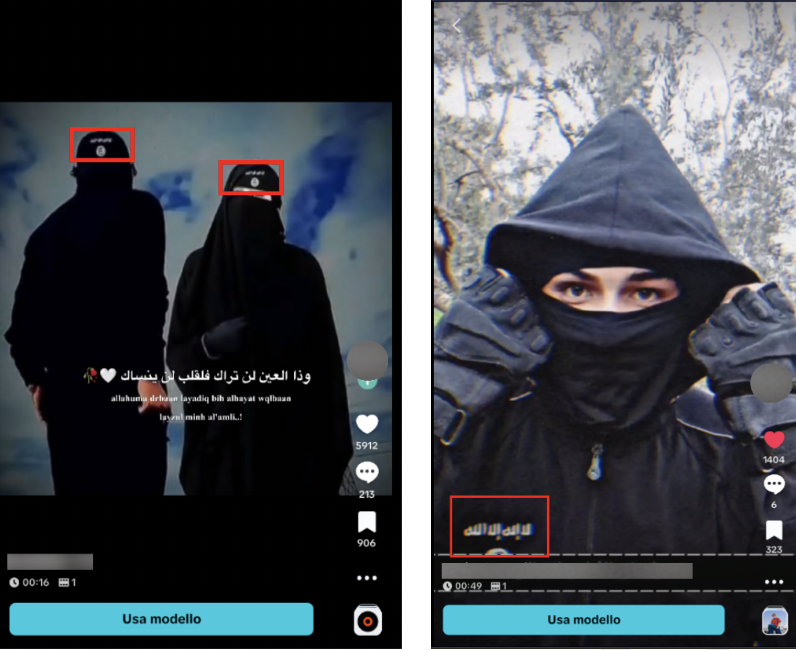
Figure 2: examples of content found on CapCut with direct references to IS
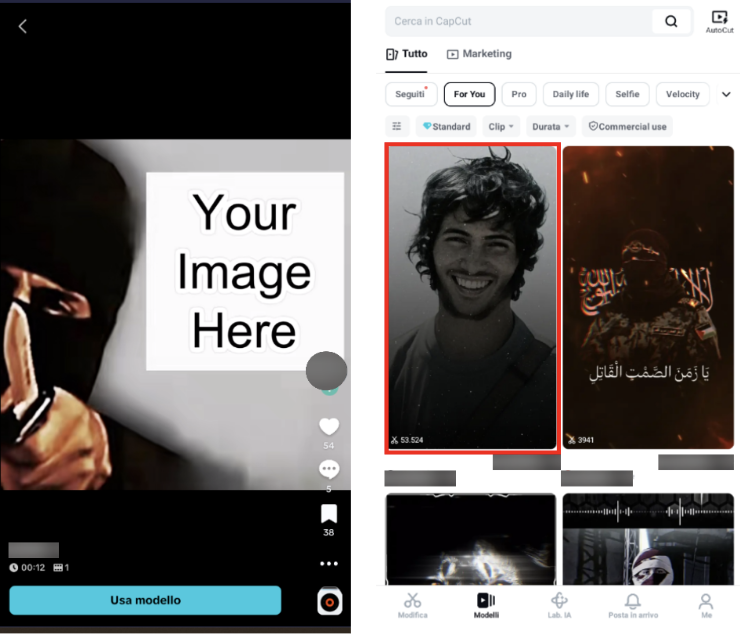
Figure 3: CapCut content displaying Jihadi John and Abu Bakr al-Suwaidi
Furthermore, a considerable number of edited videos depict former IS leaders such as Abu Bakr al-Baghdadi, Abu Musab al-Zarqawi and Abu Mohammad al-Adnani (Figure 4), along with other important ideologues. Some videos centre entirely on the aforementioned figures, while in others, images of these individuals accompany other visual content or video frames that serve as a background. These are mainstream figures within the Salafi-jihadi online ecosystem and, in this specific case, within the pro-IS online ecosystem. This reflects the primary need to create content that is easily recognisable and appealing to other IS supporters and/or sympathisers, encouraging its circulation and consumption among a broader user base.
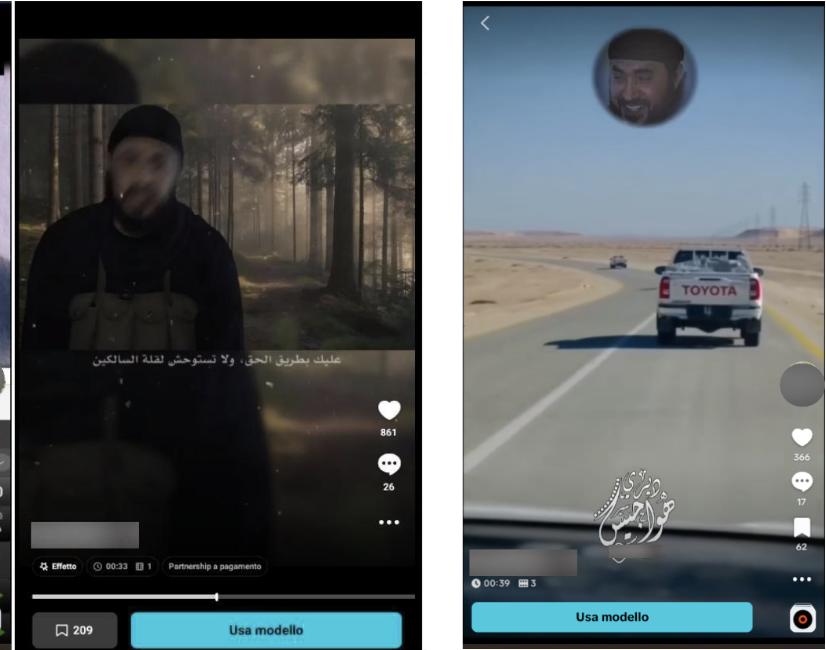
Figure 4: from left to right, Abu Bakr al-Baghdadi, Abu Musab al-Zarqawi, and Abu Mohammad al-Adnani
In addition, pro-IS CapCut videos have been produced using frames taken from official IS institutional propaganda videos. Indeed, as can be seen in Figure 8, the case in question involved the use of a frame from the well-known IS video “A Message to America”, produced by the official media outlet al-Furqan Foundation, to which an accompanying phrase in Arabic was added in reference to the violent acts carried out by the mujahid depicted, namely Jihadi John, describing him as an “endless nightmare” (Figure 5). Thus, a spectrum of explicit and concealed ISIS support is visible, with more or less open references to the group appearing at varying strengths across different pieces of content.
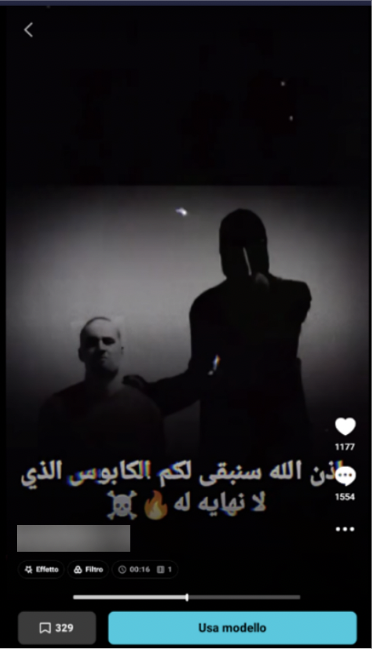
Figure 5: frame from the IS video “A message to America”
There are some commonalities, however. Most videos are shared in combination with a series of hashtags which frequently contained explicit references to the individuals depicted and/or to IS. For example, a user shared a video depicting an individual with a covered face, using an Arabic hashtag (Figure 6, left). Another user, by contrast, shared a video depicting Jihadi John with a related hashtag (Figure 6, right). Iconography and references in user profiles also indicate allegiances and allow users to identify one another, sometimes linking across platforms (such as to TikTok accounts).
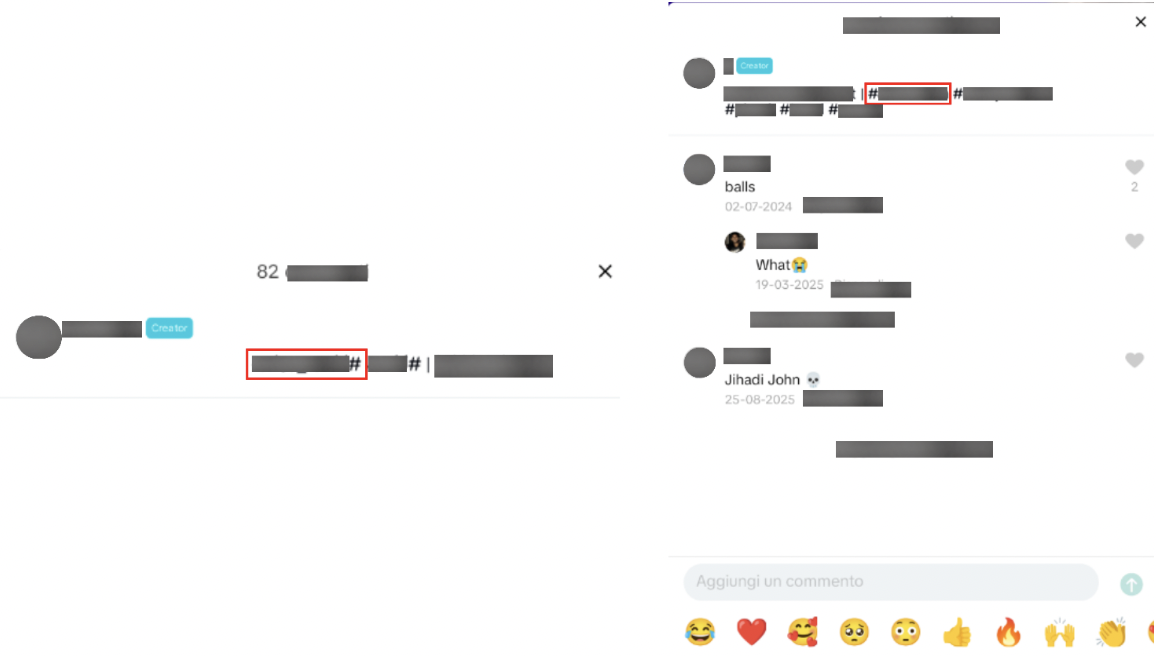
Figure 6: screenshot of hashtags used by pro-IS users on CapCut.
Conclusions
CapCut is a platform conducive to producing and disseminating ‘spontaneous’ pro-IS propaganda content. In this regard, IS’s sympathisers and supporters themselves contribute, through CapCut, to the pro-IS propaganda stream by creating this type of content, which appears – according to observation of these ecosystems – to be particularly appealing to younger audiences and to users who are especially active on major social media platforms such as TikTok. Indeed, given the existing synergy and interconnection between CapCut and the aforementioned platforms, content produced on CapCut is more widely shared – and, consequently, more readily appreciated – on TikTok.
While CapCut does not constitute a fully-fledged social media platform, having been developed primarily to meet the needs of users creating and editing videos and multimedia content of various kinds, it should nevertheless be regarded as a dual-use tool in relation to the propaganda flow associated with IS. It functions as a creative hub, where supporters and sympathisers can create and edit videos with a pro-IS propaganda background. To a lesser extent, CapCut enables its user base to share their own productions, thereby allowing users to find material directly on CapCut itself that can subsequently be shared on their own social media platforms. For this reason, it is necessary to monitor the flow of pro-IS material produced through CapCut, both within the platform itself and as shared externally via TikTok, which is directly connected. This content can then draw new IS supporters towards other types of content available on TikTok, ranging from official propaganda material; to content from Ansar Production; and non-official material. As noted, TikTok acts as an entry point into IS’s online ecosystem, as the presence of ‘publicly’ and ‘openly’ accessible content (given the nature of the social network and the possibility of finding material without specific links) is accompanied by the sharing of links leading to decentralised and encrypted messaging platforms within which the core of IS operates.
Given the platform’s creative features, CapCut operates within this ‘creation-dissemination’ chain alongside other social networks such as TikTok and Instagram. On the one hand, CapCut serves as a functional ‘laboratory’ for creating new non-branded material. On the other hand, it also serves as an ‘open content repository’ for those who, instead of creating material from scratch, prefer to edit and customise existing audiovisual content. Non-branded content, especially content created using CapCut, is not always characterised by strong and evident symbols and/or elements directly related to IS. Therefore, this content is often ‘lost’ among the vast array of ‘theological’ or Salafi-styled content, making it difficult to detect and later delete problematic content from social platforms.
In conclusion, as stressed in previous articles, it appears to be fundamental for counter-policymakers to develop a deep and specialised knowledge about Salafi-Jihadi movements, their ideology, symbols and propaganda aesthetics, in order to effectively detect problematic materials even when not explicitly related to IS, both referring to human and automated types of detection. A number of the accounts traced for this research have since been removed from the platform; nevertheless, markers, narratives, and visuals continue to circulate using the same strategies examined in this Insight, indicating a need for a broader moderation strategy informed by research outcomes. Furthermore, particularly regarding ‘automated content detection’, detection tools should be trained on Arabic textual and visual content to improve the effectiveness of countermeasures and detect and remove most pro-IS-related content online.
—
Alessandro Bolpagni is a Senior Analyst at the Italian Team for Security, Terroristic Issues, and Managing Emergencies – ITSTIME – lecturer at the Università Cattolica del Sacro Cuore (UCSC), and Senior security analyst of the Emergency Team (E-Team) of ITSTIME. He holds an MA in European and International Policies from UCSC and a Postgraduate Master in Middle Eastern Studies (MIMES) from the Alta Scuola di Economia e Relazioni Internazionali (ASERI). He also specialised in digital HUMINT (Human Intelligence) and OSINT/SOCMINT (Open Source and Social Media Intelligence), with a particular focus on Salafi-jihadi groups. He focused on monitoring terrorist networks and modelling recruitment tactics in the digital environment, particularly on new communication technologies implemented by terrorist organisations. He has produced operational reports and lectures for training and education purposes for companies, research centres, and law enforcement agencies.
Grazia Ludovica Giardini is a Researcher at the Italian Team for Security, Terroristic Issues, and Managing Emergencies – ITSTIME. She has a BA in Linguistic and Cultural Mediation from the Faculty of Languages, Literatures, Cultures and Mediation of the Università degli Studi di Milano and an MA in International Cooperation and Development Policies at the Università Cattolica del Sacro Cuore (UCSC) in Milan. She specialises in the application of Open Source Intelligence (OSINT), Social Media Intelligence (SOCMINT) techniques, and Digital Human Intelligence (Digital HUMINT). Her research activities are focused on monitoring Salafi-jihadi groups’ communication strategies and propaganda through various online platforms.
–
Are you a tech company interested in strengthening your capacity to counter terrorist and violent extremist activity online? Apply for GIFCT membership to join over 30 other tech platforms working together to prevent terrorists and violent extremists from exploiting online platforms by leveraging technology, expertise, and cross-sector partnerships.
The views and opinions expressed in this Insight are the authors’ own and do not necessarily reflect those of GNET or any of its partners.