

On Wednesday, 27 May, the Global Network on Extremism and Technology (GNET) hosted its Sixth Annual Conference, as part of a joint two-day event alongside the Global Internet Forum to Counter Terrorism (GIFCT)’s Global Multi-Stakeholder Forum at King’s College London. The event, entitled “Threats in Focus: Re-Examining Terrorism and Violent Extremism at the Tech Frontier,” brought together academics and representatives from government, civil society, and tech companies to discuss existing and emerging trends at the intersection of violent extremism and technology.
Over the course of the conference day, GNET had the honour to welcome Director of the Carnegie Mellon Institute for Strategy and Technology (CMIST) Professor Audrey Kurth Cronin for a compelling keynote address on the dynamics of terrorist use of technologies and their implications for the field of counterterrorism. Professor Cronin’s address was followed by three panels and a discussion, each engaging with a different set of threats and challenges related to extremism and technology.
685 people registered to attend the event across in-person and virtual registrations. Participants spanned across sectors and regions, demonstrating that the knowledge sharing produced at the GNET Conference is highly valuable to stakeholders across the globe.
GIFCT’s Executive Director, Naureen Chowdhury Fink, began the conference with opening remarks that reaffirmed the importance of cross-sector cooperation and evidence-based research to effectively tackle violent extremist exploitation of digital platforms. As the academic research arm of GIFCT, GNET was pleased to once again have the organisation’s support in putting on this event.
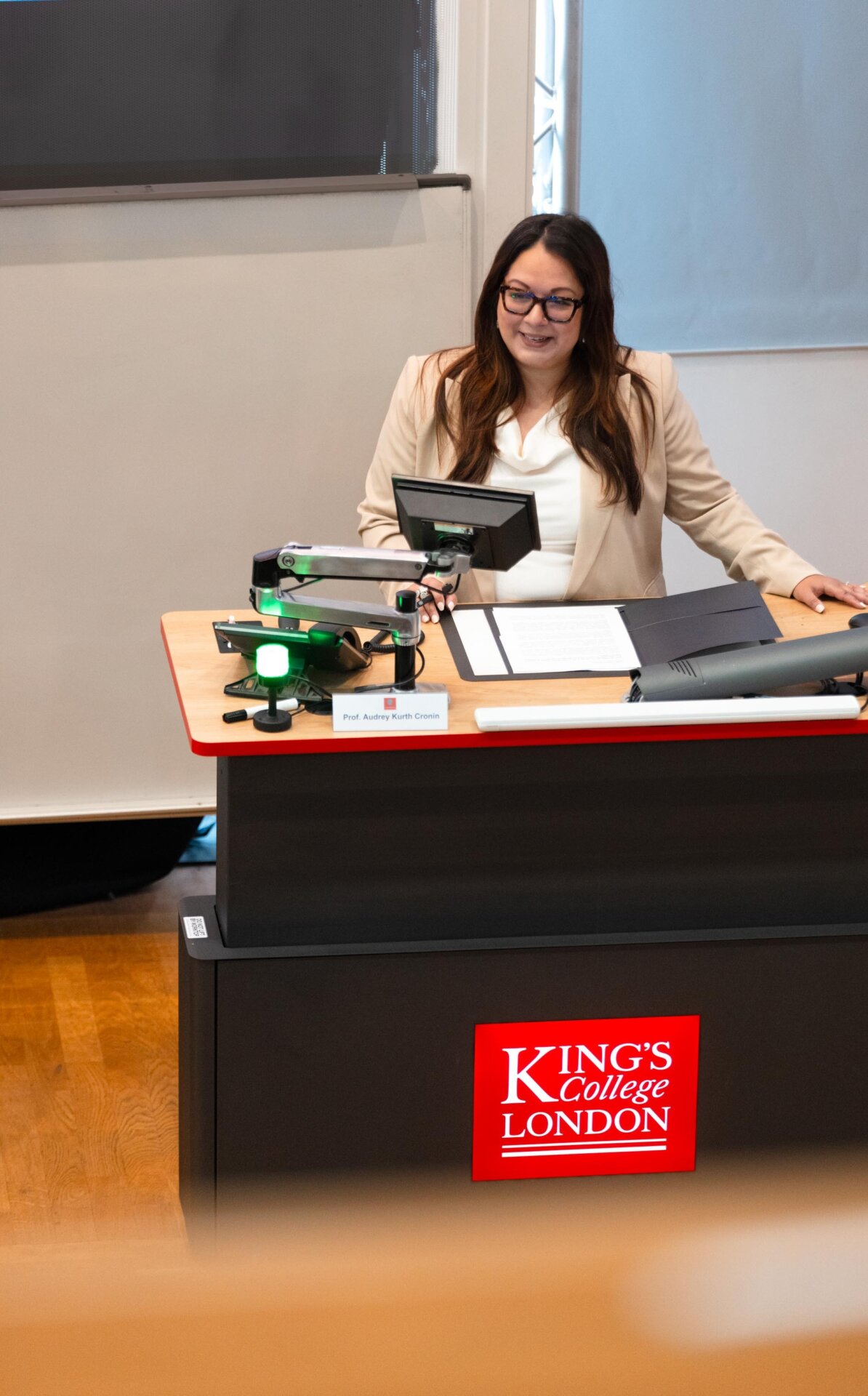
Naureen Chowdhury Fink
Keynote Address
The day got off to a strong start with Professor Audrey Kurth Cronin’s keynote address, which examined how terrorists have exploited technological innovation and what that means for the future of counterterrorism.
Professor Cronin highlighted that technology has not changed the nature of terrorism as a political act, but it has changed its character. She stressed that terrorism has become increasingly automated in recent years due to social media, artificial intelligence and other emerging technologies. This, according to her, transformed both terrorism and counterterrorism. It eroded common norms and values, blurred the rules of the game and shifted key judgements from humans to machines. As a result, terrorism has moved beyond traditional ideological categories into grievance-driven clusters such as incels, nihilists or accelerationists.
Terrorists are, however, not tech pioneers, Professor Cronin argued. They are opportunists who have consistently leveraged emerging technologies as they became available to the public. The key questions are therefore how quickly new technologies will disseminate into violent extremist movements, how tech companies will respond, and how sensibly governments will use counterterrorism technologies.
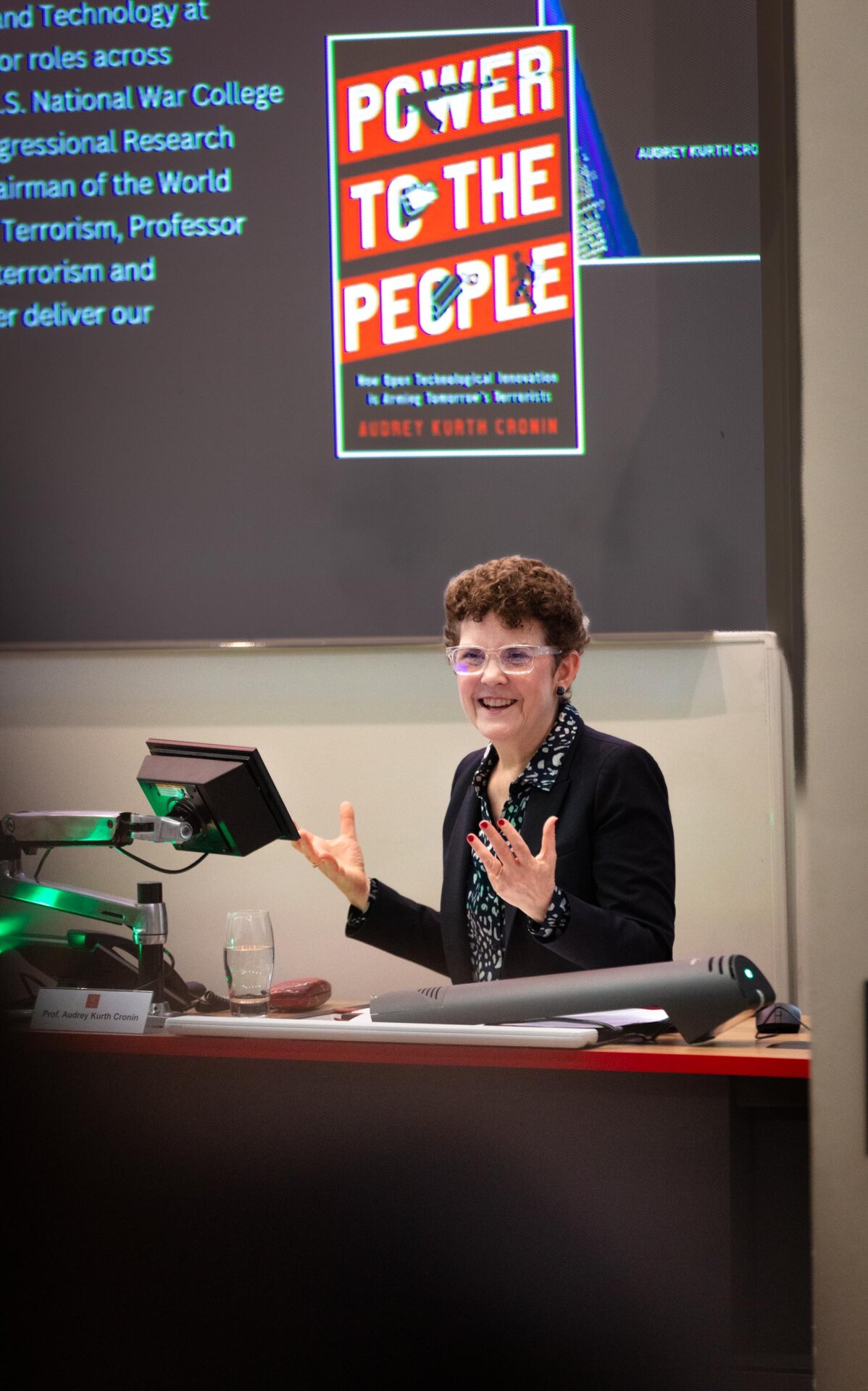
Professor Audrey Kurth Cronin
Professor Cronin identified five functional areas in which terrorists made advances thanks to existing and emerging technologies in recent years: 1) Mobilisation and recruitment via online means; 2) Information operations such as automated propaganda production; 3) Reconnaissance using satellite imagery, maps and other tools; 4) Financing via cryptocurrencies and other means; 5) Power projection from simple explosives to drone attacks.
She also highlighted what she views as the next tech evolutions for terrorist groups, such as fibre-optic-connected drones to evade jamming; facial recognition technology for easy targeting and various AI systems and their applications, from agentic AI to AI-driven robotics. More importantly, Professor Cronin identified two cutting-edge technologies that have not yet diffused into terrorist movements and require intervention now to prevent potential misuses in the future: automated large-scale cyberattacks on institutions and infrastructures; and risks related to advances in biotechnology, such as LLMs giving terrorists advice on how to build complex bioweapons.
Professor Cronin emphasised the latter, arguing that bioterrorism is tomorrow’s biggest threat. To prevent it, she offered three main directions: 1) Stronger entry barriers for anonymous customers of remote labs; 2) Increased AI safety; 3) Legislate on rigorous human oversight of remote robotic labs.
Finally, Professor Cronin looked at the future of counterterrorism and argued that we must build and use counterterrorism technology wisely to confront the terrorist threats of tomorrow. She identified two key challenges moving forward. First, the difficulty of finding the right balance between human and machine roles in intelligence analysis. How could we allow humans to leverage the capabilities of technology in ways that would not undermine their cognitive abilities over time? Second, the importance of finding the right balance of data collection on the domestic population. She argued that counterterrorism is tied to public perception and governments must strengthen their moral authority through transparency, privacy protection and fairness.
“How companies govern, how states preserve legitimacy, and how analysts exercise judgment are all inherent human choices. And we’re at a watershed moment in building wise policies, both in governments and in private companies. Terrorism is an inhumane act, but it is inherently human.” – Professor Audrey Kurth Cronin
Panel 1: Emerging Tech and Evolving Tactics, Techniques, & Procedures: Insights from GNET Case Studies
The first panel included presentations from four GNET contributors and focused on how emerging technologies are facilitating new tactics and reshaping traditional terrorist and violent extremist activities. The panel was chaired by GIFCT Senior Director of Memberships and Programs, Dr Erin Saltman.
Daria Alexe opened the panel with a presentation on terrorist use of “agentic smurfing”, the use of autonomous AI agents to fragment large cryptocurrency donations into micro-transactions, as a financing method to evade traditional detection mechanisms. AI tools are also being used to create thousands of crypto wallets at a rapid pace, which helps overcome wallet blacklisting. She warned that terrorists are embedding their finance mechanisms into the broader ecosystem of autonomous microtransactions and called for more real-time coordination across stakeholders, rigorous AI-driven detection systems, and faster disruption mechanisms.
Next, Dr Kye Allen focused on the relational dimension of human-chatbot interaction and offered a topology of various manifestations of chatbot radicalisation. He highlighted four key ways in which one-to-one human-AI interactions have intersected – or are reasonably predicted to intersect – with processes of radicalisation and warned about the risks associated with the proliferation of obliterated open-source AI models.
Through his investigative monitoring, Dr Rajan Basra offered an overview of recent developments in the 3D-printed firearm movement. He presented findings suggesting that platform interventions and successive bans have negatively impacted the movement’s online reach, reducing the user base of extremist 3D weapons social media platforms. He warned, however, that those who are still active have formed a hardcore of committed supporters who are now harder to detect and monitor online.
Finally, Muskan Sagwan examined recent developments in Islamic State’s communication strategy and how drone knowledge is disseminated through small, encrypted ecosystems. She argued that terrorists’ technical learning is not only being shared through large media houses but also through more marginal, ordinary-looking digital spaces. She therefore called for the field to focus not on the tech itself, but on how tech is being weaponised.
Both Dr Basra and Ms Sagwan noted that one of the key challenges of technologies like drones and 3D-printed weapons being used by terrorists is that both also have non-extremist and enthusiast communities which provide instruction on how to use and develop them. Thus, in both cases, terrorists and extremists do not need to rely on formal and proscribed organisations for information on using drones or 3D weapons. Relatedly, materials for both technologies are also easily accessible and can be purchased without raising suspicion.
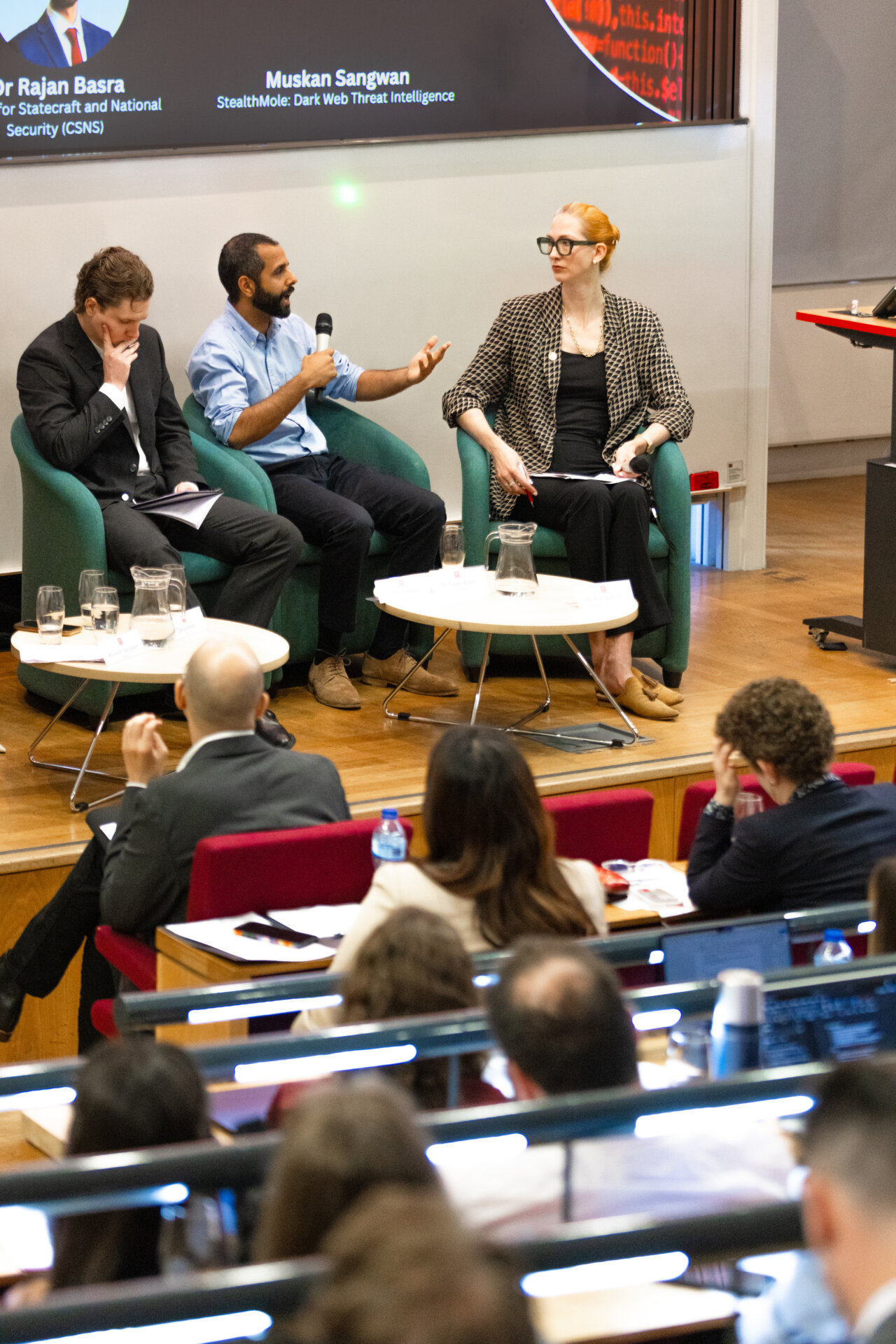
From L-R: Dr Kye Allen, Dr Rajan Basra, Dr Erin Saltman
Panel 2: Blurred Lines: Nihilistic Violent Extremism and Emerging Violent Threats
Dr Alexander Meleagrou-Hitchens, Senior Lecturer in Terrorism and Radicalisation in the Department of War Studies at King’s College London and co-Director of the Centre for Statecraft and National Security (CSNS), moderated the second panel of the day. The discussion looked at the online threat landscape of subcultures of nihilistic violence and discussed their categorisation as misanthropic and violence-fixated communities from regional and policy perspectives.
In the first presentation, Valdemar Balle opened the discussion with a difficult question: is Nihilistic Violent Extremism (NVE) a useful category? He argued that subcultures of nihilistic violence are characterised by specific aesthetics and behaviours rather than ideological or religious beliefs. Actors are driven more by a personal desire to overcome a diminished sense of self-worth and capture the attention and recognition they believe they deserve. As such, NVE as a category can be operationalised insofar as it points to specific sets of behaviours and practices professionals can rely on to identify specific communities.
Henry Adams offered a counterpoint, arguing that while the term NVE can be useful in the counterterrorism context, it does not capture the variety and complexity of interrelated harms deployed by these communities. He called instead for a more practical approach to counter hybrid threats, which includes the creation of cross-functional structures dedicated to hybrid harms across relevant bodies and increased coordination between data protection and online safety regulators.
The panel continued with Hannah Rose, who highlighted the Institute for Strategic Dialogue (ISD)’s recent work on the topic. She presented subcultures of nihilistic violence as ideology-agnostic violence driven by misanthropy that requires different approaches to prevention and protection from ideologically driven extremism. She called for a “big front-door approach” assessing various vulnerabilities and harms, and effectively directing individuals to appropriate safeguarding services.
Munira Mustaffa concluded the panel with a presentation on subcultures of nihilistic violence and their impact in Southeast Asia. She demonstrated that, despite their Western origins, the aesthetics and activities of NVE networks are appealing to young men around the world.
The speakers showed how there are multiple individual pathways into NVE online networks, including via self-harm and extremist communities, referring to it as a prime example of a new hybridised threat. They argued that current policies pursued by platforms to combat this threat, while effective, still tend to treat NVE in a siloed manner which does not reflect the fluid, ideologically agnostic, and overlapping nature of the problem. Enforcement conducted by terrorism, violent extremism and dangerous organisation teams within technology companies can therefore be too narrow for the NVE challenge, which cuts across child exploitation, cybercrime, coordinated manipulation and violence incitement. Future efforts should connect multiple existing policy areas, rather than simply focusing on this as an extremism problem.
Similarly, it was recommended that government policy also show more flexibility and not only absorb NVE into counter-terrorism frameworks, which may unnecessarily overload counter-terrorism services. Policymakers must consider how to recalibrate from ideology-focused counter-extremism towards broader violence prevention models which connect counterterrorism, child safeguarding, digital regulation and cybercrime.
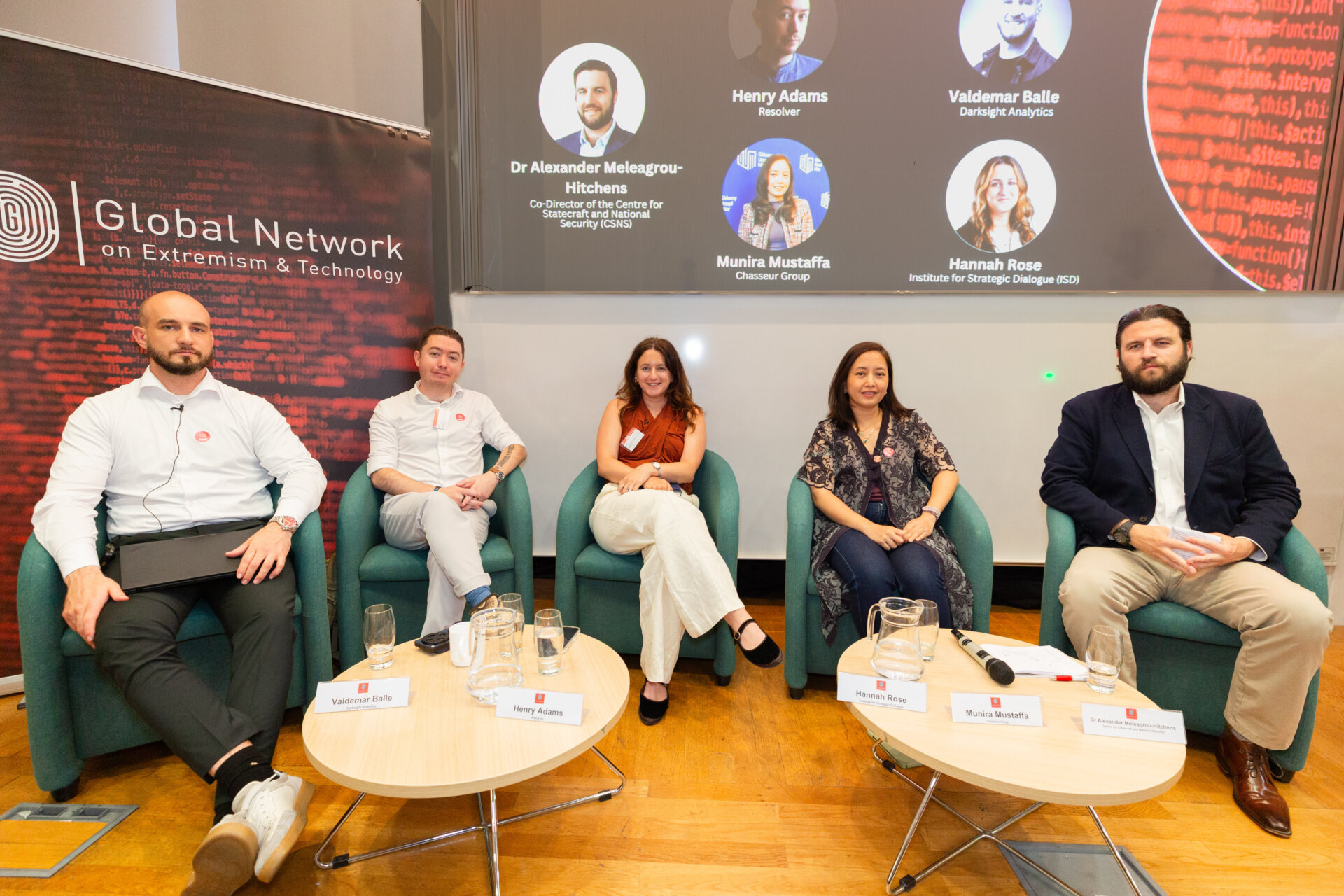
From L-R: Valdemar Balle, Henry Adams, Hannah Rose, Munira Mustaffa, Dr Alexander Meleagrou-Hitchens
Conversation: GNET and the Extremism and Research Gaming Network (EGRN) in Discussion
Following the second panel, Erin Saltman, Alexander Meleagrou-Hitchens, and the Director of Policy and Research at ISD, Jacob Davey, gathered on stage for a discussion about the integration of the Extremism and Gaming Research Network (EGRN) into GNET.
The discussants highlighted the importance of EGRN’s role in shedding light on the various ways extremists exploit gaming and gaming-adjacent ecosystems. They argued that since its creation in 2021, the network has grown into a real community of practice. EGRN members produced research; trained law enforcement, regulators and P/CVE practitioners; and offered advice on positive interventions for the gaming sector and civil society organisations.
They highlighted gaps that require more attention moving forward, notably on how to interpret harm signals in in-game-specific contexts. They also emphasised the need to build an efficient industry-research feedback loop to turn research insights into actionable pathways forward for companies. They concluded that integrating EGRN into GNET serves a dual purpose: safeguarding EGRN as a research community while providing stronger institutional support to the network for future growth and long-term sustainability.
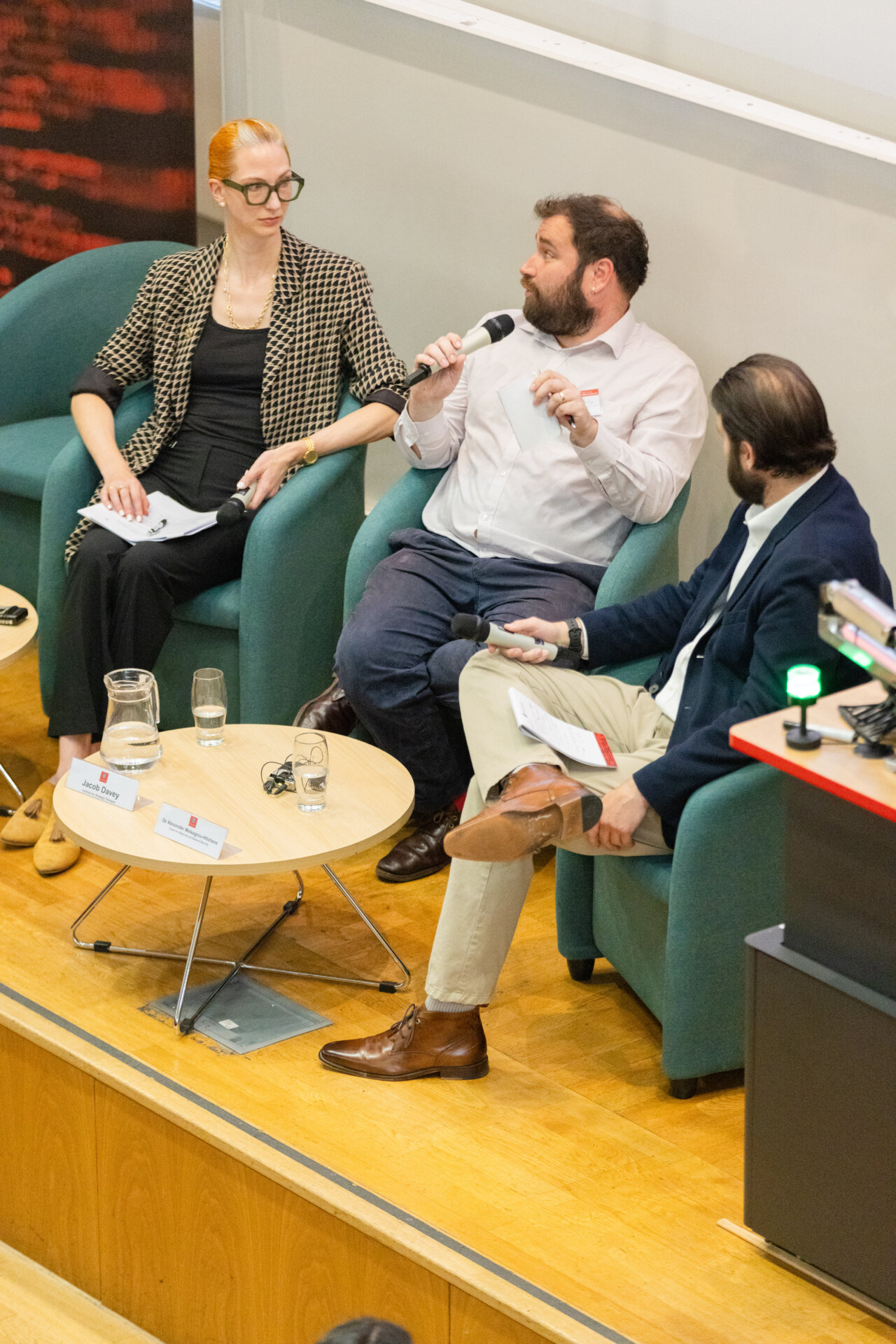
From L-R: Dr Erin Saltman, Jacob Davey, Dr Alexander Meleagrou-Hitchens
Panel 3: Transparency, Data Access and the Future of Extremism Research
GNET Research Director Julien Bellaiche chaired the last panel of the day. The discussion brought together researchers and practitioners to discuss the legal, ethical, and practical challenges related to data access, data sharing, and multi-stakeholder cooperation in countering online violent extremism.
Harrison Pates opened the panel with a presentation of the Repository of Extremist Aligned Documents (READ), an initiative led by CSNS for sharing far- and extreme-right primary source documents with professionals in the space. He demonstrated how READ helps significantly address the challenge of safely accessing and sharing extremist and terrorist materials in a responsible manner by offering qualified access to users after they prove their affiliation to recognised, professional institutions. He also shared exciting new developments for the project with the launch of a new platform powered by DSpace, a professional repository software.
Next, Skip Gilmour expanded on GIFCT’s efforts to prevent and counter violent extremist exploitation of digital platforms. He focused on two main tools GIFCT uses to help tech companies mitigate the spread of harmful content on their platforms: the Hash-Sharing Database (HSDB), a repository of hashed terrorist and violent extremist content which tracks and tags terrorist and other illegal materials, allowing GIFCT member companies to identify these at point of upload, and the Incident Response Framework (IRF), a real-time, coordinated response to terrorist events.
Arda Gerkens, the chair of the Netherlands’ Authority for the Prevention of Online Terrorist Content and Child Sexual Abuse Material (ATKM), then highlighted the importance of greater data sharing in the field of online extremism and called upon tech companies to cooperate more closely with the research community to identify and access relevant data sets. She noted the challenge of banning materials that are not produced by individuals linked to proscribed terrorist groups or not found on the UN Sanctions List, which is an increasing problem as the threat becomes increasingly post-organisational and hybridised.
Finally, Alistair Pullar presented Ofcom’s recent work on researchers’ access to data from regulated online services to support work on online safety matters. He discussed existing barriers constraining information sharing and offered policy options for enabling greater information access in a safe and responsible manner. In particular, he called for the creation of an independent intermediary body which would sit between researchers and regulated services to accredit researchers, vet their proposals, mediate with platforms, and manage controlled access to sensitive data. From a research perspective, he urged governments to provide clearer and more accessible guidance on what is legally acceptable to access and share online.
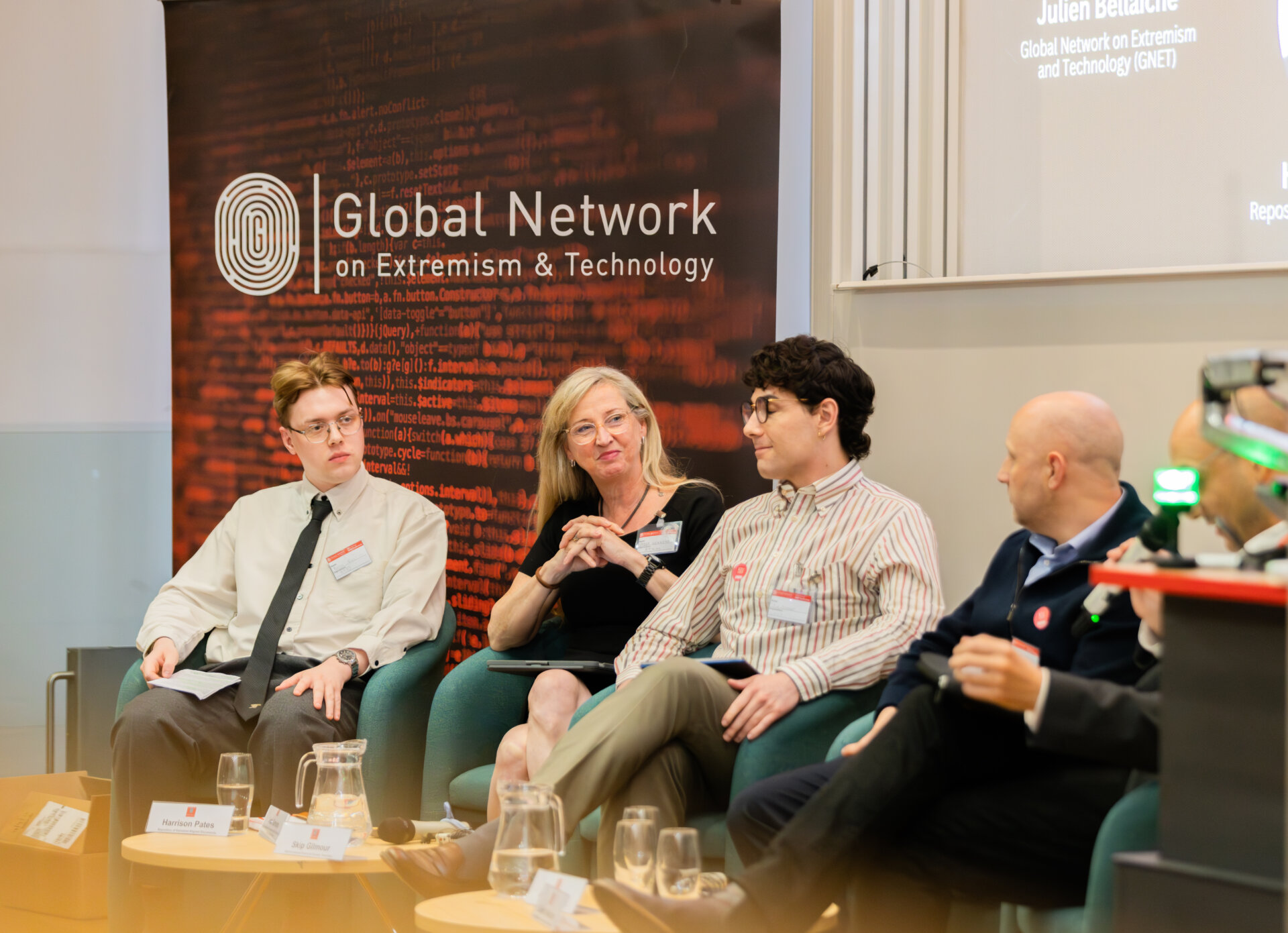
From L-R: Harrison Pates, Arda Gerkens, Skip Gilmour, Alistair Pullar and Julien Bellaiche
Identified Research Gaps
The conference highlighted that additional research is needed on the following topics:
- The changing character of terrorism. Emerging technologies, from social media to AI, favoured the fragmentation of traditional ideological categories into grievance-driven clusters, such as incels and nihilists, and new intersections across various types of harms. More research is needed on how this change operates, how it impacts the fragmentation and convergence of violent extremist ideologies, and how it contributes to the emergence of hybrid harms.
- AI-enabled terrorist financing detection. The conference highlighted gaps in countering new AI-assisted financing tactics deployed by terrorists to avoid traditional detection mechanisms. Additional research would be welcome on detection and disruption strategies of illicit financing tactics and on how AI systems could be used to combat that phenomenon.
- Youth radicalisation and gaming. More research is needed to understand harm signals in game-specific contexts.
- Data-sharing and collaboration. More discussions are needed on how to effectively and safely share data across stakeholders in the field.
Key Policy Takeaways
- Multi-stakeholder cooperation is key. The conference highlighted that terrorist threats at the tech frontier – AI, cryptocurrencies, drones, biotechnology – are evolving at a rapid pace. Combatting these threats effectively requires increased collaboration across stakeholders, smarter governance and better researcher access to data.
- The threat of hybrid harms requires more flexible and adapted policy frameworks. Terrorism moving beyond traditional ideological categories and types of harms requires cross-cutting policy teams and frameworks spanning across domains – i.e. counterterrorism, child safety, cybercrime.
- Building guardrails for automated large-scale cyberattacks and biotechnology. The conference emphasised early intervention on two key risks relating to terrorist use of emerging technologies that are not yet diffused: automated large-scale cyberattacks on institutions and infrastructures and bioterrorism before capabilities scale and spread. Proposed policy measures included tightening access to remote robotic laboratories, implementing rigorous human oversight, and improving AI safety products to avoid potential misuses.
- Industry-research feedback loop. The speakers highlighted the need to build effective ways to bring relevant research insights to the attention of industry leaders and ensure researchers’ findings can be turned into actionable measures for platforms.
- Policy options for greater information access. The conference highlighted concrete policy options for greater and safer researcher access to data, including the creation of an independent intermediary body to accredit researchers and manage controlled access to sensitive platform data.
You can watch panel recordings here:
The views and opinions expressed in this Insight are the authors’ own and do not necessarily reflect those of GNET or any of its partners.