

The growth of online fitness ecosystems with ties to right-wing extremism (RWE), alongside manosphere influencers who promote self-improvement through physical training and warrior-style identities, has evolved in tandem with a broader surge in interest in mixed martial arts (MMA). In recent years, popularised among mainstream audiences by the strategic branding of the UFC (Ultimate Fighting Championship), PFL (Professional Fighters League), and ONE Championship, MMA has become a booming global industry, with high-profile streamed tournaments and lifestyle-oriented merchandise expanding the audience and participant base. Drawing on MMA aesthetics and infrastructure, the far right has increasingly sought to ride this wave of visibility and appeal, embedding itself within combat sports subcultures.
This Insight discusses how RWE combat sports groups use Telegram to ritualise belonging, mobilise emotion and attract young men into RWE activism. A primary example is The Active Club Network, whose roots lie in the American white supremacist Rise Above Movement, which has gained ground all over Europe, North America, and Australia in recent years. It draws on my recent study of the Finnish RWE combat sports milieu, which applied ritual theory and Critical Discourse Analysis to a dataset of 245 Telegram posts published between 2020 and 2024 by three movements: Active Club Finland, Club 8, and Veren Laki. In Finland, developments linked to extremist milieus have traditionally been viewed as emerging a couple of years behind broader international trends. However, this perception has changed. Compared to similar movements internationally, the Finnish RWE combat sports scene established itself relatively early, with Veren Laki emerging as early as 2020 and expanding rapidly, followed by Active Club Finland and Club 8 in 2022 and 2023. Building on the findings of my study, this Insight outlines the appeal of combat sports to the RWE milieu, Telegram’s role in recruitment, and how online engagement translates into offline participation.
White Nationalism 3.0 and the Rebranding of the Right-Wing Extremist Milieu
In 2021, Robert Rundo and his Active Club Podcast co-host, Denis Kapustin (also known as Denis Nikitin) – a notorious Russian neo-Nazi and a central figure in establishing the European far-right combat sports scene – encouraged their audience to form local Active Club chapters with shared aesthetics and the Active Club Network strategy. Since then, RWE combat sports groups have become one of the fastest-growing phenomena in the international RWE milieu.
The popularity of Active Clubs can be traced to the intentional launch of the so-called White Nationalism 3.0 strategy. This combines an internal metapolitical project, aimed at reshaping norms and organisational culture within the far-right milieu, with an external strategy of repackaging far-right ideology in more accessible forms to attract broader support. Internally, the strategy seeks to prevent ideological fragmentation, reduce the risk of legal prosecution, and establish common denominators by shifting the focus away from ideological debates and towards practical activism. Externally, White Nationalism 3.0 seeks to make RWE values appear more credible and socially acceptable to broader audiences, particularly young men.
By marketing themselves as nationalist fitness groups, these actors offer young men subcultural entry points into the wider RWE milieus through discipline, physical training, and masculine community-building. While international commentary often portrays Active Clubs as combat sports groups “hiding in plain sight”, obscuring extremist views behind lifestyle and fitness content, the Finnish case offers a somewhat different picture. In my dataset, the groups’ public messaging made their extremist ideological orientation explicit, suggesting that concealment played a less central role than often assumed.
The screenshot below, taken from a now-deleted C8 recruitment video, illustrates the density of explicit extremist references found across the dataset: it shows a young man performing a Nazi salute while wearing a black tank top featuring the phrases “Waffen SS” and “Panzer Division” together with a Totenkopf emblem. The scene is accompanied by a White Power song audibly chanting “Sieg Heil” in the background.
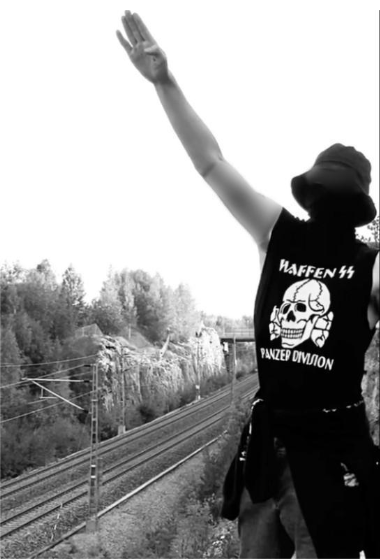
Figure 1. Screenshot from C8’s recruitment video. Personal features that might compromise an individual’s identity were blurred for this publication.
In Finland, ACF and C8 members have also participated in events organised by the Blue-Black Movement, a minor political party openly presenting itself as a racist and fascist. On the eve of May Day 2026, tensions escalated during their joint “White May Day” Black Bloc demonstration, during which a counter-protester was assaulted. These overlaps indicate close proximity between the RWE combat sports groups and organised far-right political mobilisation. Similar links between Active Clubs networks, violence, and confrontational far-right activism have also emerged internationally. In Sweden, four Active Club members have been convicted of racist assaults; in the UK, the founder of the RWE fitness club ‘White Stag Athletic Club’ was convicted of possessing a terrorist handbook; in Estonia, local Active Club affiliates have been convicted of far-right vigilantism; and in the U.S., Active Clubs are accused of engaging in coordinated harassment of marginalised groups.
Despite the explicit ideological references present in the Finnish groups’ Telegram communication, MMA culture and hypermasculine aesthetics still function as important mobilisation tools. Alongside overt white supremacist and (neo-)Nazi symbolism, recruitment material combines MMA imagery, militarised masculinity and affective narratives of threat, decline, and confrontation. By constructing clear enemy images and framing physical training as preparation for future conflict, combat sports become more than exercise – they allow individuals to imagine themselves as protectors of the nation and to adopt heroic identities within a broader existential struggle.
Findings
Symbolism and Coded Aesthetics
Analysis of the three aforementioned publicly accessible Telegram channels shows that recruitment relies heavily on symbolism, aesthetics, and affective cues. Visual references and coded aesthetics function as ritualised markers of belonging, reinforcing collective identity and signalling ideological alignment to those already familiar with RWE subcultures and narratives. Rather than relying on lengthy ideological argumentation, the groups communicate through symbolic shorthand embedded in logos, clothing, hand gestures (Figure 2), and historical references.
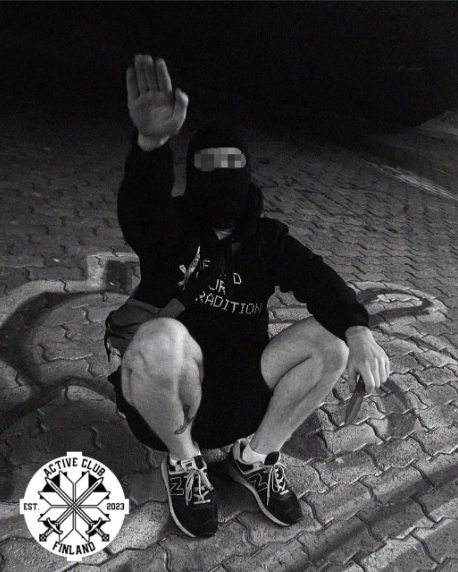
Figure 2. A picture posted by ACF.
For example, Active Club Finland ends recruitment posts with “XIV 🏴☠️” (see Figure 3), in which the Roman numeral refers to David Lane’s “14 words”, and the accompanying skull and crossbones alludes to the Totenkopf associated with the SS Totenkopfverbände, and later widely embraced by neo-Nazi movements. The screenshot from the dataset below (Figure 3) further illustrates how ideological meaning is woven into fitness-oriented imagery and narratives of masculine self-discipline. In this context, references to historical National Socialism do not merely function as ideological signalling but as a way of mythologising physical training as part of a broader existential and civilisational struggle.
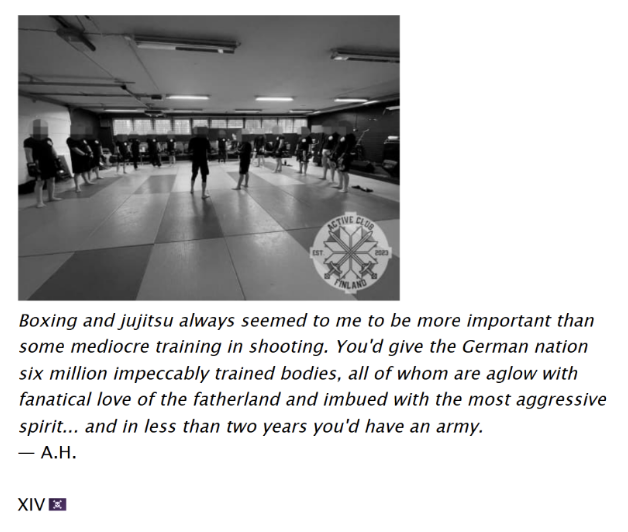
Figure 3. ACF’s post quoting Adolf Hitler elaborating on the connection between body, mind, and National Socialism
Instead of attempting to persuade outsiders through argumentation, the groups use symbolic saturation to cultivate recognition and a sense of shared identity among ideologically sympathetic individuals already within the broader RWE discursive space. At the same time, the extensive use of (neo-)Nazi symbolism and references is highly visible to anyone familiar with RWE subcultures, making their ideological orientation difficult to overlook despite their fitness-oriented framing.
Emotional Triggers: From Shame to Honour and Purpose
Alongside symbolism, recruitment material follows a clear emotional arc that moves from negative to positive affect. Posts frequently feature narratives of societal decline, cultural loss and looming threats, often conveyed through familiar far-right ideas about immigration or betrayal by political elites. These narratives are paired messaging that targets young men, framing passivity, physical inactivity, and disinterest as shameful and dishonourable.
One recurring message is that modern society has failed, leaving young men humiliated and directionless. As one post bluntly put it: “Stop making excuses and ask yourself: for how long are you planning to be a coward? Until death? Get active now! (Active Club Finland 6 September 2023, translated by the author).” Here, inaction amounts to moral failure and creates the emotional conditions under which recruitment becomes meaningful.
However, the second stage of emotional triggers offers redemption. Combat sports and physical training are framed as a remedy for humiliation and degradation, a path from weakness and passivity to honour and discipline. Joining a local combat sports group is presented as a corrective act that restores personal and societal significance. Training is depicted not only as exercise, but as a duty for one’s community and nation.
There is a recurring narrative that frames participation as a path from failure to discipline, purpose, brotherhood, and status within the group. Rather than convincing individuals of ideological claims, recruitment seeks to convert existing grievances into embodied, offline commitment by offering a ritualised solution to emotional discontent. Physical toughness and discipline are presented as moral virtues, reinforcing a hypermasculine ideal contrasted against the imagined soft and decadent society. Aligning body and ideology thus becomes a process that is both performative and transformative.
Sustaining Commitment: Cohesion, Emotional Effervescence, and Movement Pathways
The findings indicate that the RWE combat sports groups sustain motivation and cohesion not only through regular fitness training but also through street activism and performative practices.
As members of Active Club Finland state about the performative side of their activities in a podcast episode:
“[…] merely the fact that when a normie, on his walk at the park, sees a dozen of Finnish athletic guys working out and sparring, that in itself is a fucking strong political statement […] showing up on the street, showing that we are here, this is our city […] that matters” (Sinimusta Liike 2025).
Public workout sessions, street activism, and participation in demonstrations function as recurring rituals with a dual purpose: internally, they build trust, solidarity, and emotional connection among members; externally, they project discipline, unity and ideological presence to the wider public.
Importantly, RWE combat sports groups do not exist in isolation. In Finland, in addition to their collaboration with the Blue-Black Movement, they collaborate closely with the White Power music scene, co-organising festivals and fight night events, attending gigs, and using their hate-filled lyrics in their recruitment materials to amplify shared grievances. While co-organised fight nights held alongside White Power gigs serve ritualistic purposes as events that foster collective enthusiasm, they also facilitate networking across the wider RWE milieu and position combat sports groups as gateways to other RWE movements with sometimes more extremist ideological inclinations.
This dynamic is particularly relevant for younger recruits. Active Club Finland’s relatively strict age limits indicate that participation is intended more as an entry point than as an endpoint. Recruitment transforms online engagement into offline activism, offering opportunities to collaborate with and move among different RWE groups, thereby providing an infrastructure that sustains involvement and reinforces ideological commitment within the milieu.
Conclusion: Telegram and Ritualised Recruitment
Taken together, these findings show that RWE combat sports groups rely less on ideological persuasion of entirely new audiences than on ritualised recruitment mechanisms that pull individuals already embedded in RWE online ecosystems and hypermasculine fitness cultures into offline activism. Symbolism establishes boundaries and signals in-group belonging, while emotional triggers generate both motivation and justification for participation by offering a pathway from fear, anger and shame to brotherhood with personal and collective purpose. Physical training, events and street activism, in turn, provide a sense of community, sustain motivation and channel commitment into embodied action. Networking with the White Power music scene and other extremist actors further enables individuals to move deeper into the wider milieu.
Telegram plays a central role in this process by enabling symbolic circulation, anonymity and low-threshold entry, while offline rituals complete the cycle. Public channels function as a front-stage presence, advertising movements through hypermasculine fitness content, MMA aesthetics, (neo-)Nazi symbolism and emotionally charged narratives. Individuals interested in joining are then instructed to contact local chapters via bots or email, after which interaction shifts to closed channels or offline settings. This division allows groups to maintain visibility while limiting exposure to scrutiny and facilitates the transition from online to offline spaces.
Based on this research, several implications emerge for platforms, policymakers and prevention practitioners seeking to address online-offline mobilisation dynamics. First, content moderation efforts that focus on specific words, ideological statements or symbols risk overlooking key recruitment dynamics. Greater attention to ritualised language cues, recurring symbolic patterns, and aesthetic saturation may help identify new types of recruitment activity. Second, recognising emotional framings, particularly narratives that combine shaming based on societal or personal failure with hypermasculine empowerment arcs centred on discipline, brotherhood and purpose, may improve the detection of recruitment-oriented content. Third, beyond moderation, offering accessible sporting or community-based alternatives that provide belonging, structure and meaning without ideological manipulation – such as the Finnish Gettogymi initiative by HelsinkiMissio, which uses combat sports alongside youth outreach to prevent violent behaviour and social exclusion among young people – may help reduce the appeal of extremist recruitment.
Overall, these findings suggest that RWE combat sports groups do not simply exploit digital platforms to disseminate ideology but use them to ritualise belonging and convert subcultural and ideological appeal into sustained offline commitment. Understanding Telegram’s role in this process helps clarify how contemporary RWE movements embed themselves within popular online fitness ecosystems and translate visibility into mobilisation.
–
Katri-Maaria Kyllönen is a doctoral researcher at the University of Jyväskylä, Finland. Her dissertation examines the connections between social media and political mobilisation, with a particular focus on how far-right online narratives facilitate recruitment into extremist milieus.
–
Are you a tech company interested in strengthening your capacity to counter terrorist and violent extremist activity online? Apply for GIFCT membership to join over 30 other tech platforms working together to prevent terrorists and violent extremists from exploiting online platforms by leveraging technology, expertise, and cross-sector partnerships.
The views and opinions expressed in this Insight are the authors’ own and do not necessarily reflect those of GNET or any of its partners.