

On 31 January 2026, the Baloch Liberation Army (BLA) launched a wave of large-scale coordinated attacks, targeting at least fourteen strategic locations across Balochistan. The group employed a range of tactics, including simultaneous suicide attacks in multiple districts. The violence persisted for nearly six days in at least two districts, including Noshki, a mountainous border town near Afghanistan. According to Pakistan’s military media, the attacks resulted in approximately 250 fatalities, including 216 BLA fighters and 22 security personnel. Notably, the BLA deployed several female suicide attackers in this wave, including an elderly woman, a young female fighter, and even a married couple.
The BLA adopted a vibrant media strategy to hype the attack from the outset, coinciding with the attacks on the battlefield and releasing timely propaganda video footage, including footage from the operational front.
This Insight studies the BLA’s media strategy, with a particular focus on its portrayal of female suicide attackers, in its propaganda material on TikTok. The analysis will explore the group’s use of AI-generated images, as well as the language and statements employed to frame and promote female suicide attackers. It will also assess how the BLA constructs narratives that position women as active participants on the battlefield while simultaneously shaping symbolic and ideological representations of femininity.
The Black Storm
BLA terms this multilayer operation as its second series of ‘Herof’, a Balochi term meaning ‘black storm’. Herof-1, the first phase, occurred in August 2024, when Mahal Baloch, a female suicide attacker, became the face of BLA’s media warfare. The attack quickly entered Baloch nationalist discourse through poetry, songs, and online narratives, helping embed the symbolism of female militancy within the movement’s propaganda ecosystem. In the week preceding the second phase of this operation, BLA-linked media channels were already predicting a potential wave of violence in the province, suggesting a coordinated effort to translate this symbolic mobilisation into anticipated action. In this context, BLA adopted a conventional approach by storming cities and peripheral areas, primarily to attract public attention. They also attempted to mobilise the population through footage, propaganda videos, and speeches. This strategy became a trend across the province, as it successfully engaged the public, who began creating TikTok content for digital audiences both within the province and globally.
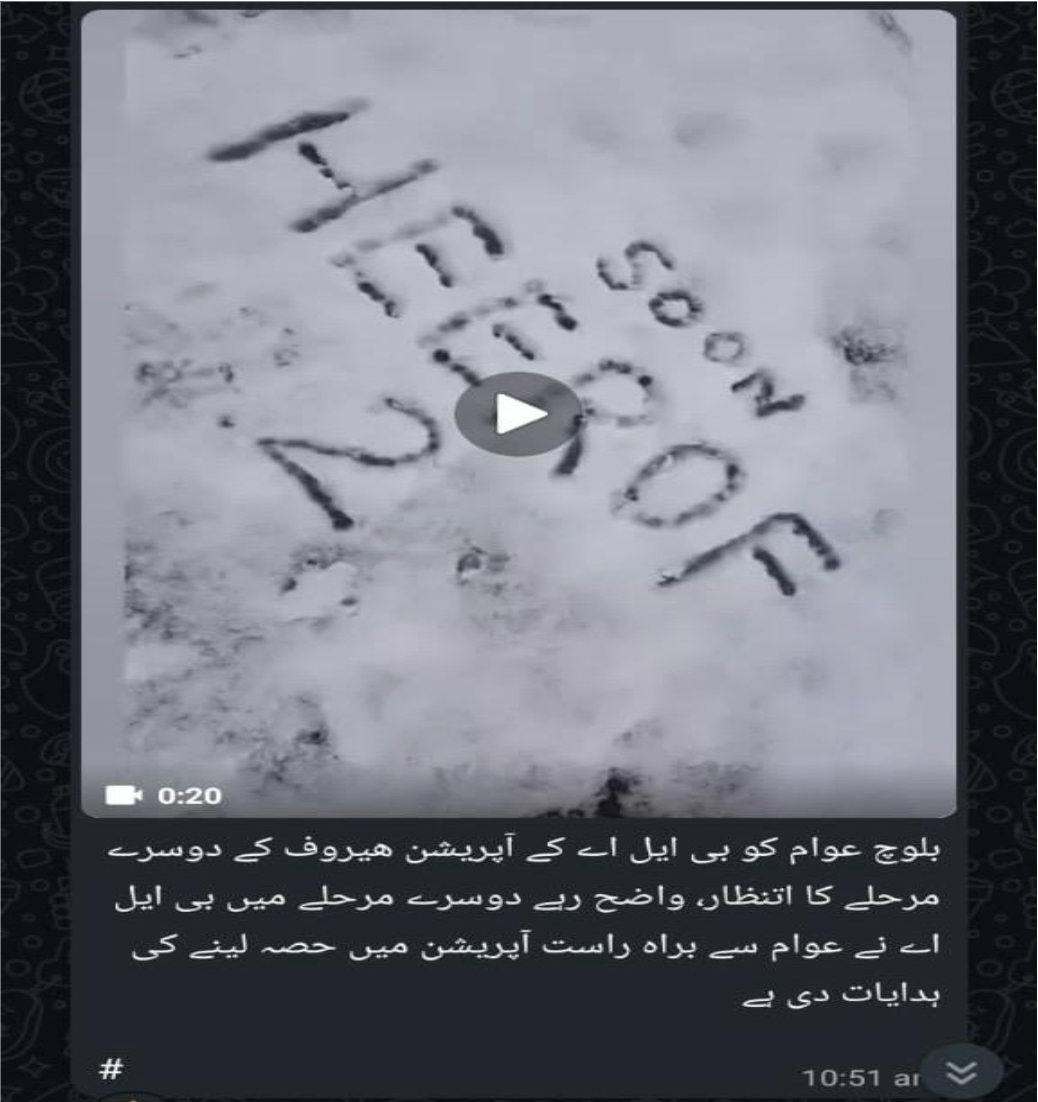
Figure 1: Text accompanying a video that circulated on a WhatsApp channel referencing ‘Operation Herof’ one week before the operation began.
This trend prompted the Balochistan government to characterise it as a form of “social manoeuvring,” aimed at radicalising the province’s youth through digital media. The issue was extensively debated in the provincial assembly, where concerns were raised that militant activities were becoming increasingly TikTok-centric. Nevertheless, armed groups in Balochistan continued to plan more sophisticated attacks, simultaneously integrating media as a strategic weapon of conflict, comparable in significance to conventional weaponry. This has been witnessed in the recent wave of attacks, as female fighters and their on-camera messages from the battlefield have caught widespread attention.
The Making of a Trend
Interestingly, the BLA’s propaganda strategy can be understood as part of a broader effort to challenge Pakistan’s state narratives through both violent action and strategic communication. By emphasising its female fighters, the BLA employs gendered symbolism to signal to wider Baloch audiences that the conflict with Pakistan constitutes a ‘collective war’ that transcends gender, class, and generational divides.
In a short video statement, the head of the BLA, Bashir Zaib, a long-haired, bearded man, made a provocative statement while riding a motorcycle to announce the beginning of the Operation Herof phase two. Accompanied by thumping music, the video quickly went viral and became a news headline. It attracted numerous TikTok recreations, with male users replicating Zaib’s motorcycle scene, while female users gained traction through short, stylised clips inspired by the video.
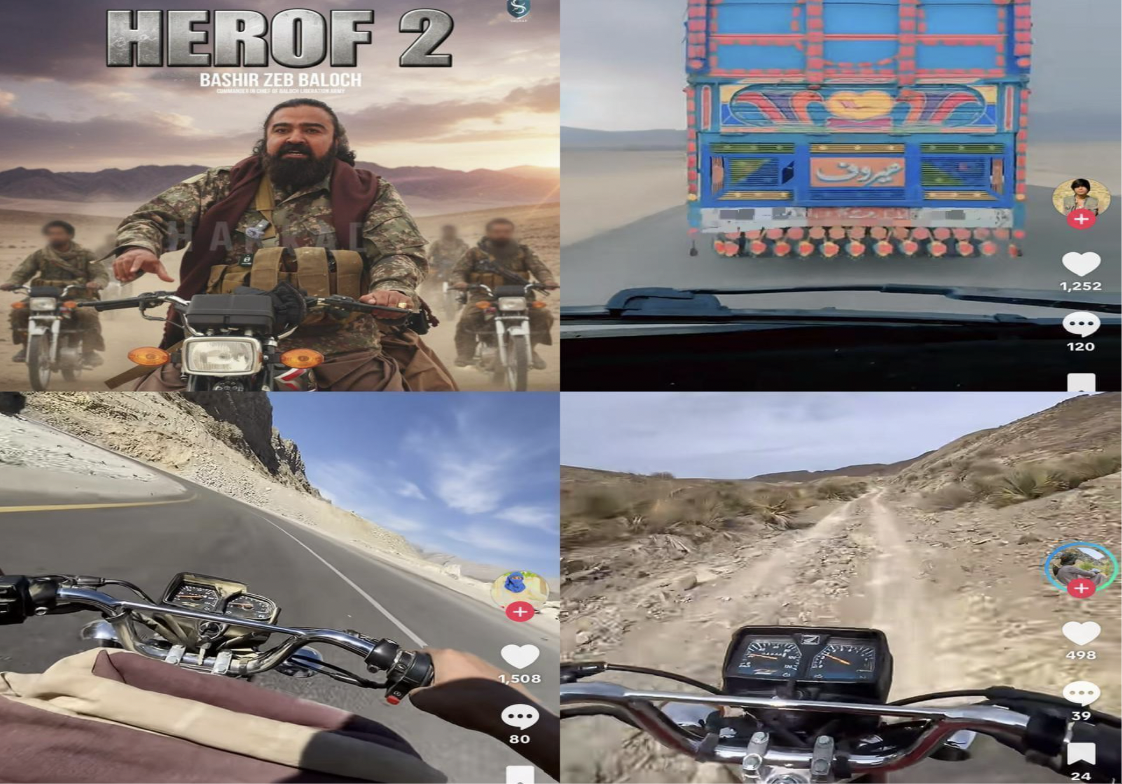
Figure 2: A composite image featuring the BLA chief on a bike with an AI-generated background, illustrating the organisation’s use of modern tools to enhance its visual propaganda. Inspired by ‘Operation Herof,’ local bikers are now producing similar videos on TikTok across Balochistan.
In another viral trend, female TikTok content creators began producing stylish content with high graphics while posing with the monogram of the BLA’s intelligence wing, Zephyr Intelligence Research & Analysis Bureau (ZIRAB), a Balochi term meaning “flame”, often set in scenic locations such as Balochistan’s long coastal belt and around beaches.
BLA-influenced propaganda has significantly expanded, using songs, memetic reels, and short-form video content to attract recruits, particularly younger audiences like Gen Z, marking a more calculated shift toward adaptive and platform-optimised propaganda. By leveraging visually engaging formats, emotionally charged audio, and fast-paced editing styles, the group is increasingly aligning its messaging with the consumption habits of digital-native users.
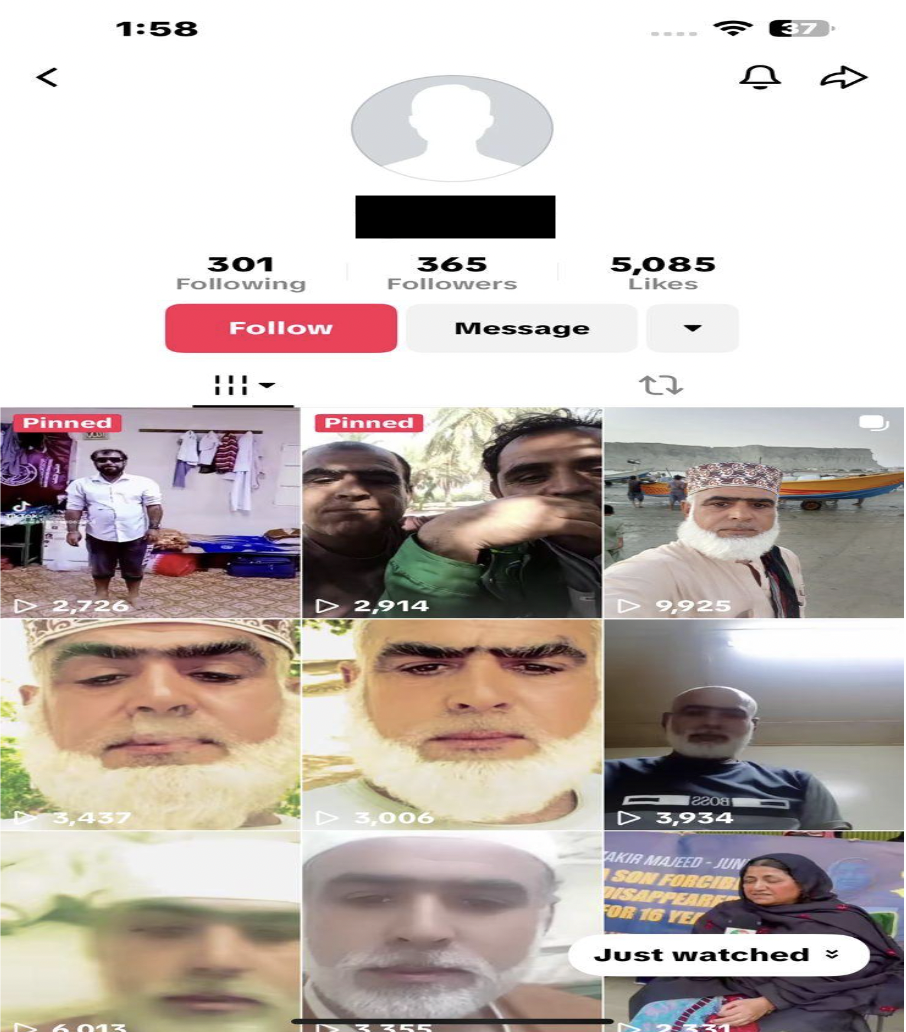
Figure 3: Fazal Baloch, a 70-year-old suicide attacker who posted videos on TikTok.
This dynamic was observed in the case of Fazal Baloch, a 70-year-old man and reportedly the oldest suicide attacker associated with the BLA, who maintained an active presence on TikTok prior to carrying out a suicide attack at the entrance gate of a Coastal Guards headquarters in Pasni. His content, largely influenced by poetry and songs associated with the group, circulated online before the attack and drew wider attention after his involvement was revealed. Several of his TikTok videos, viewed thousands of times, recreated clips featuring songs linked to the BLA, suggesting exposure to and engagement with radicalising online material.
Notably, TikTok prohibits violent individuals on the platform and content that glorifies violence, as per its community guidelines. According to the platform’s most recent Community Guidelines Enforcement Report, TikTok removed 28,198,284 videos from users based in Pakistan between July and September 2025, with a proactive removal rate of 99.8%. The report states that the region’s 24-hour removal rate was 95.9%.
Female Fighters in the Battlefield and on the Streets
The BLA’s official propaganda outlet, Hakkal, released several video clips showing female fighters leading operations inside military installations and participating in street battles. These videos have sparked debate both in the media and across Baloch society. Within the conservative patriarchal society of Balochistan, the visibility of women has often been criticised.
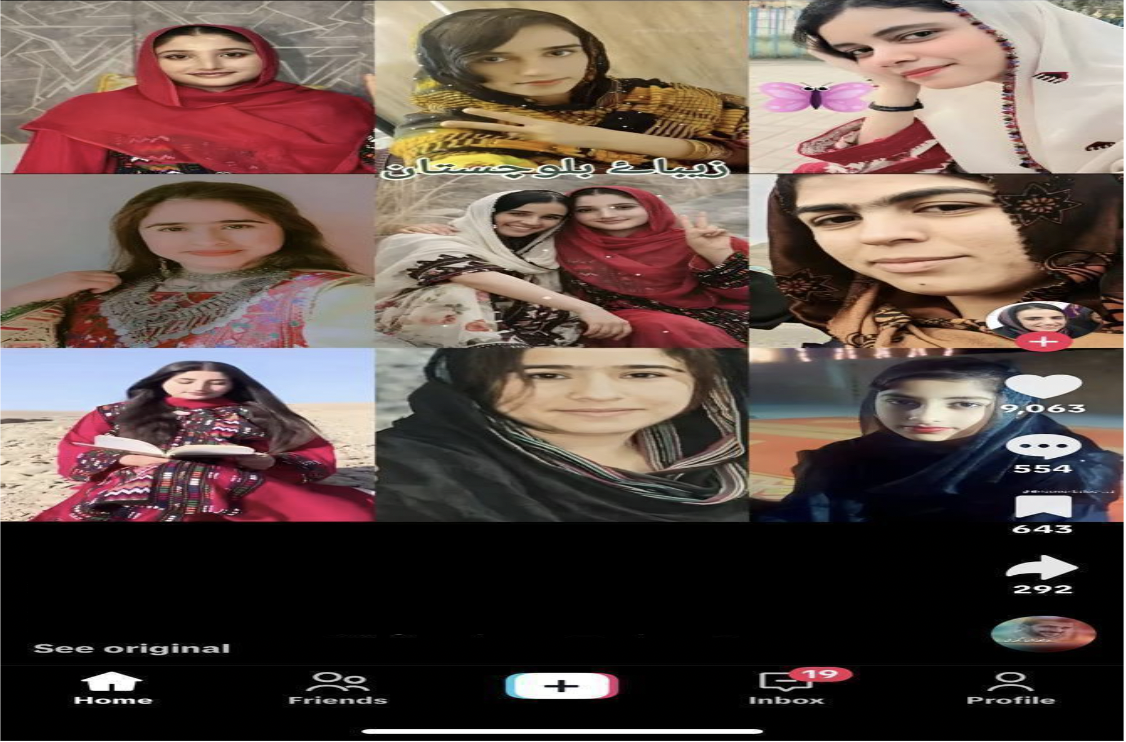
Figure 4: Viral TikTok content of female fighters participating in BLA’s operation Herof’s second phase.
Contrary to these norms, female fighters from Herof-2 have become focal points of discussion in BLA propaganda for their participation and camaraderie in combat alongside their male counterparts. For instance, a couple set a new precedent for being deployed in battle together. Several women associated with the BLA – among them Hawa Baloch, Maryam Buzdar, Hataam Naz Baloch, and Asifa Mengal – have become viral figures used to reinforce the group’s narrative that the Baloch community is collectively at war.
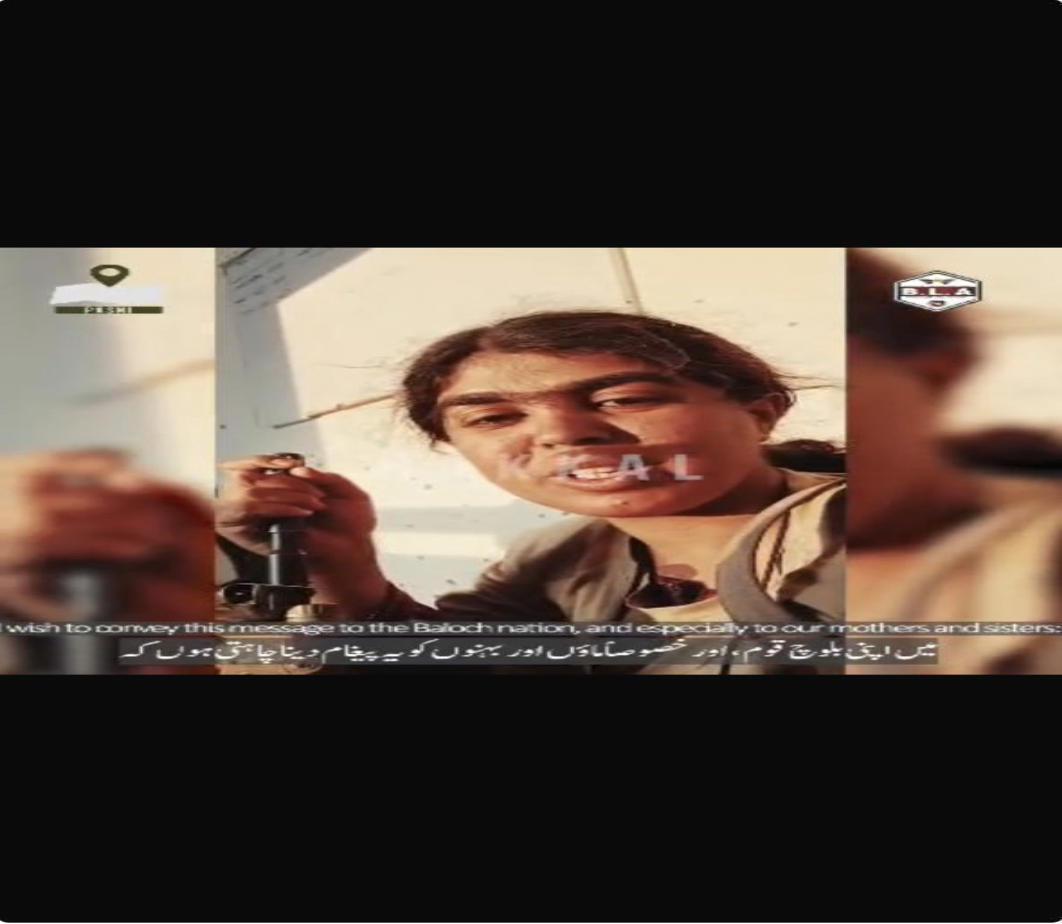
Figure 5: Yasma Baloch’s propaganda footage from the battlefield with subtitles in Urdu and English posted on TikTok.
Among these female fighters, Yasma Baloch’s message became widely visible in the algorithmic feeds of users who were already engaged with Balochistan-related content. Similarly, fighter Hawa Baloch’s message from the battlefield, in which she addressed the Baloch audience while holding a rifle, gained significant attention on TikTok and other platforms. In particular, a video showing Hawa Baloch’s mother honouring her by presenting a shawl circulated widely online, suggesting a strategic effort to involve fighters’ families in celebrating their ‘contributions’.
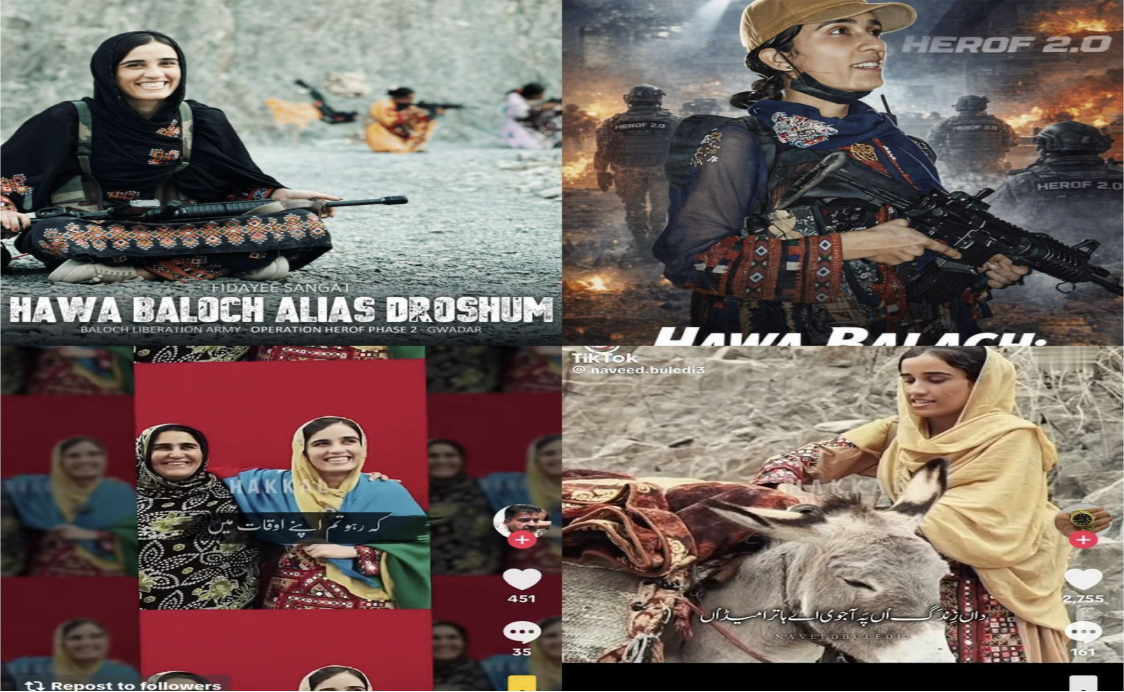
Figure 6: Hawa Baloch’s picture released by the BLA media, while the second picture illustrates an AI-generated portrait of her. The third picture shows Hawa Baloch and her mother before her departure on her attack. The last picture is viral TikTok content of her from the field.
Images portraying fighter Asifa Baloch in a modern and stylish manner have also circulated on TikTok. Her lauding and participation, especially given her background from a relatively tribal and conservative area of Balochistan, prompted traditional-minded Baloch men to reconsider their own roles, as her visibility challenged stated norms around gender and female participation in the insurgency.
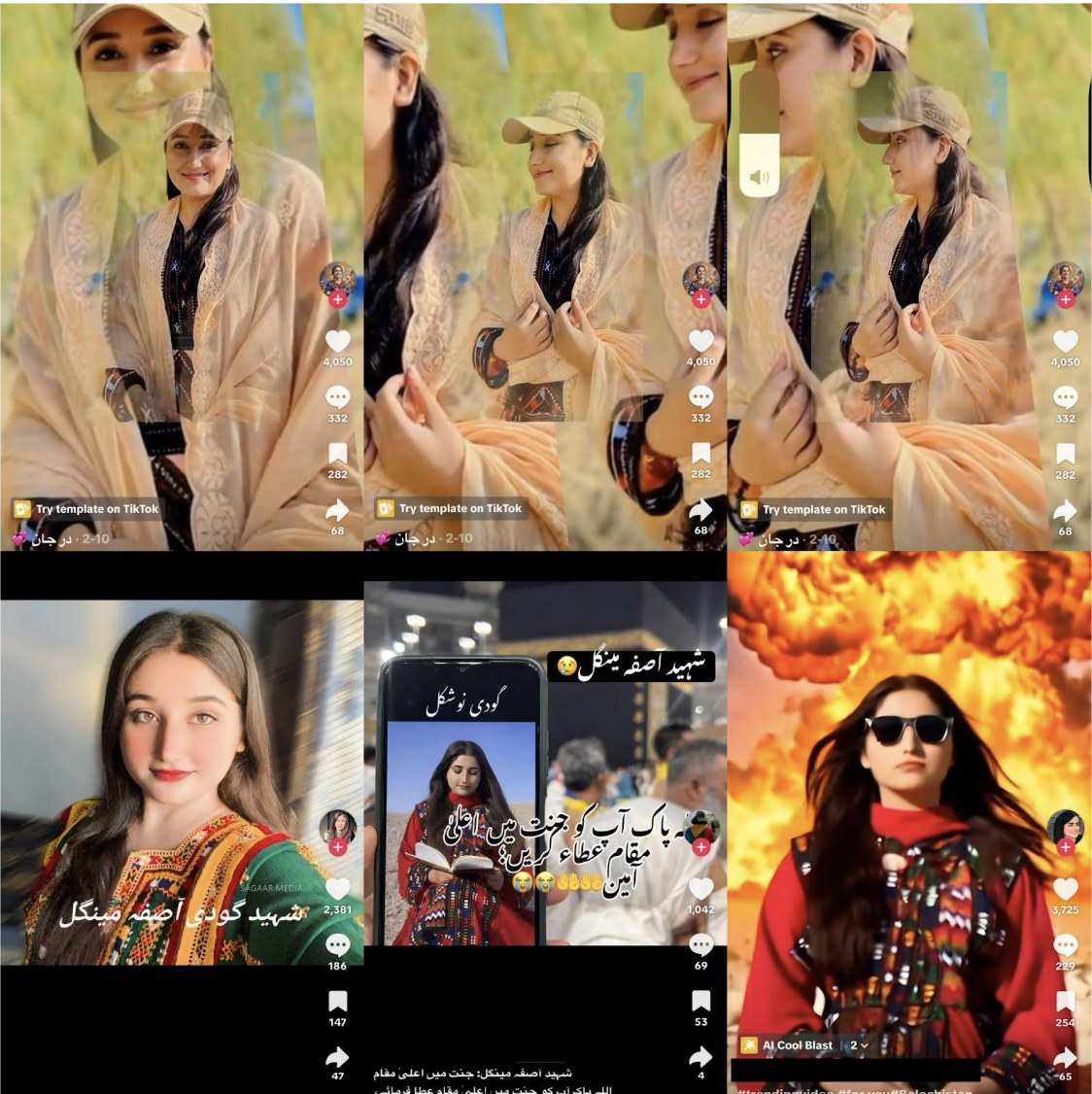
Figure 7: The first row shows an AI-generated depiction of Asifa Baloch, created by a TikTok user. The subsequent images depict her other settings, including the last one featuring an AI-generated explosion in the background. Such depictions clearly glorify violence and terrorism.
Conclusion
An organised propaganda campaign by the BLA, which has employed various digital tools, including AI, to generate pamphlets, posters, and videos, has raised alarm among the Pakistani government. The propaganda has further intensified the conflict’s digital dimension, requiring Pakistani authorities to confront both an asymmetrical battle on the ground and a parallel contest of narratives online. At the same time, the BLA has adapted its propaganda narrative to frame women as equals, not only at the social level but also on the battlefield. It portrays their participation as a sign of strength, emphasising that this war is waged irrespective of gendered participation on the battlefield. Additionally, the BLA is aligning its media campaign with a more sentiment-driven approach, producing ground-level content that resonates with feelings of deprivation in the province.
On the counterfront, the state’s efforts to decode the narratives of Baloch insurgents are largely based on flawed assumptions, often produced by actors with limited knowledge of Baloch society and the dynamics of the insurgency in the province, and therefore remain disconnected from the realities on the ground. This suggests that state-produced content often frames the Baloch issue within an “uneven” or “unparallel” development context. Similarly, these efforts reflect a lack of genuine commitment to diagnosing the state’s own shortcomings in winning the hearts and minds of the population. Moreover, in some cases, the portrayal of women fighters as frustrated individuals, along with gender-based online exploitation through the use of sexualised narratives, further weakens the state’s position.
Lastly, the weaponisation of short-form video propaganda on TikTok, often with culturally resonant music and content, reflects broader Gen-Z social media consumption patterns in Balochistan. The use of colloquial language and unconventional spelling indicates a fairly disorganised propaganda pattern. Such content is still in its infancy, but nevertheless may affect how young people view armed groups in the region. Therefore, content produced by armed groups and their supporters should be closely analysed at the local level, paying particular attention to the cultural and linguistic elements embedded in TikTok videos, including songs, poetry, and the use of colloquial language and unconventional spelling.
–
Imtiaz Baloch is a journalist and researcher with a particular interest in political development and security in Pakistan’s Balochistan and Iran’s Sistan-va-Baluchestan provinces. He previously worked as a Researcher at the Pak Institute for Peace Studies (PIPS), Islamabad. He tweets at @ImtiazBaluch.
–
Are you a tech company interested in strengthening your capacity to counter terrorist and violent extremist activity online? Apply for GIFCT membership to join over 30 other tech platforms working together to prevent terrorists and violent extremists from exploiting online platforms by leveraging technology, expertise, and cross-sector partnerships.