


Major social media platforms have intensified content moderation efforts in recent years in response to growing regulatory pressure and concerns about harmful and extremist content. One prominent example of these pressures emerged in January 2026, when ByteDance, the Chinese parent company of TikTok, announced the sale of its US assets, which were subsequently grouped into a new corporate structure called TikTok United States Data Security (USDS) Joint Venture LLC. The restructuring was intended to address long-standing security concerns and strengthen content moderation protocols on the popular social network. It is in this context – including controversy over the ownership of the platform – that has driven some TikTok users to explore new, alternative platforms. Particularly after the Joint Venture was finalised, there has been growing user engagement with a new social network called UpScrolled. UpScrolled launched in June 2025 and was founded by Issam Hijazi, a Palestinian-Jordanian-Australian entrepreneur. As of January 2026, it has surpassed one million users and has become the most downloaded platform on the US App Store. At the same time, violent extremists have migrated to the platform, with Salafi-jihadi groups beginning to exploit UpScrolled features.
In monitoring the pro-Islamic State (IS) online ecosystem, the authors have observed that supporters and sympathisers of the Salafi-jihadi group have been discussing the possibility of exploiting UpScrolled to advocate proselytism and spread propaganda material. In late January 2026, users on Element, one of the core platforms sustaining the pro-IS online ecosystem, began discussing UpScrolled, noting that it had been created by a Palestinian developer. However, some users raised concerns about the platform’s privacy and security, as no information about its policies had been disclosed, casting uncertainty on its safety and reliability (Figure 1).
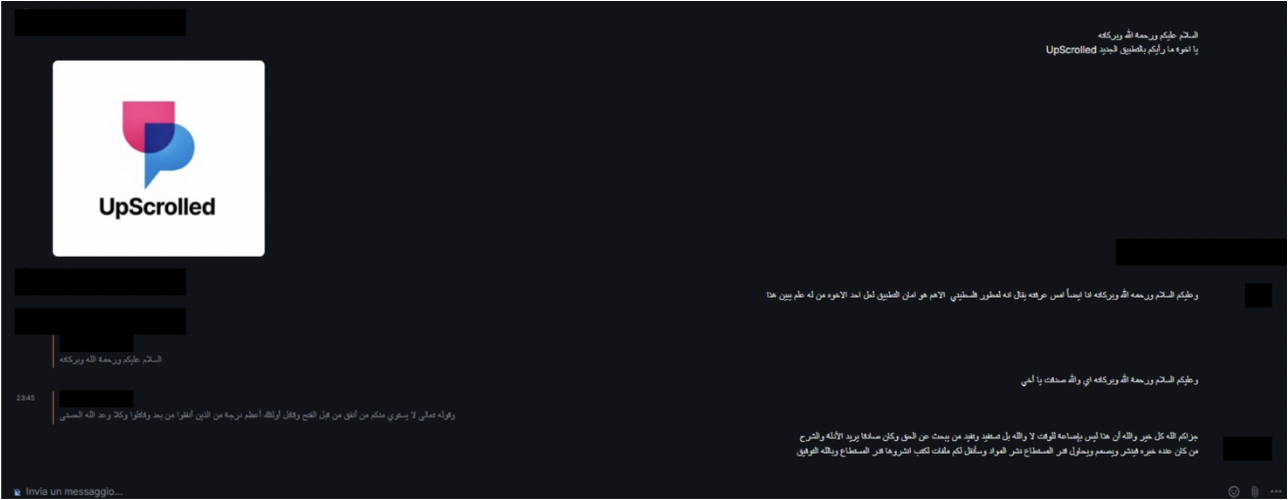
Figure 1: Pro-IS users discuss UpScrolled on Element.
In early February, the non-institutional media outlet Ansar Electronic Security (AES) posted on its channels that it “received a question from one of our brothers about a new application called UpScrolled.” AES first emphasised that the application has been recently released, “so […] there is not much information about it.” The post emphasised that since UpScrolled is not “open source…, external security audits” would be needed in order to “ensure its safety and security.” Notably, AES highlighted that, even though UpScrolled claims to be “anti-censorship… it is likely that State-affiliated material will be removed.” On that basis, AES advised users “to be cautious with any new applications and websites, because it takes time to determine the strength of an application’s security and privacy features.” The media house concluded that it would monitor the news on UpScrolled and provide a more detailed security analysis as soon as more information becomes available (Figure 2).
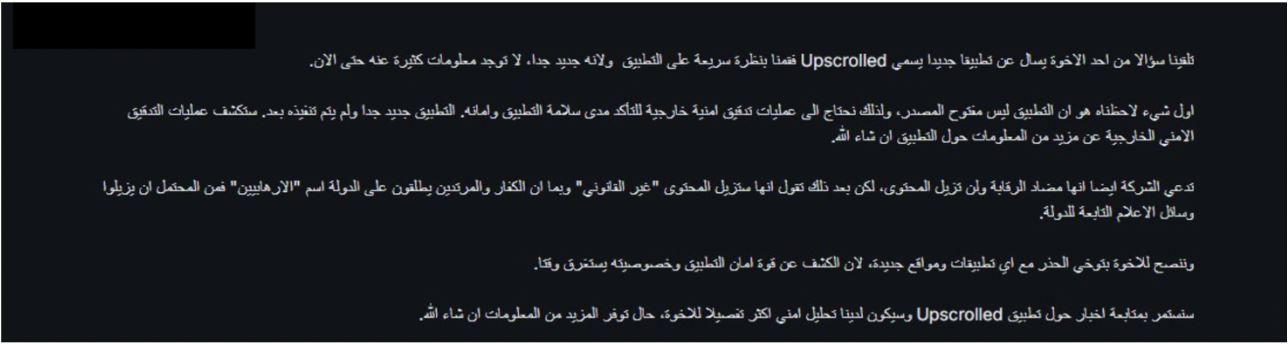
Figure 2: AES shares its views on UpScrolled.
Given the newfound interest and attention to UpScrolled, this Insight provides an overview of the platform’s pro-IS propaganda content. First, the main features of the social network will be described, followed by an illustration of pro-IS content shared by supporters active across the platform. Finally, recommendations related to content moderation and regulation will be included.
What is UpScrolled?
UpScrolled is a social network developed to share text, photos, and short videos. It was designed to foster an authentic, unfiltered environment, promising interactions free from any form of censorship. As stated on the official website, “every voice gets equal power. No shadowbans. No algorithmic games.” In the founder’s words, UpScrolled “is more than just an alternative to Meta, X, or TikTok.”
The application includes two feeds: ‘Following’ and ‘Discover.’ The ‘Following’ feed is chronological – posts are not reshuffled and appear in the order they are shared. This feature distinguishes UpScrolled from other popular social media platforms, where chronological feeds are not prioritised. The ‘Discover’ feed is organised according to an apparent “simple, transparent ranking” which orders content by likes, comments, and reshares. Users can post photos, videos, and text directly to the feed, allowing followers to comment and reshare. Additionally, content can be posted via ‘Stories’, which last 24 hours. The application thus seems a combination of Instagram, X (formerly Twitter), and Snapchat.
Pro-IS Propaganda Content on UpScrolled
Despite security concerns about UpScrolled expressed across core platforms of the pro-IS online ecosystem, the authors identified at least 120 UpScrolled accounts dedicated to disseminating pro-IS propaganda, ranging from Institutional and Ansar Production audiovisual material to non-branded propaganda. The latter material was found using the platform’s search bar, with different keywords related to IS and/or IS-related media houses. Considering the spread of institutional propaganda, it was possible to detect a significant amount of content produced by the most important and notorious official media outlets, such as An-Naba Newsletter editorials and AMAQ News Agency bulletins (Figure 3).
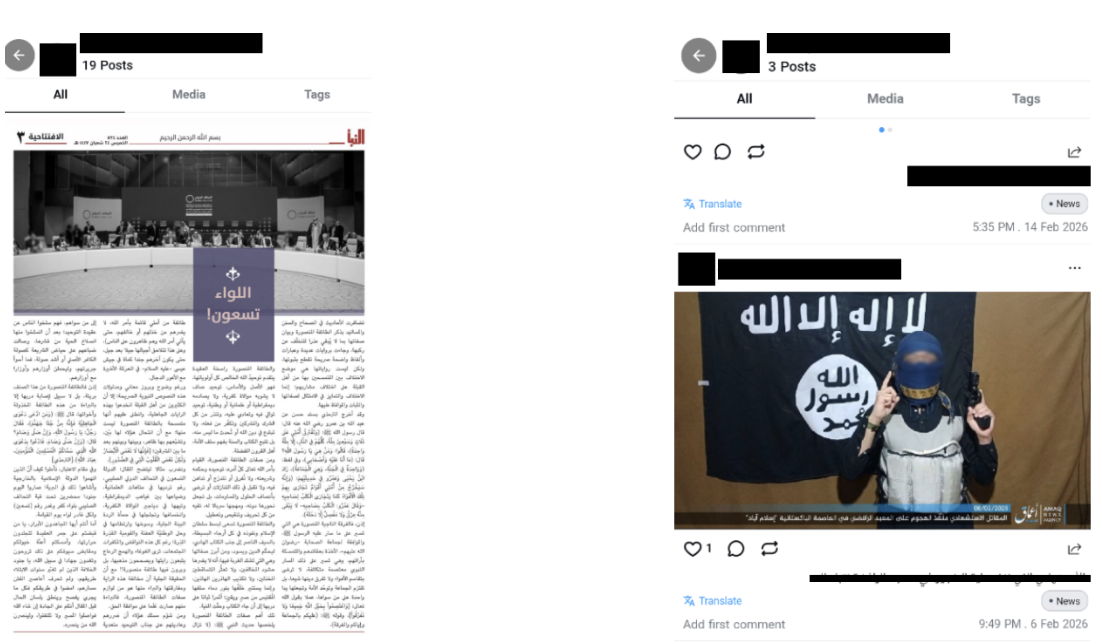
Figure 3: An example of the dissemination of the An-Naba Newsletter editorial (Left) and the AMAQ News Agency bulletin (Right).
It is also interesting to note that some users have been creating content for both AMAQ bulletins and the An-Naba Newsletter as textual posts, taking advantage of UpScrolled’s built-in feature (Figure 4).
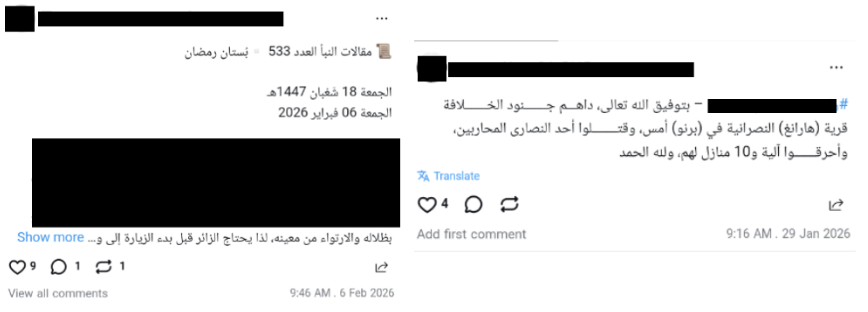
Figure 4: Examples of transcribed An-Naba Newsletter extract (Left) and AMAQ News Agency bulletin (Right)
Audiovisual material issued by the institutional media house Al-Hayat and IS’s official wilayat videos have been shared within the platform as well (Figure 5).
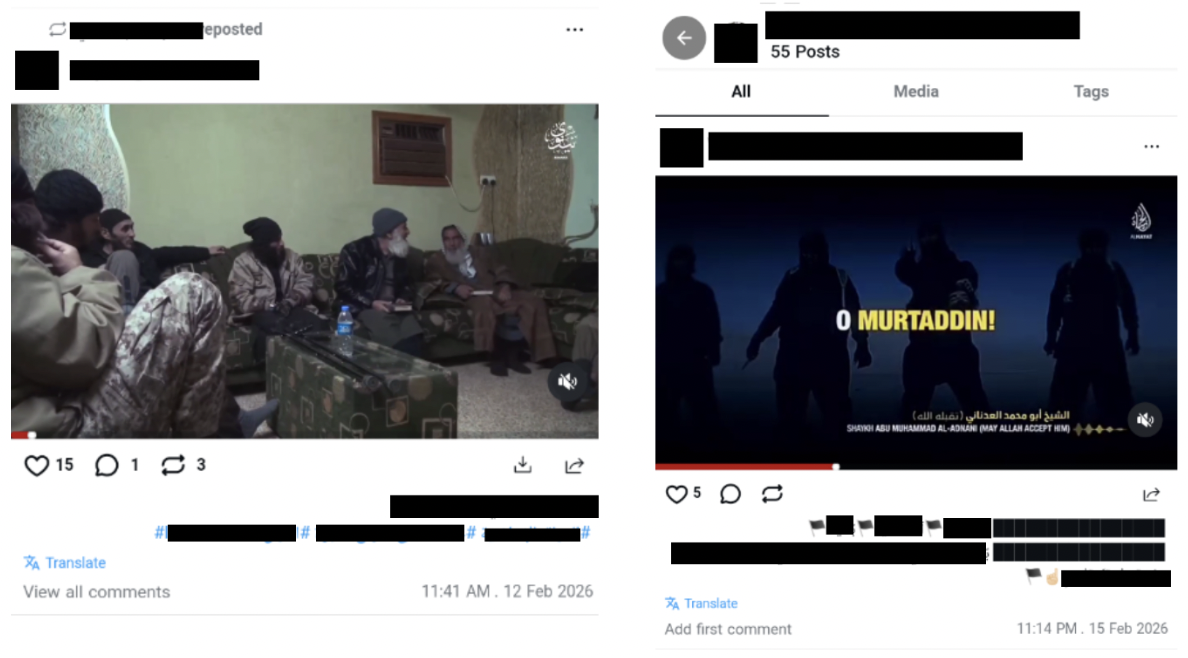
Figure 5: Examples of the dissemination of IS’s official videos (Left) and Al-Hayat audiovisual material.
Additionally, most of the observed users have disseminated posters related to Ansar Production media outlets, such as Sarh al-Khilafah, Talaea Al-Ansar Foundation, Al-Morhafat, Alhadiyat, and many more (Figure 6).
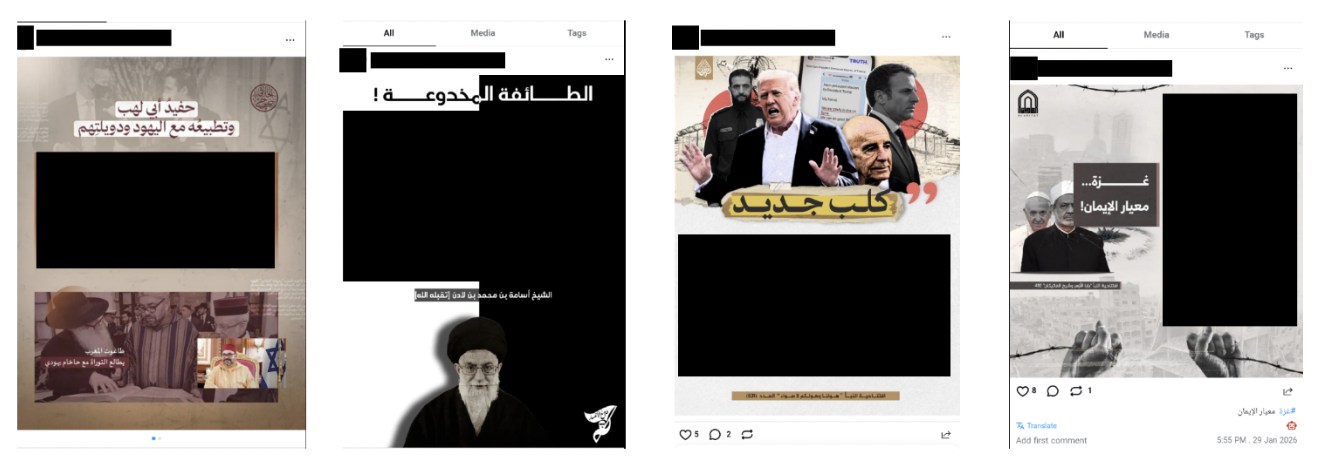
Figure 6: Examples of the dissemination of Ansar production media product on UpScrolled.
The latter content is characterised by highly graphic elements and can catch the attention of IS supporters and sympathisers, as it represents a more immediate form of propaganda.
Lastly, pro-IS users on UpScrolled have been observed disseminating a range of IS-related propaganda, including institutional and Ansar Production audiovisual material as well as so-called “non-branded” propaganda (Figure 7).
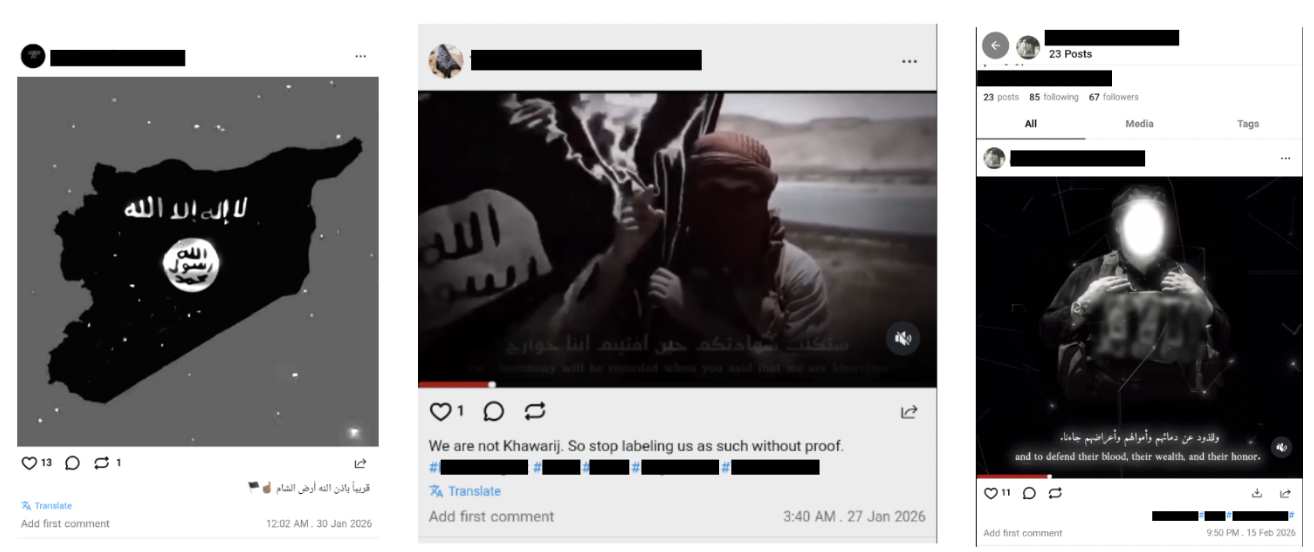
Figure 7: Non-branded propaganda on UpScrolled, respectively depicting a Syrian map with IS’s black banner (Left), a Mujahid with IS’s flag (Middle), and the image of Abu Muhammad al-Adnani (Right).
The latter production primarily focuses on the representation of explicit IS-related figures, symbols, and narratives. Consequently, most of this content shows the figure of former well-known IS leaders, the IS black banner, and/or images of mujahidin in military or violent scenarios.
Across all the aforementioned content, whether institutional, produced by Ansar Production, or non-branded, users employ a range of hashtags to index the material, enabling sympathisers and pro-IS supporters to easily locate it with know-how. The hashtags employed are mainly characterised by the use of IS-related keywords, both in English and Arabic.
Cross-platform activity is also present on UpScrolled, with some pro-IS UpScrolled users sharing outlinks to active accounts on alternate platforms, such as TikTok, Telegram, and Facebook (Figure 8).
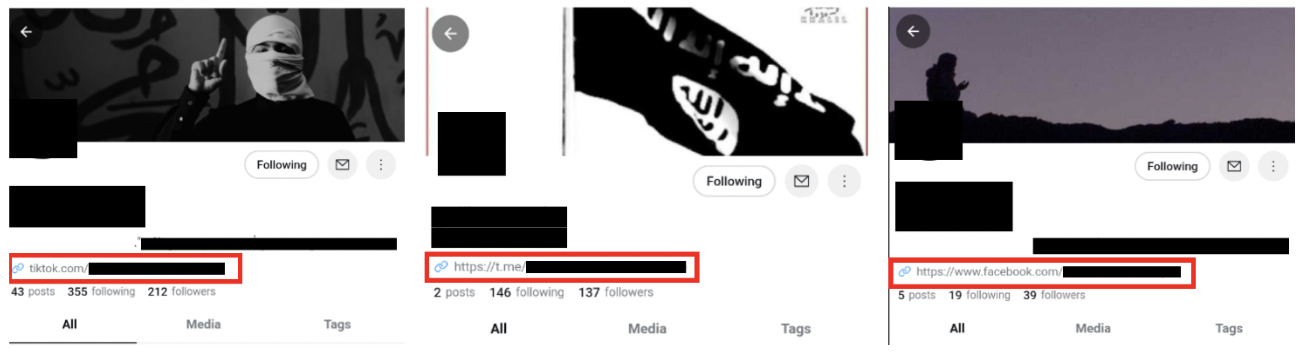
Figure 8: Users’ description containing outlinks to TikTok (Left), Telegram (Middle), and Facebook (Right).
Moreover, outlinks leading to official IS website repositories have been found in some users’ descriptions as well. Consequently, the dissemination of such outlinks enables other supporters and sympathisers to extend their reach to other platforms, where pro-IS content is also available.
Conclusions and Recommendations
Given the growing presence of pro-IS propaganda on the platform, UpScrolled appears to be emerging as an effective new venue for the dissemination of such material online. According to its representatives, the platform represents a space committed to free speech, claiming to avoid practices such as shadow-banning. As a result, UpScrolled appears particularly conducive to the circulation of audiovisual propaganda, offering user-friendly content-sharing features and the ability to generate significant visibility, including through the use of hashtags to index material. Therefore, considering the platform’s potential and the recent events surrounding TikTok’s new ownership and policies, UpScrolled appears to have all the necessary elements to become a focal point for IS sympathisers and supporters to find and share pro-IS content. Moreover, the fact that some pro-IS users have been sharing outlinks towards other social media platforms where pro-IS content is available maximises the threat as far as radicalisation and recruitment are concerned.
Notwithstanding UpScrolled’s mission to promote free speech online, it appears urgently necessary for UpScrolled to take steps to implement functional policies and measures to detect and prevent the spread of terrorist content on the platform. For instance, efficient and effective monitoring of keywords used to index the majority of pro-IS-related propaganda should be implemented, together with proper monitoring of the audiovisual material shared. This objective can be attained by combining human-led content moderation with advanced automated technologies, thereby strengthening content moderation in both the speed of detection and the quantity of extremist propaganda material.
–
Grazia Ludovica Giardini is a Junior Researcher at the Italian Team for Security, Terroristic Issues, and Managing Emergencies – ITSTIME. She specialises in the application of Open Source Intelligence (OSINT), Social Media Intelligence (SOCMINT) techniques, and Digital Human Intelligence (Digital HUMINT). Her research activities are focused on monitoring Salafi-jihadi groups’ communication strategies and propaganda through various online platforms.
Eleonora Ristuccia is a junior research analyst at the Italian Team for Security, Terroristic Issues, and Managing Emergencies – ITSTIME. She specialises in the application of Open Source Intelligence (OSINT) and Social Media Intelligence (SOCMINT) techniques. Specifically, she focuses on the study of jihad communication strategies and propaganda through various online platforms.
—
Are you a tech company interested in strengthening your capacity to counter terrorist and violent extremist activity online? Apply for GIFCT membership to join over 30 other tech platforms working together to prevent terrorists and violent extremists from exploiting online platforms by leveraging technology, expertise, and cross-sector partnerships.