

Active Clubs have become an established organisational model within transnational white-supremacist movements, combining physical fitness, combat sports and local activism with a decentralised network of like-minded groups. Local chapters retain some operational autonomy rather than answering to a single central command, while shared messaging, online promotion, and cross-group relationships connect them to a wider ideological milieu. Recent research published by the Institute for Strategic Dialogue (ISD) in March 2026 examined how physical culture and offline mobilisation continue to shape white-supremacist organising.
One organisation operating within this wider landscape is Injekt Division, a neo-Nazi accelerationist group known for online propaganda and distribution of racist stickers and flyers. Its alleged founder, Coleman Blevins, was arrested in May 2021 after reportedly threatening a mass shooting at a Walmart store in Kerrville, Texas, and was later convicted on related firearms charges. The Anti-Defamation League (ADL) records a decline in activity after his arrest, followed by the group’s return to online activity in April 2023 and offline activity in Pennsylvania in 2024. In April 2026, ISD examined the coexistence of fitness-oriented public messaging and explicit violent rhetoric in some Active Club members’ accounts. Injekt presents a more specific case: an explicitly neo-Nazi accelerationist organisation that deliberately adopted the Active Club model and described its approach as an “Acceleration Club”.
This Insight examines Injekt Division’s Telegram material to understand how the organisation adapted that model to its own ideological and organisational aims. Rather than examining Active Clubs themselves, the Insight focuses on organisational adaptation: how a more explicitly violent extremist movement can selectively adopt decentralisation, physical culture, and local activism and incorporate them into a broader organisational structure.
Much existing research on Active Clubs focuses on whether a movement built around fitness can drift toward violence. However, Injekt Division shows the movement in the other direction. An openly accelerationist group adopted the Active Club format and its language while distancing itself from the Active Club network itself. Its announcement stated that it was “not affiliated with W2R or any other network”, a reference to Will2Rise, the brand founded by Robert Rundo alongside the Active Club movement. Injekt also abandoned the restraint on overt Nazi imagery that the original Active Club model was designed around. This Insight argues that the model can be separated from the strategy that produced it and used as a template. In Injekt’s case, the Active Club-style wing was presented as the public face of an organisation that also claimed to have an underground wing.
This Insight draws primarily on Injekt-associated material circulated in 2024-2025, including the announcement of Embrace Division and propaganda describing the organisation’s structure. Most Injekt-associated channels accessible to this investigation are now private, limiting the ability to verify more recent activity. The available evidence documents the group’s adoption of the “Acceleration Club” label in 2024, but does not establish whether the label or the structure remains operational.
The Active Club Model
Active Clubs’ significance lies partly in their organisational form. Small groups can operate locally while maintaining connections to a wider movement through shared identity, physical activity and online communication.
This organisational form was a deliberate choice. Robert Rundo, co-founder of the Rise Above Movement, developed the model as part of what he called “White Nationalism 3.0”. He argued for a decentralised movement that could survive the loss of its leaders and recruit through softer public branding, including limiting the use of overt hate symbols such as swastikas to avoid attention from law enforcement. The model was a response to the legal and public pressure white-supremacist groups faced after the 2017 Unite the Right rally in Charlottesville.
This structure can also create a grey zone for white supremacist organising. On the surface, a group of young men training together, practising combat sports or participating in outdoor physical activities may appear relatively unremarkable. Compared with an openly neo-Nazi organisation, an Active Club can therefore provide a less conspicuous organisational identity and potentially reduce the immediate scrutiny associated with more explicit extremist branding.
Physical activity should not itself be treated as evidence of extremism, and Active Clubs do not all operate identically. However, research has documented how the model can provide an entry point into white supremacist movements, with messaging around hypermasculinity, discipline, physical fitness and camaraderie connected to more explicit racist, antisemitic and accelerationist ideas.
The emphasis on softer branding concerns presentation more than purpose. Some extremism researchers have described Active Clubs as a potential “shadow army” for a perceived future race war, with localised fight nights, physical training and combat-oriented activities helping to build the skills, relationships and collective identity associated with that vision.
The model’s organisational value therefore extends beyond the label. It rests on three main features: a decentralised structure that does not depend on any single leader, a shared physical culture that builds belonging, and a public presentation that keeps overt extremist symbolism in the background. The first two explain why the model appeals to movements beyond the Active Club network. The third is what separates it from the openly militant groups it was designed to move away from, and it is the feature Injekt abandoned.
From Active Clubs to “Acceleration Clubs”
Accelerationist groups occupy a particularly militant position within white-supremacist movements. Rather than primarily seeking political influence through conventional activism, accelerationists advocate or glorify destabilising existing social and political systems and often frame violence or societal collapse as a pathway to revolutionary change. These objectives are difficult to reconcile with a model built around legality, longevity and low visibility.
In June 2024, Injekt Division announced the creation of the ‘Embrace Division’, explicitly comparing it with what “most would call an active club” before introducing the term: “Acceleration Club”. The announcement described Embrace Division as a white-racialist crew focused on direct activism, physical sports and training, linking these activities to its stated national socialist goals. The same post stated the Embrace Division was “not affiliated with W2R or any other network, only the Injekt Division”. W2R refers to Will2Rise, the brand associated with Rundo and the Active Club network.
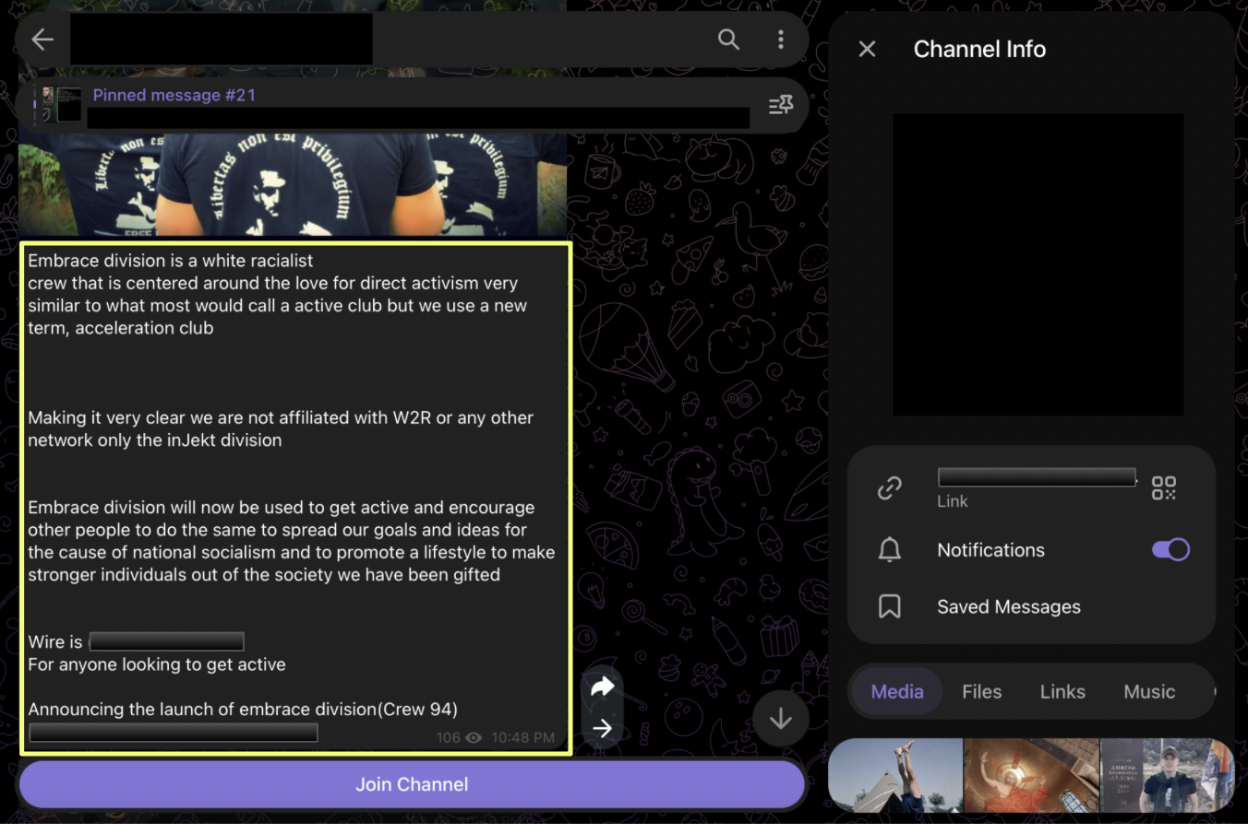
Figure 1: Injekt Division Announcement of Embrace Division as an “Acceleration Club”, June 2024
Other material associated with Injekt provides further insight into how the division was presented within the organisation. An infographic described three wings of Injekt Division: Chernobyl Media, a media wing responsible for photography, videography and graphic design; Embrace Division, centred on physical sports, training and above-ground activism; and Ground Zero, described as “the wing of the Injekt Division responsible for most underground activities”.
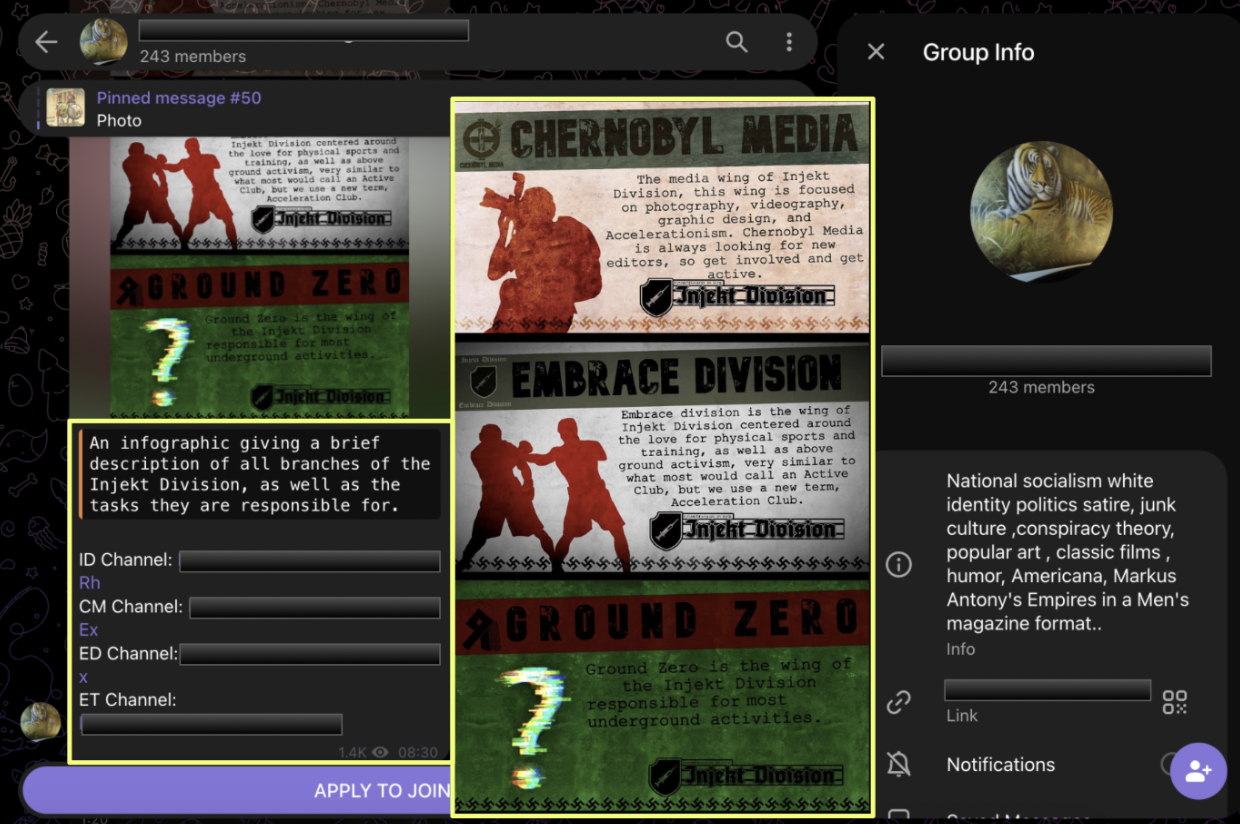
Figure 2: Injekt Division Infographic Detailing Its Organisational Structure, Shared in a White Supremacist Channel, October 2024
The infographic is significant not simply because it lists several components, but because of how it positions Embrace Division within Injekt’s self-described organisational structure. Physical training and above-ground activism appear alongside a media function and a component described as responsible for underground activities. It does not establish whether these components operated as described or how closely they coordinated their activities. It does show that Injekt represented physical culture as one part of a broader project.
The pairing of Embrace Division with Ground Zero is the most important part of this structure. The Embrace announcement ended with a contact handle, “for anyone looking to get active”, presenting the division as a recruitment point. Injekt’s material does not show how, or whether, members moved between the two wings. However, the structure it presents places the Active Club-style wing at the point of entry: the visible part of an organisation that also claimed a clandestine side. Militant movements have often separated legal-facing and clandestine activity in this way. What is unusual here is that a format designed to make white-supremacist organising look less threatening was used as the public side of an openly accelerationist group.
Injekt’s explicit rejection of any link to W2R indicates that the group was not seeking the Active Club network’s endorsement; it took the format and used it on its own terms. What makes the case illuminating is how the two modes of organising sit together within a single structure. Embrace Division carried the features of Active Club organising: physical training, a crew identity and an open call for anyone “looking to get active”. Around it, Injekt maintained the features of accelerationist organising: a claimed underground wing, a dedicated media arm and an explicit interest in collapse. In Injekt’s presentation, each mode supplies something the other lacks. The Active Club format offers visibility and an accessible route in, while the accelerationist framework supplies the purpose and militancy that the format was originally designed to keep out of view.
From Physical Culture to Militant Identity
Active Clubs have generally built their public identity around fitness, combat sports, outdoor training and direct activism, and Rundo’s model asked members to keep the identity free of overt Nazi symbolism. Yet, Injekt’s model does the opposite. Videos associated with Injekt show members engaging in firearms training and firing at targets including LGBTQ+ and Israeli flags, and an occult-style symbol.
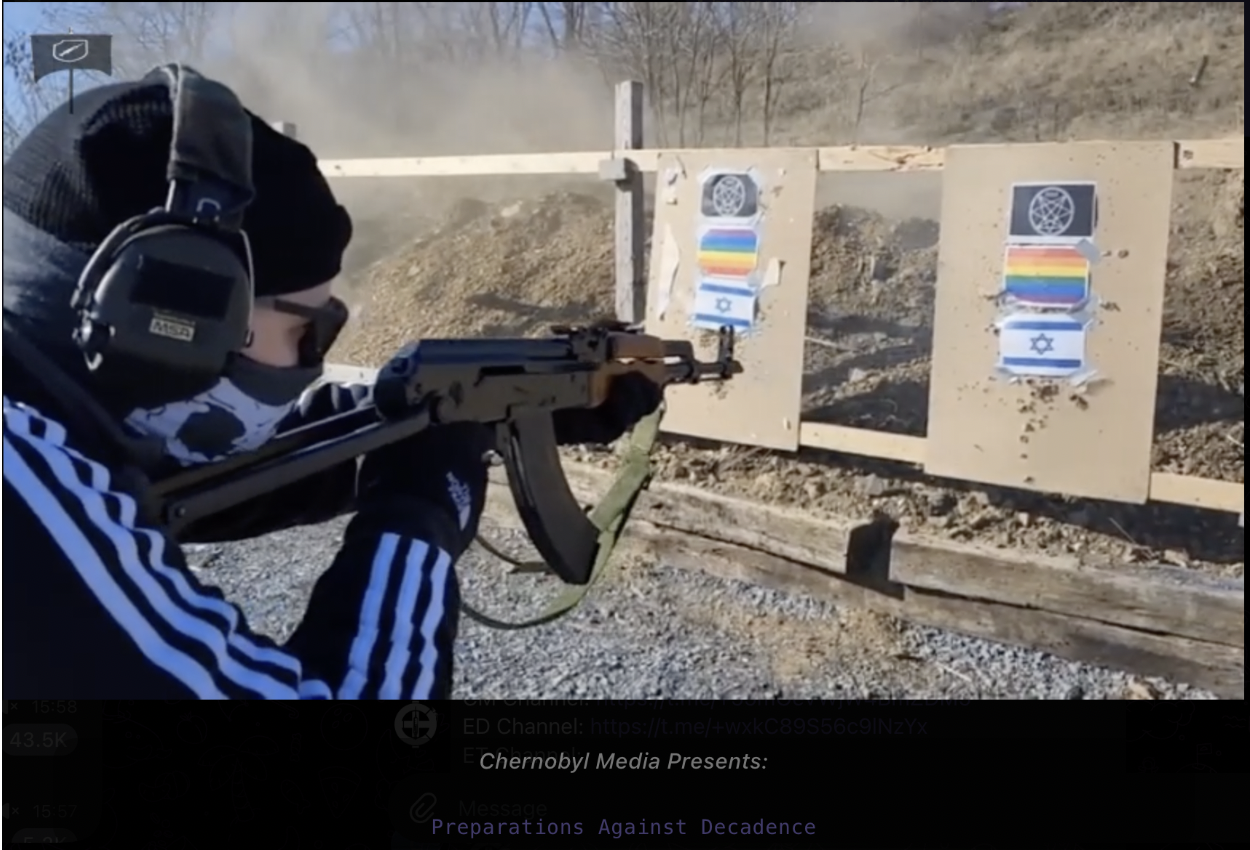
Figure 3: Still from Injekt Division’s Chernobyl Media Video Titled “Preparations Against Decadence”, February 2025
Another video montage combines Injekt’s branding with masked figures, woodland scenes, firearms and the phrase “HOLY WAR”. The footage links firearms practice not only to physical training, but also to the group’s ideological targets, giving the activity a political meaning that fitness imagery alone would not convey.

Figure 4: Still from Injekt Division and Embrace Division Video Combining Militant Imagery with Military-Style Aesthetics, October 2024
Figure 5 shows the clearest break with Rundo’s model. It is captioned “Tribe and Train”, a phrase associated with white-supremacist fitness organising, yet the image is of a Nazi shrine: swastika flags, a hat resembling those worn by the SS and including the totenkopf, masked and armed figures, and books including two copies of Ted Kaczynski’s Industrial Society and Its Future, Oswald Mosley’s Fascism: 100 Questions Asked and Answered, and Harassment Architecture, a novel widely circulated in online accelerationist spaces. A cloth in the foreground reads, “Pray for Rain”, a phrase the ADL has linked to Injekt’s interest in accelerating chaos.
Injekt retains the slogan and the emphasis on physical training, but places them within an openly neo-Nazi accelerationist framework and surrounds them with imagery considerably more explicit about violence, conflict, and militarisation.
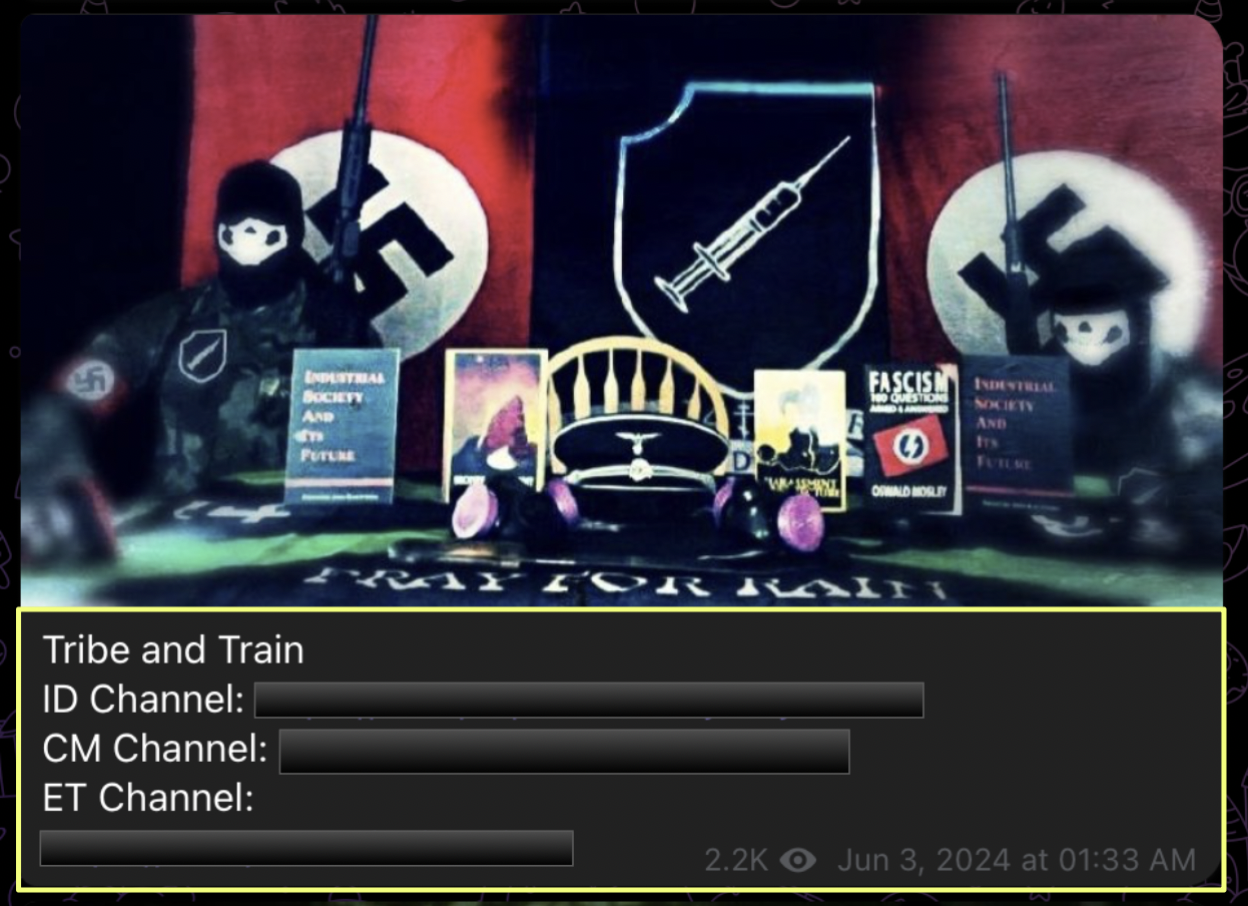
Figure 5: Injekt Division “Tribe and Train” Propaganda Combining Physical Training with Neo-Nazi Imagery, June 2024
Nevertheless, this does not mean that every Active Club is non-violent or that firearms are categorically absent from Active Club environments. Rather, firearms and overt paramilitary imagery do not principally define the model. In Injekt’s case, they become much more prominent within the group’s visual presentation, alongside explicit National Socialist ideology and violent rhetoric.
Implications for Technology Companies
The Injekt case illustrates a challenge for content moderation: an organisation can adopt a familiar model without any formal link to the network behind it, use different terminology and present its activities through several connected channels. Five approaches, most of which build on existing policies and tools, offer practical starting points.
First, tracking emerging terminology through threat intelligence. Injekt’s use of “Acceleration Club” shows why unfamiliar labels should be assessed in context rather than treated as prohibited keywords in isolation. Tech Against Terrorism’s Terrorist Content Analytics Platform (TCAP) provides a working example of this approach. However, TCAP’s inclusion policy is based largely on official designations. Other companies follow similar practice: GIFCT’s Hash-Sharing Database and Meta’s terrorist designations both draw heavily on official government and UN lists. Injekt is not designated, and groups that copy a model without joining a known network are likely to fall outside lists of this kind until researchers flag them.
Second, platforms could prioritise organisational-function signals. Announcements of new branches, descriptions of their responsibilities, links to related extremist spaces and calls to participate in physical activities can reveal how an organisation is structured. YouTube’s Violent Extremist or Criminal Organisations policy already prohibits recruitment for such organisations and content directing users to spaces used for prohibited propaganda or recruitment.
Third, platforms could use entity and relationship mapping to identify organisational clusters. Shared branding, recurring terminology, repeated links and cross-posted material can connect channels that serve different functions. X’s Violent and Hateful Entities policy provides an existing policy framework for addressing promotion and recruitment on behalf of such groups.
Fourth, platforms could develop contextual classifiers for physical-culture content. Combat sports or outdoor training imagery alone should not trigger enforcement. However, when combined with extremist branding, recruitment language, firearms training and links to known extremist networks, it may warrant further review. GIFCT identifies multimedia classifiers as an area of technical development. Platforms could build on existing automated detection and human-review processes to assess these combinations, rather than relying on any single visual feature.
Fifth, platforms could combine content-similarity systems with threat-intelligence workflows to identify the spread of emerging organisational concepts. GIFCT’s Hash-Sharing Database enables member platforms to identify known extremist content when it reappears across services. However, it cannot independently recognise a new organisational label or establish that a model is spreading. Researchers and specialist monitoring organisations could supplement hash-sharing by reporting when a known group adopts a new label or organisational structure, giving platforms evidence to assess alongside matching content and account links.
Injekt’s “Acceleration Club” shows how a model designed around restraint can be taken up by a group that rejects that restraint. Assessing Active Club-style organising therefore requires attention to what it is attached to, not only to the format itself.
–
Muskan Sangwan is a Dark Web Threat Intelligence Analyst at StealthMole and previously worked as a Senior Counter-Terrorism Intelligence Analyst at the Terrorism Research and Analysis Consortium (TRAC). She specialises in terrorism and extremist ecosystems with a special focus on Islamic State (IS) operations, jihadist and far-right movements, the crime–terror nexus, and the growing intersection of cyber threat intelligence and dark-web activity.
—
Are you a tech company interested in strengthening your capacity to counter terrorist and violent extremist activity online? Apply for GIFCT membership to join over 30 other tech platforms working together to prevent terrorists and violent extremists from exploiting online platforms by leveraging technology, expertise, and cross-sector partnerships.
The views and opinions expressed in this Insight are the authors’ own and do not necessarily reflect those of GNET or any of its partners.