


Artificial Intelligence (AI) has transformed online culture by making content creation faster, cheaper, and virtually limitless. There are various platforms that, often through a free or low-cost version, allow users to create images or videos, which can then be shared on social media platforms such as TikTok. In fact, it is often possible to find AI-generated videos created using apps such as VeoE.ai, PixVerse, Sora, Media.io, and Grok. All these services offer free registration with the option to create a limited number of products in the free version. Alternatively, a trial period is available, after which you can pay to produce more content, videos, or images. The proliferation of these AI applications and their inherent characteristics – low cost and rapid content generation in large volume – has enabled and facilitated the creation of ‘AI Slop’.
‘AI Slop’ refers to a mass production of low-quality AI-generated content with minimal human input. It is usually created to maximise clicks, views, engagement, and advertising revenue. It is cheap to produce, and a single creator can generate hundreds of short videos, so creators can flood platforms with a huge amount of content that, if it performs well, could reach many users. Social media platforms benefit from volume because they need constant uploads and activity.
‘AI Slop’ is closely connected to the broader online phenomenon known as ‘brain rot’. While ‘AI Slop’ refers to the content itself, ‘brain rot’ describes the psychological and cultural effects of constantly consuming fast, fragmented, and overstimulating media. ‘Brain rot’ content is often absurd, ironic, surreal, and intentionally meaningless, reflecting the exhaustion of users living within an endless cycle of scrolling and algorithmic entertainment.
The evolution of AI-generated ‘brain rot’ content demonstrates how online radicalisation can emerge through formats that initially appear absurd, humorous, or harmless. A recent example is the proliferation of AI-generated fruit-and-vegetable slop videos, in which anthropomorphic fruits or vegetables are inserted into melodramatic narratives involving romance, betrayal, cheating, and domestic conflict. Although these videos are often dismissed as meaningless entertainment optimised for algorithmic engagement, they already normalise exaggerated forms of aggression and emotional violence through repetitive, hyper-stimulating storytelling patterns.
This Insight analyses the use of AI-generative tools and the consequent production of fruit and vegetable-related AI slops specifically attributable to violence-based audiovisual content.
The Exploitation of Generative AI for Violence-Based Audiovisual Products
The proliferation of AI-generated audiovisual content on platforms such as TikTok has also attracted producers of violent content, despite the platform’s prohibition on such content. Users particularly attracted to violent and extremist content have exploited platforms (such as Viggle.ai) to produce and later disseminate videos that glorify and celebrate terrorist and violent extremist attacks, creating catchy videos featuring the most viral online trends.
Through online monitoring, an increasingly violent subgenre has been identified: AI fruit/vegetable gore. In these videos, colourful and anthropomorphic AI-generated fruit characters are subjected to extreme mutilation, torture, and hyper-realistic violence. The progression is significant because it shows how AI-generated content ecosystems can gradually desensitise audiences. They achieve this by transforming familiar, innocent imagery into vehicles of shock and brutality. Additionally, the ease with which content can be created and accessed using AI accelerates this trend. As Zara Mitchell notes, “The barrier to entry has collapsed, which means anyone can generate problematic content at scale” (Figure 1).
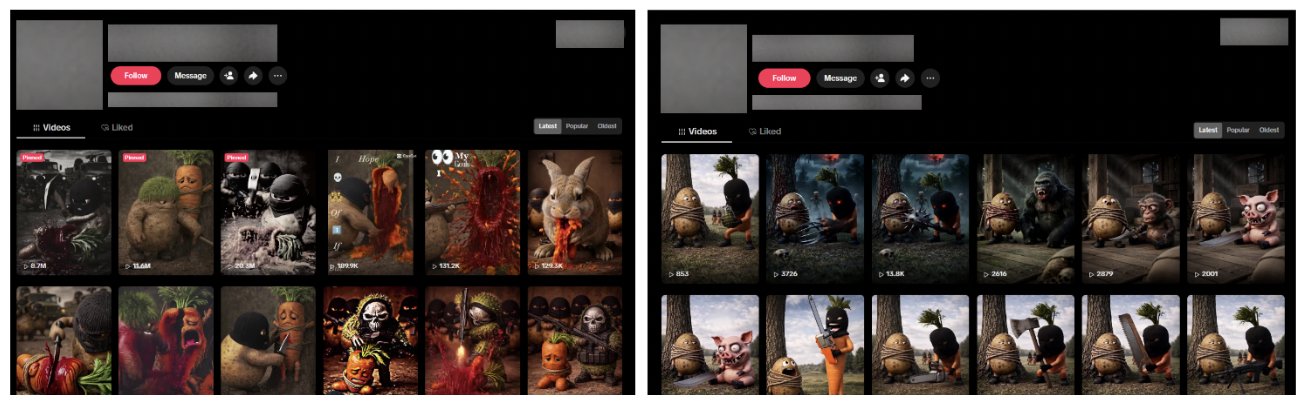
Figure 1: Examples of violence-based fruit and vegetable material.
Such gore content refers to “graphic, disturbing, and violent visual materials” which show acts of brutal violence, ranging from assassinations, brutal murders, to mass casualty events, and conflict footage. Although TikTok policies prohibit the proliferation of extreme violent material, violent fruit-and-vegetable AI slops allow users to circumvent moderation policies, perhaps because the videos appear innocuous. This content is often consumed by younger audiences, who are particularly active on TikTok. In most of the aforementioned videos, animated vegetables and fruits are depicted using different weapons (guns, axes, rifles and many more) to atrociously kill their enemies, shredding their bodies apart until the organs come out (Figure 2).
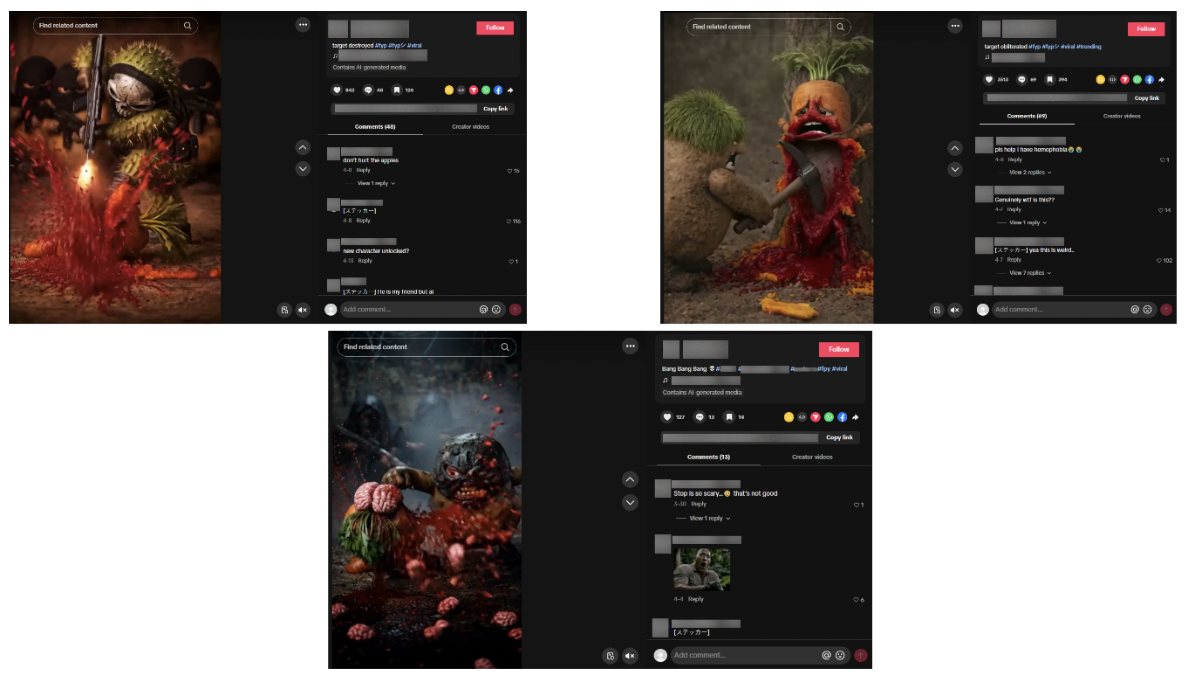
Figure 2: Examples of gore-related fruit and vegetable audiovisual content.
In videos of ‘fruit/vegetables gore’, the ‘cute’ aesthetic conceals disturbing content. Specifically, Pixar-like animation, bright colours, and cartoon characters are used to soften violence, humiliation, body horror, and cruelty. This creates a mix of comforting aesthetics and emotional disturbance.
Cartel, Salafi-jihadi, Extreme Right, and Nihilism-Related AI slops
Additionally, the authors have detected a significant number of users disseminating AI-generated fruit and vegetable slops attributable to the aesthetics of specific criminal organisations (cartels) and/or extremist ecosystems (Salafi-jihadi, extreme right accelerationism, and nihilistic violence [NVE]).
At first glance, a sampling of AI-generated videos appears to depict cartel-related violence. These posts display some of the gruesome methods used by cartel members to punish and eliminate rivals. For instance, Figure 3 illustrates a carrot ‘killing’ a potato with a saw.
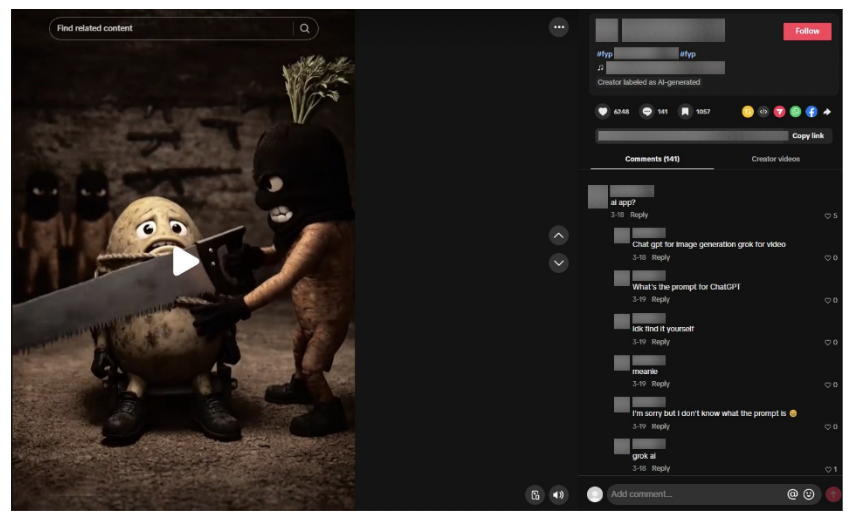
Figure 3: Example of cartel-related fruit and vegetable content
Another video shows a carrot ‘assassinating’ a potato with a hammer (Figure 4). In the comments section, TikTok users also clearly state that “AI learnt from the cartel” to produce the video (Figure 4).
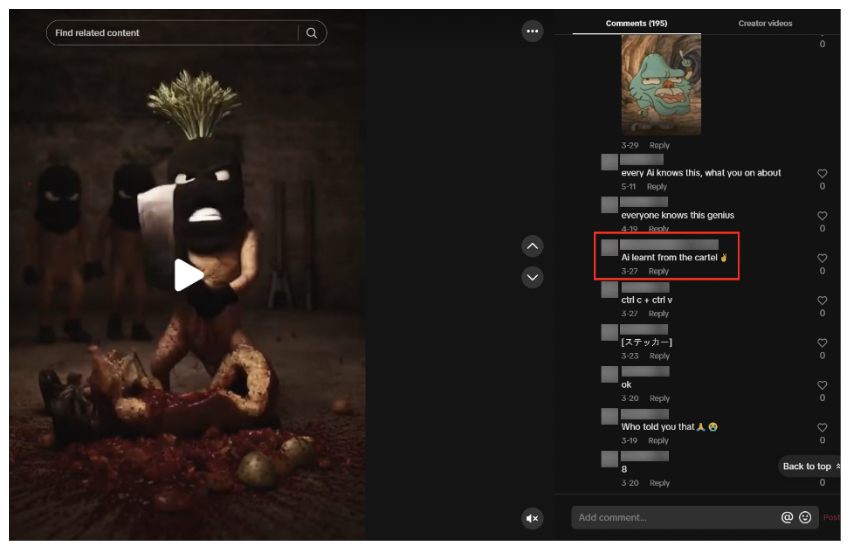
Figure 4: A user claims that “AI learnt from the cartel” to create the AI-slop
A few posts containing AI-animated food recall terrorist propaganda as well. Evidence suggests that some of these scenes replicate content from official Islamic State (IS) videos. This is the case of the post shown in Figure 5, in which a carrot makes a potato ‘explode’.
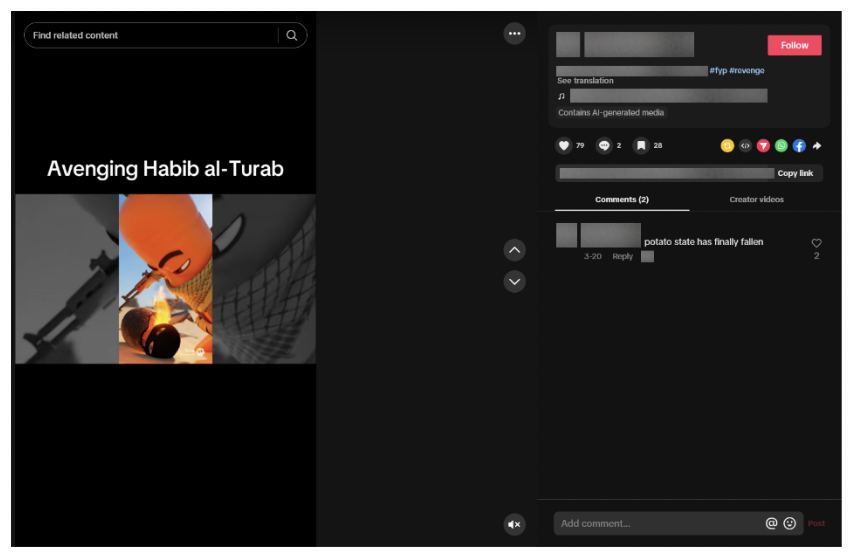
Figure 5: AI-slop inspired by an IS institutional propaganda video
Specifically, the first minutes of the clip recall the beginning of IS institutional propaganda videos (Figure 6).
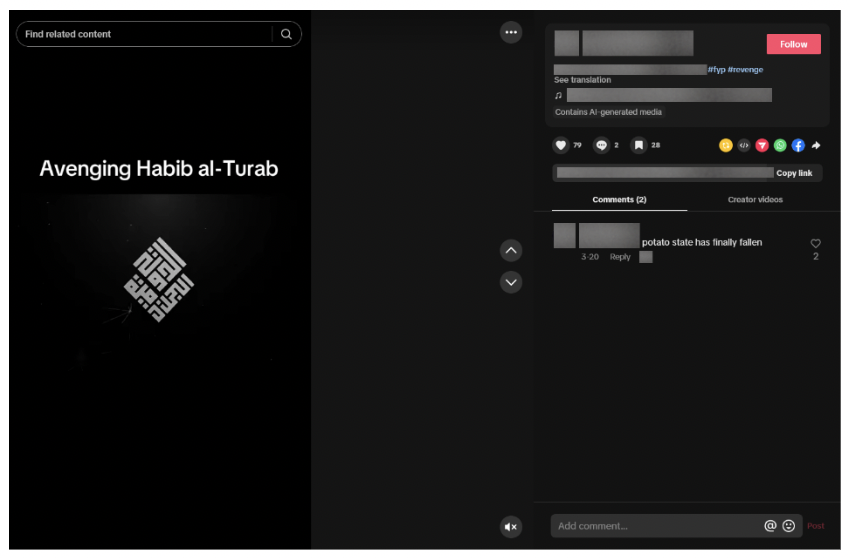
Figure 6: Intro to the AI slop inspired by an IS institutional propaganda video
In another post, a ‘Carrot Khalifah’ speaks to his ‘army’, claiming that “the Carrot State will rise again”, evoking the infamous slogan “The Islamic State will rise again” (Figure 7). It is worth noting that both videos were shared with hashtags that IS supporters typically use to disseminate propaganda on TikTok, as observed in our direct OSINT research.
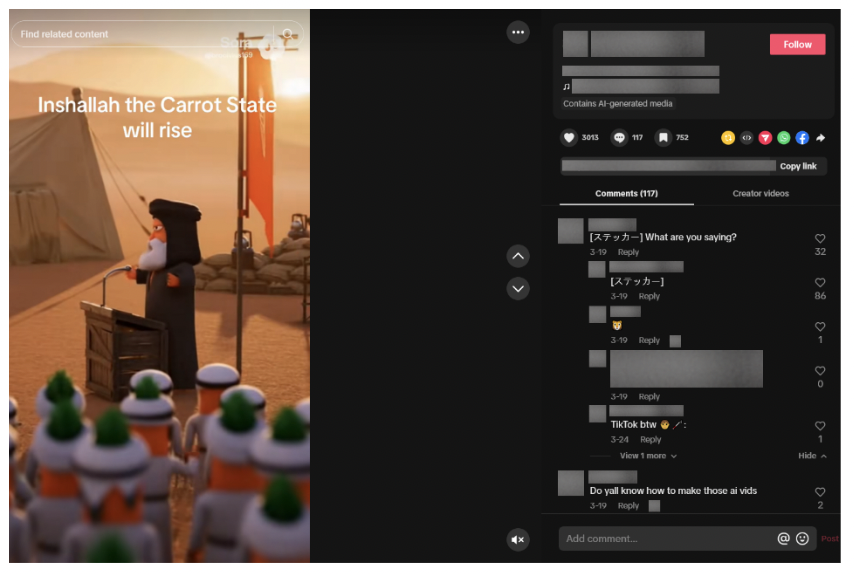
Figure 7: ‘Carrot Khalifah’ AI slop
Some users also recreate AI-generated fruit and vegetable content with aesthetic callbacks to extreme-right accelerationism and Nihilistic Violent Extremism (NVE). The bio of an account which shares violence-based fruit and vegetable AI content references the neo-Nazi terrorist organisation Atomwaffen Division (AWD), as well as No Lives Matter (NLM), an Internet subculture which falls under the NVE online ecosystem (Figure 8). The user also posted an image of a vegetable, urging “join the ******Waffen Division” and a picture of a flag inspired by AWD (Figure 8).
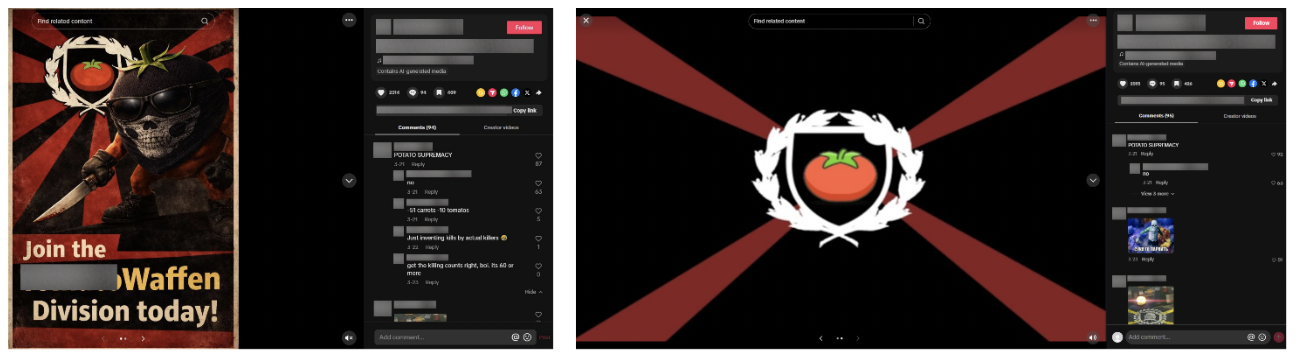
Figure 8: AI slop inspired by extreme right accelerationism
The comments section includes statements recalling concepts from the extreme right-wing online ecosystem. An example is the comment “POTATO SUPREMACY”, which blatantly refers to the ideology of white supremacy (Figure 9). Moreover, users refer to the number of victims of shootings carried out by infamous accelerationist terrorist attackers (Figure 9). In the comments section, the authors also found stickers featuring symbols of extreme-right accelerationism (Figure 9).
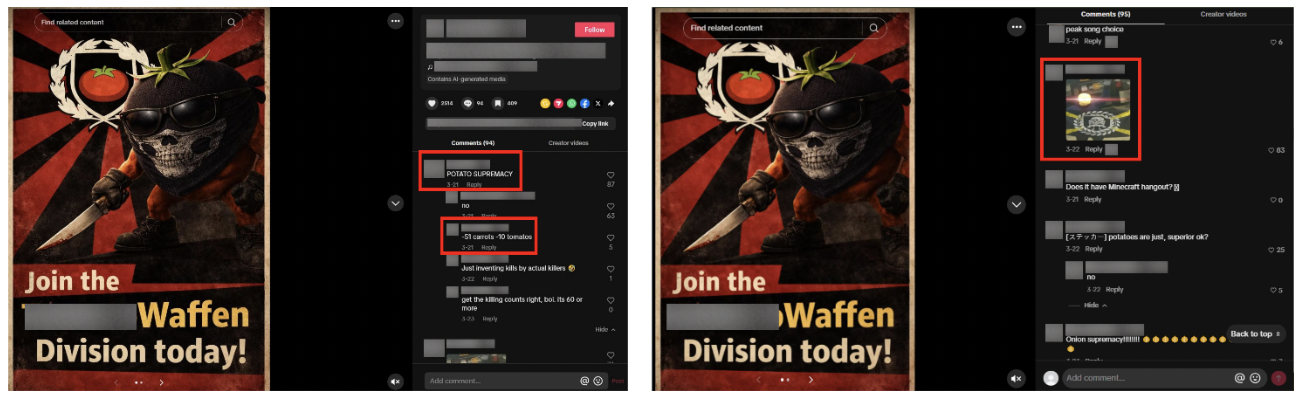
Figure 9: AI slop inspired by extreme right accelerationism – ‘Comments’ section
Furthermore, posts that mix AI-animated food with callbacks from NVE have been identified (Figure 10).
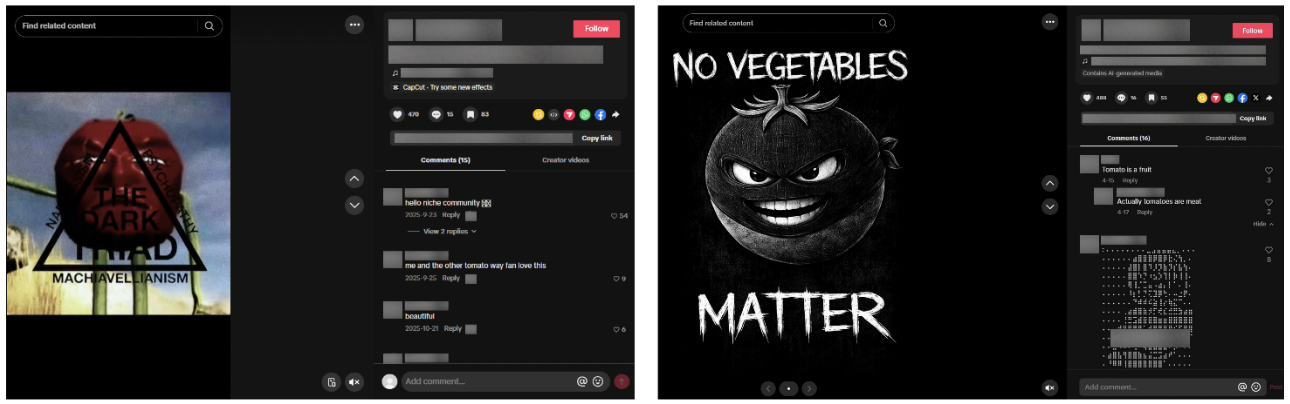
Figure 10: AI slop inspired by NVE
Under these posts, users commented with terms and slang associated with NVE.
Conclusion
It is clear that AI-generative platforms are a crucial tool for creating viral content online, including violent and extremist content, as in the aforementioned cases. Food violence-based material empowered by AI is easily accessible, putting minors and youth at risk of inadvertently consuming graphic or disturbing content. Scenes with AI fruit and vegetables are simple and highly repetitive. They require no cognitive effort, provide constant rewards through unexpected scenes, and are perfect for endless scrolling. They are specifically designed for the algorithm, extremely quick to produce, and optimised for engagement. Hence, they act as attention traps.
AI slop videos like the ones shown above are deeply attractive to the younger individuals active on social networks. The gory and disturbing content displayed in these types of videos may make violence seem funny, normal or even exciting to emulate. Such content provides a functional banalisation of violence by means of non-human elements, depicted in a veiled irony while showing a significant quantity of violence-based material. Such audiovisual content normalises specific extremist and violent narratives and imagery, making them accessible to everyone.
As for cartel and terrorism-related content, the risk is that users might stumble into this kind of material and approach membership in these online ecosystems. This is plausible as the comments to the posts analysed above often function as ‘communication hubs’ where users explain and provide further details on the platform origins of shared content. Although this specific material is not directly produced by ‘committed supporters’ of the different structured extremist online ecosystems, it is clear that this is an emulation of a particular aesthetic. This type of content can lay the basis for the consumption of further violence-based audiovisual material, making young users fall into the trap of online radicalisation and audiovisual violence consumption.
Violence-based AI slops reinforce a fascination with violence for violence’s sake, thereby allowing the so-called online ‘ode to violence’ to progressively gain ground among young people within the digital space. More concerning, however, is the escalation from absurdist AI-generated drama into explicitly graphic content. The radicalising potential of this content does not necessarily lie in ideological messaging alone, but in the normalisation of cruelty, emotional numbness, and algorithmically amplified shock culture. AI-generated slop content thrives on repetition, absurdity, and overstimulation, progressively pushing users toward increasingly extreme material to maintain engagement. In this sense, the transition from harmless surreal humour to graphic AI gore reflects a broader dynamic of online radicalisation: the gradual erosion of emotional boundaries through constant exposure to increasingly violent and dehumanising imagery, where, as Mitchell states, “the absurdity creates distance” and “viewers can enjoy the drama without feeling complicit in anything genuinely troubling.” In this regard, countermeasures regarding AI-generated regulation must be considered to prevent the creation and subsequent dissemination of violence-based audiovisual material within the digital sphere.
Therefore, it is essential that TikTok develop countermeasures that incorporate effective tools to limit the dissemination of such AI-generated content on the platform. Nowadays, with the widespread proliferation of AI tools and instruments, it is imperative that AI providers develop proactive monitoring systems and further limit the use of such technologies to create violent and extremist-related content. Notwithstanding the urge for automated and AI-based detection systems, an efficient knowledge of the ‘original’ propaganda and violent content emulated (Cartels, Salafi-Jihadi, Extreme Right, NVE-related material) is required to identify the material before its spread, since knowledge is the first line of defence against the proliferation of extremist content, especially in the digital field.
–
Grazia Ludovica Giardini is a Junior Researcher at the Italian Team for Security, Terroristic Issues, and Managing Emergencies – ITSTIME. She specialises in the application of Open Source Intelligence (OSINT), Social Media Intelligence (SOCMINT) techniques, and Digital Human Intelligence (Digital HUMINT). Her research activities are focused on monitoring Salafi-jihadi groups’ communication strategies and propaganda through various online platforms.
Alessandra Pugnana is a Research Analyst at the Italian Team for Security, Terroristic Issues & Managing Emergencies – ITSTIME. She specialised in OSINT, SOCMINT, and Digital HUMINT. Her research activities are focused on monitoring terroristic networks, with particular attention to nihilistic violence, right-wing extremism and its new communication strategy.
Eleonora Ristuccia is a junior research analyst at the Italian Team for Security, Terroristic Issues, and Managing Emergencies – ITSTIME. She specialises in the application of Open Source Intelligence (OSINT) and Social Media Intelligence (SOCMINT) techniques. Specifically, she focuses on the study of jihad communication strategies and propaganda through various online platforms.
—
Are you a tech company interested in strengthening your capacity to counter terrorist and violent extremist activity online? Apply for GIFCT membership to join over 30 other tech platforms working together to prevent terrorists and violent extremists from exploiting online platforms by leveraging technology, expertise, and cross-sector partnerships.
The views and opinions expressed in this Insight are the authors’ own and do not necessarily reflect those of GNET or any of its partners.