

On 18 May 2026, 18-year-old Caleb Vazquez and 17-year-old Cain Clark carried out a mass-casualty attack at the Islamic Center of San Diego (ICSD), the largest mosque in San Diego County. The attack left three people dead before the perpetrators ultimately took their own lives. In the aftermath, a lengthy manifesto titled The New Crusade quickly emerged online alongside other digital materials outlining the attackers’ worldview, ideological influences, grievances, and motivations.
The manifesto reflects a familiar accelerationist worldview shaped by white supremacist ideology, admiration for previous mass shooters, and longstanding conspiracy narratives such as the “Great Replacement“. Within this framework, Muslims are portrayed as symbolic representatives of demographic replacement and perceived civilisational decline, framing the mosque as a deliberate ideological target rather than an opportunistic one. The victims are consequently presented not as individuals, but as symbols within an imagined racial conflict.
While the manifesto ultimately frames violence through accelerationist and white supremacist ideology, it also reveals a far more personal layer of grievance. Vazquez repeatedly describes years of rejection, ridicule, loneliness, and perceived social exclusion, alongside a strong identification with online incel culture. These experiences are not presented as isolated frustrations but are woven into a broader ideological narrative in which personal resentment becomes inseparable from racial, political, and societal conflict.
At first glance, The New Crusade – jointly written by the two perpetrators in separate sections – appears to fit comfortably within a now familiar tradition of extremist writings associated with perpetrators such as Anders Breivik, Brenton Tarrant, and Payton Gendron. Like many manifestos before it, it seeks to explain, justify, and contextualise an act of mass violence. However, the document also poses different questions about how people become radicalised in today’s digital environment. Throughout the text, the authors reflect on developments that researchers have increasingly observed across contemporary extremist ecosystems.
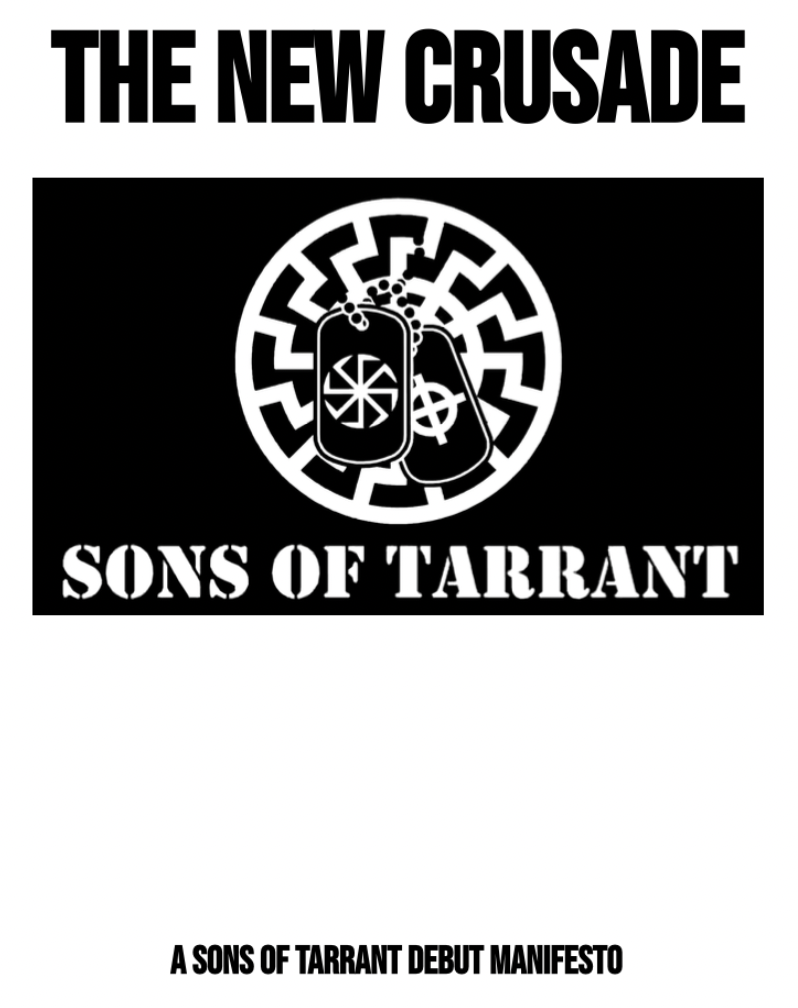
Figure 1: The front page of ‘The New Crusade’ Manifesto
This Insight analyses four themes that emerge across The New Crusade: the evolving role of manifestos, the construction of symbolic identities versus organisational membership, the influence of fandom and internet culture, and the growing importance of emerging technologies. The manifesto’s significance lies less in introducing new ideas than in revealing how its authors understood the changing dynamics of radicalisation, recruitment, and mobilisation in an increasingly digital environment.
Propaganda Beyond the Manifesto
The modern extremist manifesto has long occupied a unique position within violent extremist movements. From Breivik’s 1,500-page 2083 manifesto to Tarrant’s The Great Replacement, such documents serve multiple purposes: they justify violence, explain ideology, inspire supporters, and attempt to shape how attacks are remembered long after they occur. In many respects, the manifesto has become one of the defining artefacts of contemporary extremist violence. The New Crusade clearly attempts to position itself within this tradition, yet it also reveals an awareness that the information environment has changed. While discussing radicalisation and recruitment, it argues:
“Edits, memes, and propaganda based shitposting of all kinds, this has done more to radicalize the masses than any book or manifesto ever could.”
This observation reflects a broader shift already recognised by researchers and practitioners. Previous generations of extremists often relied heavily on ideological texts, books, pamphlets, and lengthy propaganda materials to communicate their worldview. Today, extremist narratives are far more likely to circulate through memes, edited videos, social media posts, livestreams, and other forms of highly visual, easily shareable content.
The manifesto incorporates this shift into the attackers’ own propaganda strategy. The livestream of the attack was an integral part of the dissemination plan outlined throughout the document, as well as an emulation of previous attackers whom they had earlier praised. Alongside discussions of memes, videos, and written manifestos, the authors also discuss stream quality, recording, archiving, and redistribution, treating livestreaming as another medium through which extremist content could be preserved and shared.
The attackers’ own digital footprint reinforces this point. In the manifesto, Vazquez and Clark explicitly identify several of their online aliases. Building on these self-disclosed usernames, an investigation by MS7 Security Services mapped the attackers’ broader digital footprint across multiple online platforms, linking them to platforms like TikTok, Steam, and SoundCloud, as well as fringe online communities. Much of their publicly available content reflected the same communicative styles promoted throughout the manifesto, including short-form videos, memes, internet humour, gaming culture, and niche online subcultures.
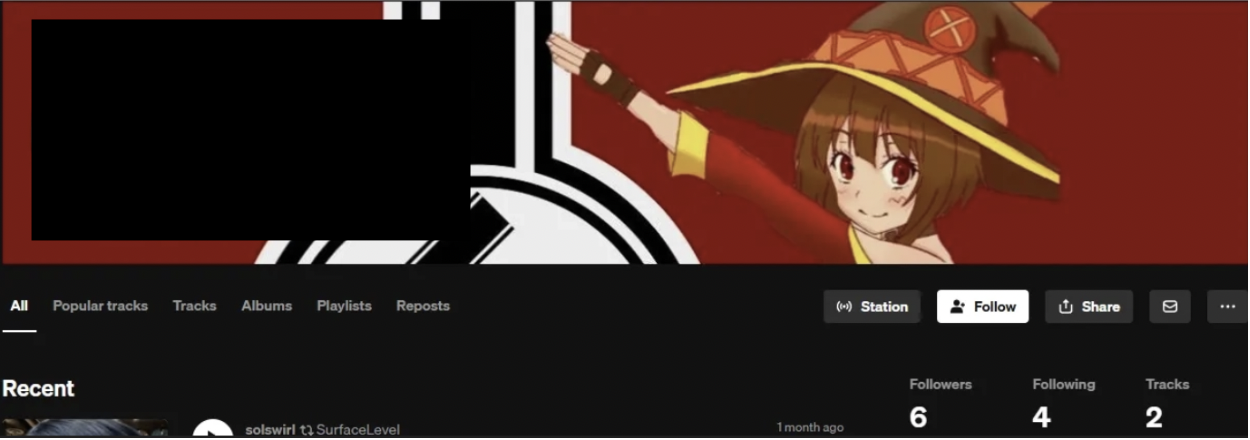
Figure 2: A screenshot of Cain Clark’s self-proclaimed SoundCloud
Although some of these accounts, such as those on TikTok and SoundCloud, were removed following the attack, their online activity illustrates that the manifesto’s arguments about digital propaganda were not merely theoretical. They were embedded within the attackers’ own online behaviour and culminated in an attack that was itself designed for digital dissemination through livestreaming and subsequent redistribution. It is important to note that TikTok and SoundCloud prohibit the promotion of violent extremist material on their platforms.

Figure 3: TikTok Video Showing Caleb Vazquez Dancing While Mimicking a Self-Stabbing Gesture.
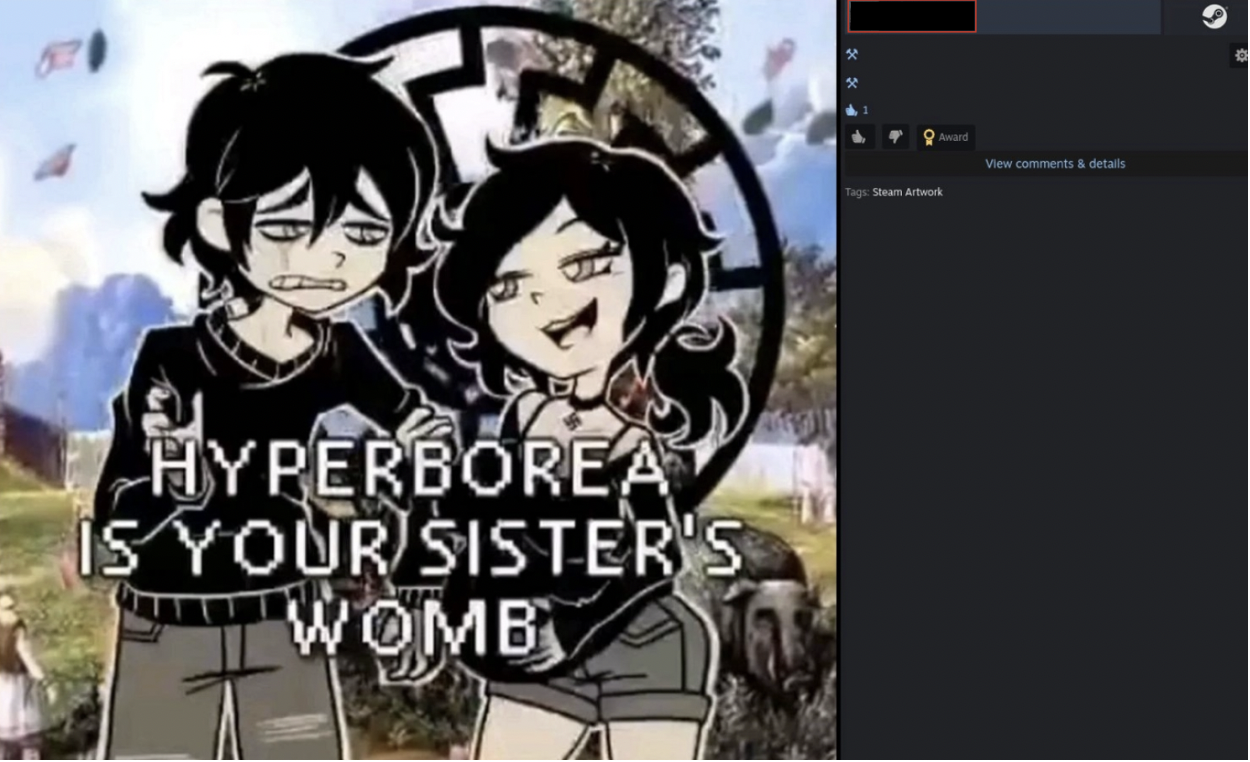
Figure 4: Cain Clark’s Steam Artwork Incorporating the Black Sun (Sonnenrad) and Hyperborea, Recurring Symbols Within White Supremacist Online Communities.
Terrorgram Saints and the Search for the Sons of Tarrant
If the manifesto’s discussion of memes acknowledges how extremist propaganda has evolved, its discussion of the “Sons of Tarrant” reveals a similar evolution in how the authors understand belonging.
The authors repeatedly reference previous attackers, particularly Tarrant, the perpetrator of the 2019 Christchurch mosque attacks. References to previous mass shooters are hardly unusual within accelerationist ecosystems. Communities associated with networks such as Terrorgram have long elevated perpetrators into symbolic “saints”, creating a culture in which previous attackers are remembered not simply as historical figures but as enduring sources of ideological inspiration. The New Crusade builds upon this tradition but moves beyond glorification by presenting the “Sons of Tarrant” as an identity intended to create “a sense of belonging and union” among supporters.
Historically, many extremist movements relied upon organisations to create collective identity. Membership, leadership structures, physical communities, and shared activities helped individuals feel connected to a broader cause. Yet many contemporary extremist ecosystems operate very differently. Individuals may spend years consuming propaganda, participating in online communities, and adopting extremist beliefs without ever formally joining a group. Throughout the document, the authors reference previous attackers, recommend ideological reading material, and present their own writing as part of a broader historical lineage. Vazquez explicitly identifies specific perpetrators as figures prevalent in this imagined identity and those they sought to emulate.
The significance of the “Sons of Tarrant” concept, therefore, lies less in introducing a new organisational model than in making explicit how the authors believe belonging should be cultivated, and how these pseudo-groups can play a role in the radicalisation process. Instead of encouraging readers to join an organisation or formalised movement, the manifesto proposes a shared identity capable of connecting geographically dispersed individuals through symbolism, mythology, and a common lineage. In doing so, it provides an insight into how the authors themselves conceptualise collective identity within contemporary extremist ecosystems.
For researchers and practitioners, this raises an important question. If modern extremist ecosystems rely upon symbolic identities rather than formal organisations, how should those identities be understood and monitored? The challenge of tracking radicalisation patterns beyond groups or networks requires understanding how belonging itself is being constructed in online environments where membership may be entirely symbolic.
When Fandom Becomes Ideological Territory
Internet culture occupies a prominent place across the manifesto. Alongside discussions of ideology and violence, the authors devote considerable attention to memes, online communities, niche internet subcultures, and even the Dutch animated web series Ongezellig. This emphasis reflects a broader pattern seen across contemporary extremist attacks, in which internet culture is not merely referenced but becomes an important component of radicalisation and mobilisation.
Similar themes emerged following the 2025 Antioch High School shooting, where investigators found that the perpetrator, 17-year-old Solomon Henderson, also maintained an extensive online presence across imageboards, extremist forums, and social media platforms, with his writings incorporating memes and internet-specific language. Taken together, these cases illustrate how internet-native cultures can increasingly form part of the social environments in which extremist worldviews are reinforced and expressed, particularly influencing younger perpetrators.
The manifesto and online activity around the San Diego attack indicate that these communities are more than spaces of entertainment. They are environments where identities are formed, and influence is established long before individuals encounter overtly extremist material. The authors repeatedly express frustration about the perceived “gentrification” of certain online spaces, arguing that outsiders dilute the culture and values of these communities. Their discussion of Ongezellig is particularly revealing because it focuses less on the series itself than on preserving the identity of the surrounding community.
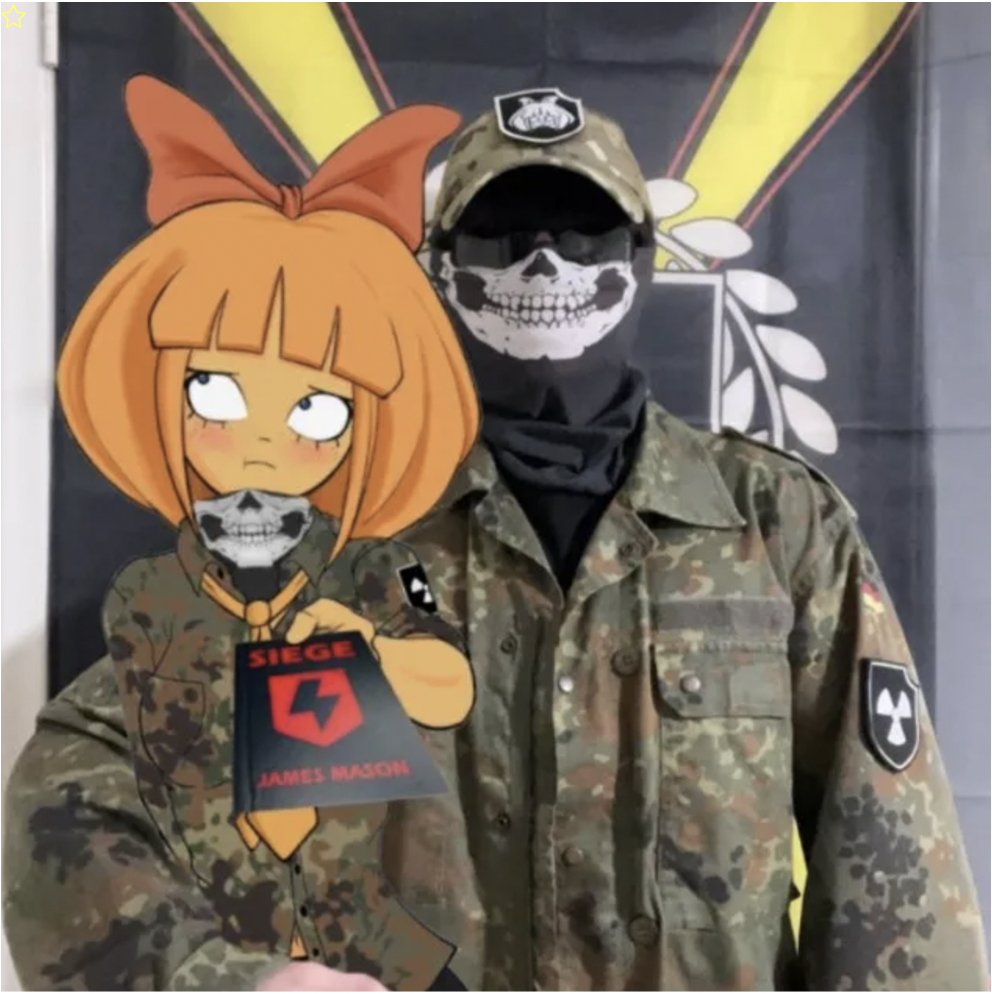
Figure 5: Caleb Vazquez Posing Alongside an Edited Ongezellig Character, Holding a Copy of Siege – a neo-Nazi text – by James Mason
Furthermore, it suggests that radicalisation does not exclusively concern explicitly extremist spaces. Individuals may first encounter particular aesthetics, humour, or social networks through gaming communities, fandoms, meme pages, or other niche online spaces long before any explicit ideological commitment develops.
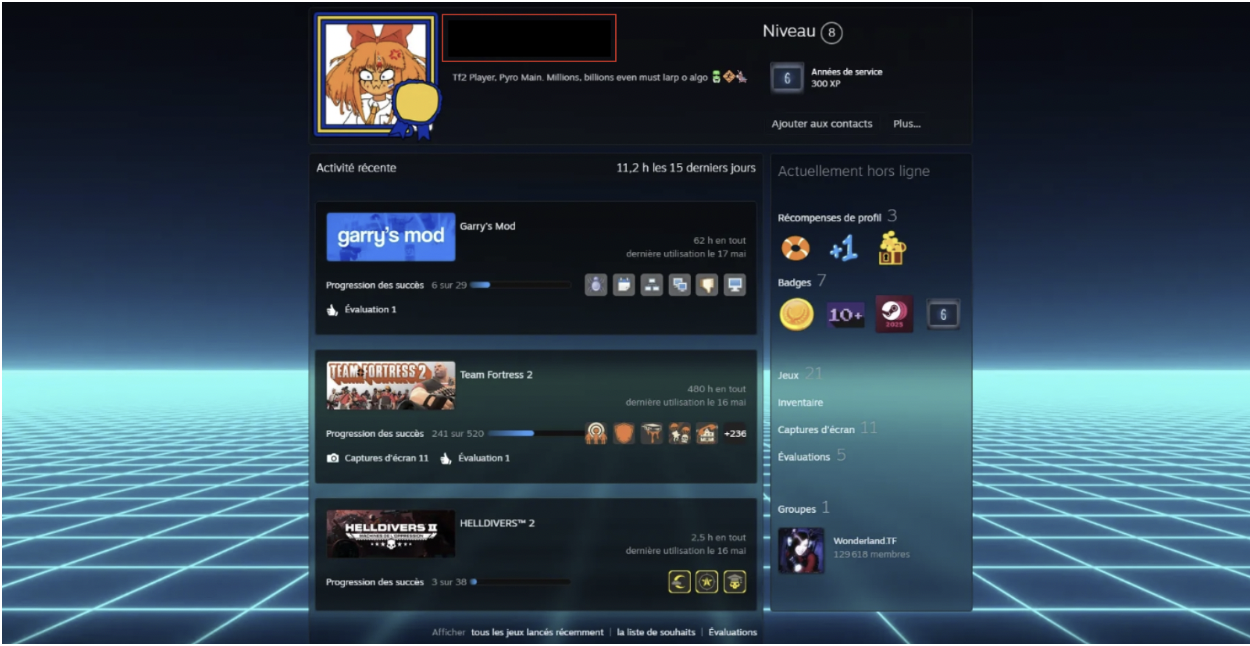
Figure 6: Caleb Vazquez’s Steam Profile with Ongezellig Profile Picture (Courtesy: MS7 Investigations: Mapping Digital Footprint of San Diego Shooters)
The significance of these spaces lies in their ability to foster participation. Unlike traditional propaganda, which is often consumed passively, online communities encourage users to create content, share jokes, develop in-group language, and establish social connections.
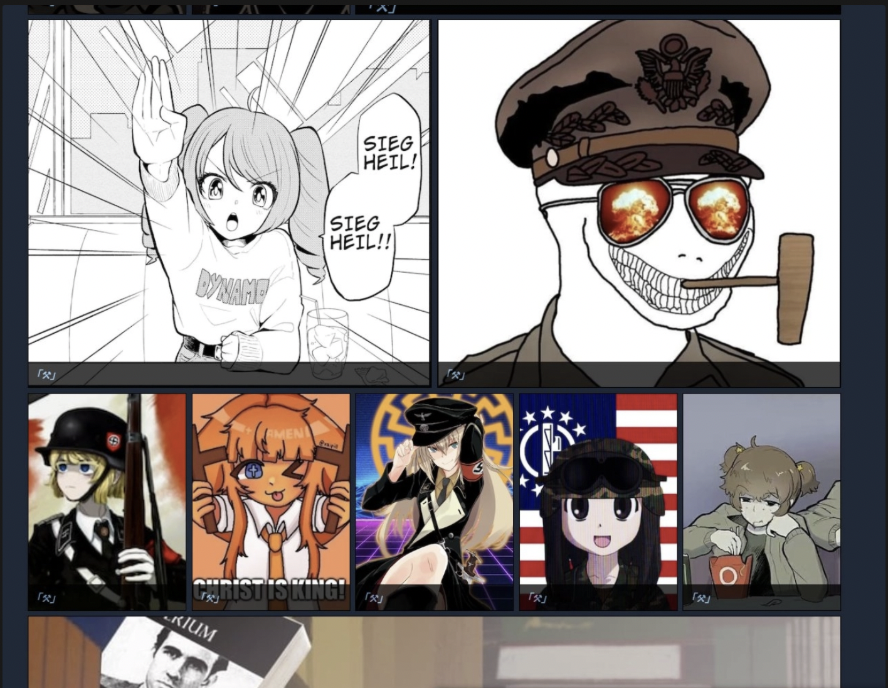
Figure 7: Extremist Artwork Shared on Cain Clark’s Steam Profile
For the authors, the battle for influence begins long before individuals encounter overtly extremist propaganda. It begins in the online cultures where identities, friendships, and worldviews are first formed.
Preparing for Future Conflict
Beyond propaganda, identity, and culture, the authors also devote attention to questions of strategy, conflict, and technological adaptation for future attacks. Among the materials discussed are FPV and reconnaissance drones, guerrilla warfare manuals, and military tactics adapted from insurgent movements and modern security practices. In this section, the authors are attempting to anticipate the environment in which future extremists may operate. While this forward-looking perspective is characteristic of accelerationist ideology, The New Crusade applies it not only to societal collapse but also to the practical realities of propaganda, identity formation, and future mobilisation – in alignment with their previous emphases on memes and online communities.
This is particularly evident in the manifesto’s discussion of drones and other emerging technologies, whose significance lies in how readily they can now be observed, studied, and discussed online as footage, innovations and tactical developments are accessible through social media and online video platforms, lowering the barriers to technical learning. Previous research has shown how these dynamics have contributed to the emergence of online drone instruction ecosystems within extremist movements. Overall, the themes discussed throughout the manifesto do not fundamentally reshape existing understandings of radicalisation. Instead, they reinforce and synthesise developments that researchers have documented over recent years. The value of The New Crusade lies not in introducing new ideas, but in revealing how its authors themselves understood the changing landscape of extremist mobilisation.
These observations provide valuable insight into how at least some extremists themselves understand recruitment, participation, and mobilisation in digital environments. If extremist actors believe that influence is built through memes, identities, online communities, and emerging technologies rather than through ideology alone, then efforts to understand and counter radicalisation may need to pay greater attention to signals present in non-extremist environments as well. In that sense, the most revealing aspect of the San Diego manifesto may not be the beliefs it expresses, but the future of extremist mobilisation it attempts to imagine.
—
Muskan Sangwan is a Dark Web Threat Intelligence Analyst at StealthMole and previously worked as a Senior Counter-Terrorism Intelligence Analyst at the Terrorism Research and Analysis Consortium (TRAC). She specialises in terrorism and extremist ecosystems with special focus on Islamic State (IS) operations, jihadist and far-right movements, the crime–terror nexus, and the growing intersection of cyber threat intelligence and dark-web activity.
—
Are you a tech company interested in strengthening your capacity to counter terrorist and violent extremist activity online? Apply for GIFCT membership to join over 30 other tech platforms working together to prevent terrorists and violent extremists from exploiting online platforms by leveraging technology, expertise, and cross-sector partnerships.
The views and opinions expressed in this Insight are the authors’ own and do not necessarily reflect those of GNET or any of its partners.