

On 20 April 2026, a shooting attack took place at Mexico’s Teotihuacán pyramids. The alleged perpetrator, 27-year-old Julio César Jasso Ramírez, killed one tourist and injured thirteen others before taking his own life. The attack included several references to the Columbine High School massacre that point to a potential connection with the True Crime Community (TCC), a loosely connected online milieu operating across digital platforms that venerates mass violence and its perpetrators.
This phenomenon overlaps with broader subcultures of nihilistic violence, understood as forms of violence lacking a clear ideological motivation and instead driven by misanthropic worldviews. Some scholars have also conceptualised these dynamics as forms of “participatory memetic violent extremism”, in which violence operates primarily as a symbolic act of affiliation and participation within online communities that valorise violent behaviour, rather than as the expression of a coherent ideological objective.
Incidents associated with TCC and broader forms of nihilistic violence have historically received limited analytical attention in the Spanish-speaking Latin American context, where they have often been perceived as primarily associated with the United States. However, in recent years, several cases across Latin America have exhibited overlapping characteristics, including symbolic imitation of prior attackers and elements of nihilistic framing. Their convergence around shared online cultural references suggests the emergence of a broader pattern that remains underexplored in regional research.
Building on the attack in Teotihuacán, this Insight examines a selection of recent attacks associated with nihilistic violence across Latin America, adopting a broader regional perspective on the phenomenon and analysing the circulation of TCC-related social media content that glorifies local perpetrators.
Examining the Teotihuacán Attack
The Teotihuacán attack generated extensive coverage in Mexican and international media, much of it focused on the perpetrator’s profile, possible motivations, and his digital footprint. Journalistic investigations identified an X account, inactive since 2016, allegedly linked to the perpetrator that contained references to Nazism and fascism, including a photograph of himself performing a Nazi salute, content glorifying Benito Mussolini, and references to Francoism and the Spanish far right. The account also included a false claim of being based in Seville, Spain. Such references are not uncommon within online subcultures associated with nihilistic violence, which often intersect with ideologically motivated extremist communities, including neo-Nazi milieus.
During the attack, Jasso delivered a speech in peninsular Spanish despite being Mexican, directing hostile remarks toward European tourists visiting the site. The delivery of a speech during the attack may reflect the performative dynamics observed in TCC-related online spaces, where perpetrators often seek symbolic visibility and post-attack recognition. Taken together, these elements may suggest a form of symbolic or aesthetic appropriation of Spanish-associated far-right and cultural references as part of a stylised and performative online identity, rather than a coherent ideological position.

Figure 1: Content from an account of X of the Teotihuacan attacker with references to fascism and Francoism.
The perpetrator’s speech during the attack explicitly referenced the symbolic meaning of the site: “this was built to sacrifice… not for you to come and take your pictures.” This suggests that the selection of the location may not have been solely driven by its high visibility or high concentration of people, but also by its perceived symbolic association with sacrifice within pre-Hispanic history, which was invoked and reinterpreted during the attack.
The attack displayed several elements consistent with symbolic and memetic dynamics. Firstly, it coincided with the anniversary of the Columbine massacre on 20 April 1999 — a date that also corresponds to Adolf Hitler’s birthday — as well as an AI-generated image reportedly found in the attacker’s possession depicting him alongside Eric Harris and Dylan Klebold, perpetrators of the Columbine massacre. These forms of aesthetic imitation, including references to clothing and symbols, recur in TCC-linked acts of violence and serve as a shared symbolic language within these online communities, whose meaning is primarily legible to insiders.
Mexican media reported that Jasso allegedly left a YouTube comment prior to the attack stating: “Today Mexico will be attacked by Columbine. I will be the protagonist in Teotihuacán.” Such content violates YouTube’s policies on violent extremist material.
The message reflects patterns observed in attacks influenced by online violent subcultures, where perpetrators foreshadow acts of violence in digital spaces. The online response following the attack further reinforced these dynamics.
Shortly after the shooting, content glorifying Jasso began circulating on TikTok accounts associated with TCC-related material. These posts included rampage edits depicting the attacker alongside music, visual effects, and references to the number of victims, reflecting forms of post-attack visual presentation commonly present in online spaces that glorify perpetrators of mass violence, where they are reframed as misunderstood heroes, tragic figures, or objects of romantic interest. It should be noted that such content violates TikTok’s Safety and Civility guidelines, particularly around promoting and supporting “individuals who cause mass or serial violence.”
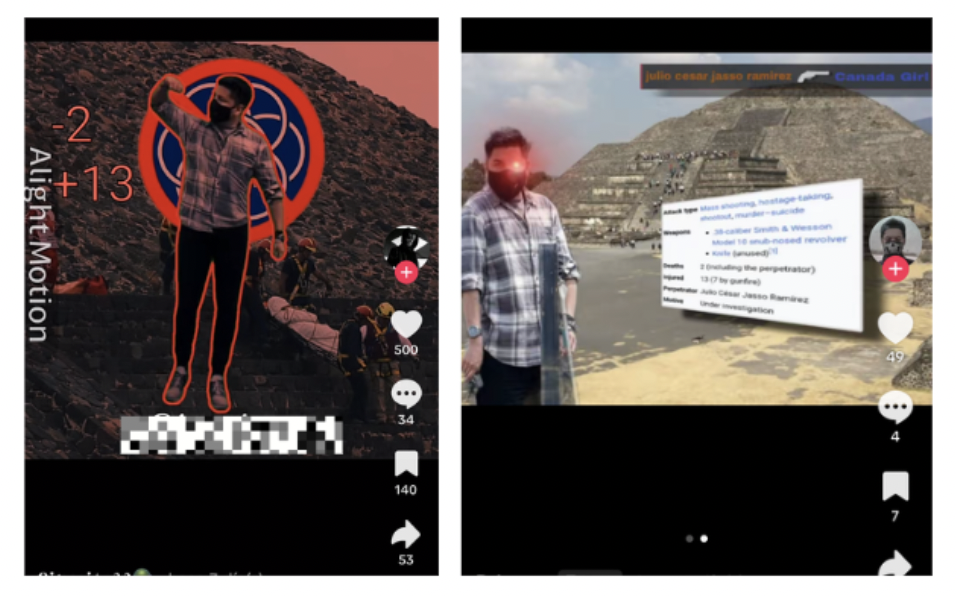
Figure 2: Rampage edits on TikTok about the Teotihuácan attacker.
While Mexican President Claudia Sheinbaum and the Mexican prosecutor’s office framed the attack primarily as an isolated act linked to the perpetrator’s psychological condition, the case reflects broader transnational dynamics associated with the globalisation of online nihilistic violence and its associated copycat dynamics.
Nihilistic Violence in Mexico
Mexico has its own precedents of attacks associated with nihilistic violence, including the 2017 Colegio Americano de Monterrey shooting and the 2020 Colegio Cervantes attack in Torreón, the latter of which also included direct references to Columbine. Since March 2024, at least four additional cases beyond the Teotihuacán attack have displayed recurring patterns of symbolic imitation and online circulation of references linked to online subcultures of nihilistic violence.
Across these four incidents, recurring elements include pre-attack social media signalling, symbolic in-group references, and the rapid incorporation of perpetrators into online glorification content. Within Spanish-speaking online spaces, recent Mexican attackers have begun to function as emerging reference figures, alongside more established international cases.
In the attack at the University of Technology of Guadalajara in March 2024, in which three women were killed with bladed weapons, the perpetrator published a photo on Facebook hours before the attack, dressed in black, wearing a skull mask, and displaying the weapon later used in the assault. Media reports also indicated that he participated in a WhatsApp group titled “Crimes driven by fanaticism”. His Facebook profile – which was eventually removed by the platform but still circulates on online forums such as Reddit – reportedly included references to the Suzano school massacre in Brazil.
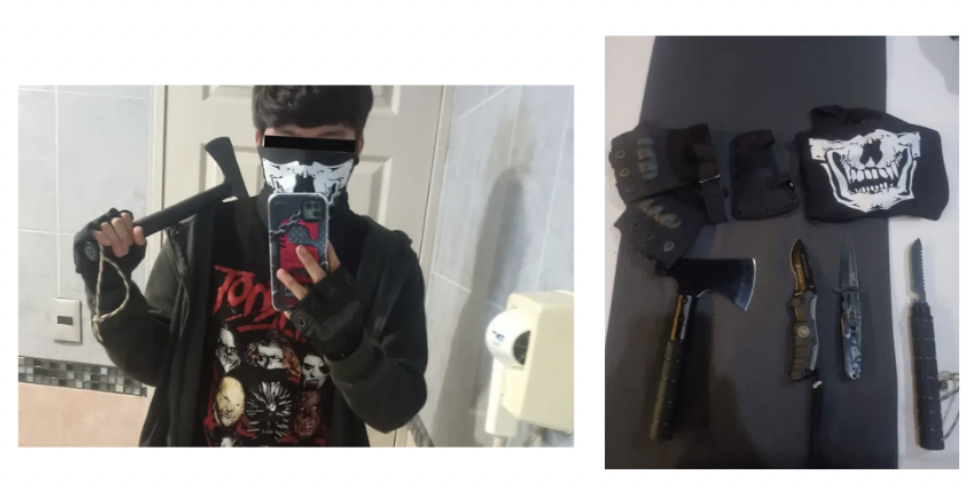
Figure 3: Photos uploaded to Facebook by Gabriel Alejandro N., perpetrator of the attack at the Technological University of Guadalajara. Source: Nmas
Similar dynamics appeared in the San Andrés preparatory school attack in November 2024. Prior to attacking two classmates with a hammer, the perpetrator announced the assault on X and then livestreamed the attack. Posts published before the incident included photographs of the attacker posing with weapons while wearing clothing displaying Nazi-related symbolism alongside messages anticipating the attack, including “We’re already well equipped for this Saturday’s party (…) Sieg Heil.” The livestream itself was introduced with the caption “school massacre, enjoy the show.” X ultimately suspended the associated account.
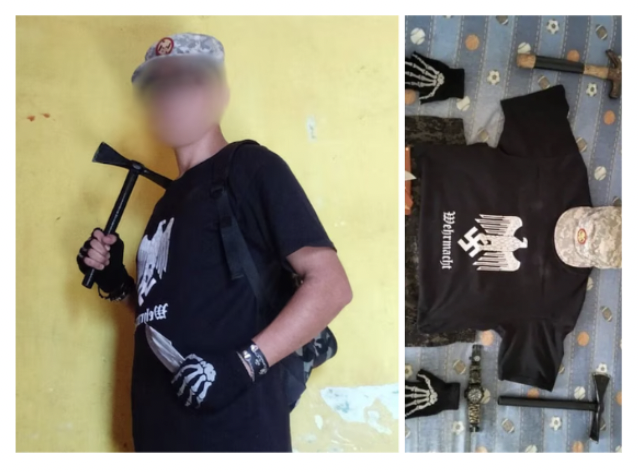
Figure 4: Social media content from Brandon A., the San Andrés High School attacker.
The UNAM stabbing attack in September 2025 and the March 2026 shooting in Lázaro Cárdenas also reflected common elements of nihilistic violence and adjacent online subcultures, including engagement with incel-related communities and the circulation of misogynistic messages. These overlaps illustrate how the boundaries between TCC-related material and other violent online subcultures, including incel communities and militant accelerationist milieus, can become increasingly blurred through shared practices of glorification, symbolic imitation, and the use of recurring aesthetic markers such as skull masks.
Latin American Context
The rise of TCC-related incidents and broader forms of nihilistic violence is not limited to Mexico, but appears to be emerging as a wider regional trend across Latin America. In March 2026, a stabbing attack in Chile resulted in the killing of a teacher. The perpetrator had reportedly signalled the attack in advance on YouTube, while his weapon and online activity referenced previous mass attackers, reflecting patterns of symbolic imitation commonly associated with TCC-related online spaces.
In Córdoba, Argentina, a school shooting in March 2026 was directly linked to TCC-related online spaces, with the perpetrator reportedly participating in Discord communities associated with TCC and displaying explicit references to Columbine, including symbolic references in clothing. Such actions violate Discord’s terms of use. In the same period, another planned school attack in Córdoba was prevented; the adolescent involved was also reported to be engaged in TCC-related groups that had encouraged the execution of a school shooting.
In addition, reports from Argentina, Chile, Peru and Mexico documented a wave of graffiti and online content threatening imminent school attacks, such as “tomorrow, shooting.” The simultaneity and geographic spread of these messages suggest possible connections to a viral online challenge on TikTok. This trend also illustrates how the circulation and aestheticisation of perpetrator-related content may contribute to the normalisation, memefication, and wider symbolic reproduction of nihilistic violence across online spaces. Although some associated terms are now blocked in search functions of the platform, alternative spellings continue to bring results linked to such content, including videos of teenagers writing threats in school environments.
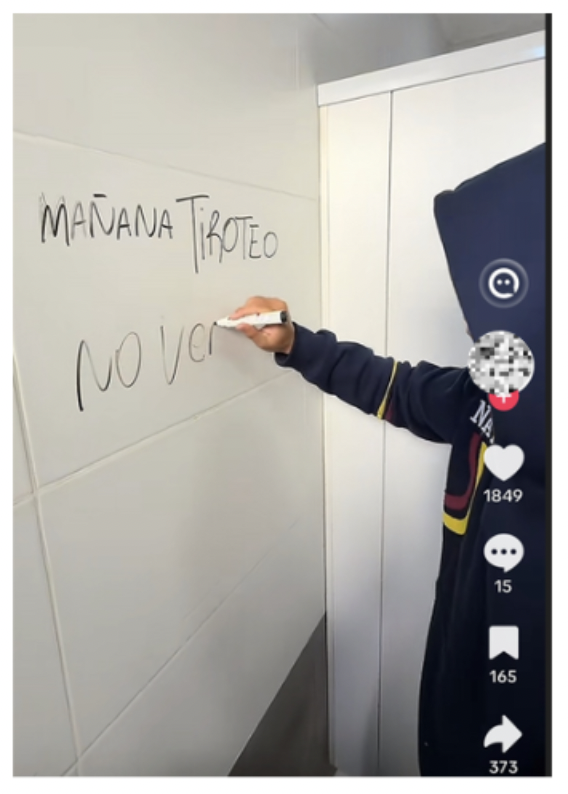
Figure 5: TikTok content related to the “Shooting Tomorrow” trend.
The increasing frequency of nihilistic violence-related incidents in Latin America in recent months suggests a pattern in which TCC-linked attacks may operate both as participatory triggers for further acts and as acts of performative violence aimed at generating notoriety and recognition within these online communities. Research using self-exciting models of violent events has shown that the occurrence of one attack can increase the probability of subsequent incidents, a pattern that, while not universal across all forms of violence, is observable within TCC-related ecosystems. TCC-related violence thus appears self-reinforcing: each attack generates further engagement, fandom-like content, and symbolic circulation, which in turn contributes to its visibility and perceived legitimacy within online subcultures, increasing the likelihood of imitation and participation.
The Latin American landscape of nihilistic violence appears to have entered a stage in which regional attacks are increasingly shaping subsequent attacks and online symbolic cultures. Perpetrators are no longer drawing exclusively on internationally recognised attacks, but also on attackers from within the region who have acquired symbolic status inside TCC online spaces. This dynamic is particularly visible on TikTok, where some accounts are entirely dedicated to the glorification and aestheticisation of Latin American perpetrators, reframing them as locally recognisable figures within the subculture’s symbolic canon. This is despite the prohibition of glorification in TikTok’s Safety and Civility guidelines.
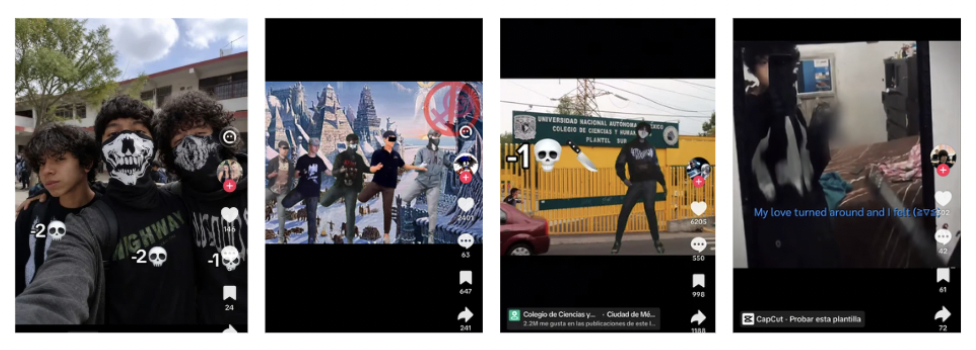
Figure 6: TikTok content glorifying various Mexican attackers, including rampage edits, AI-generated photos, and romantic expressions.
The 2019 Suzano school massacre in Brazil, in which ten people were killed, has emerged as one of the most significant regional reference points within Latin American TCC-related ecosystems. References to Suzano have appeared not only in subsequent Brazilian attacks, but also in attacks and online content linked to perpetrators in countries such as Mexico. In this sense, Brazil continues to occupy a particularly significant position within the regional landscape, concentrating a significant number of reported attacks associated with nihilistic violence and school shooting subcultures in Latin America.
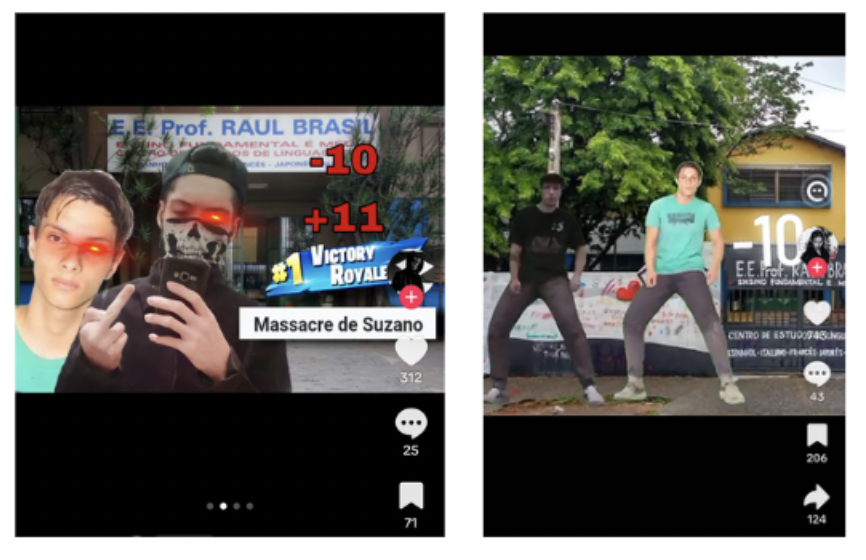
Figure 7: Content on TikTok that glorifies the perpetrators of the Suzano massacre.
It is important to consider several contextual layers when analysing these dynamics. Within school environments, many perpetrators have reportedly been victims of bullying, while TikTok content related to Latin American perpetrators frequently frames attackers as figures of revenge against bullying and abuse. This narrative is significant in a regional context where, according to UNICEF, one in four adolescents experiences school bullying and around 15% face mental health problems, often linked to broader structural factors such as the normalisation of violence, inequality, or excessive social media use, which vary across countries. These societal conditions should be understood as contextual risk factors that help situate the environments in which such incidents may emerge and inform prevention and risk assessment frameworks.
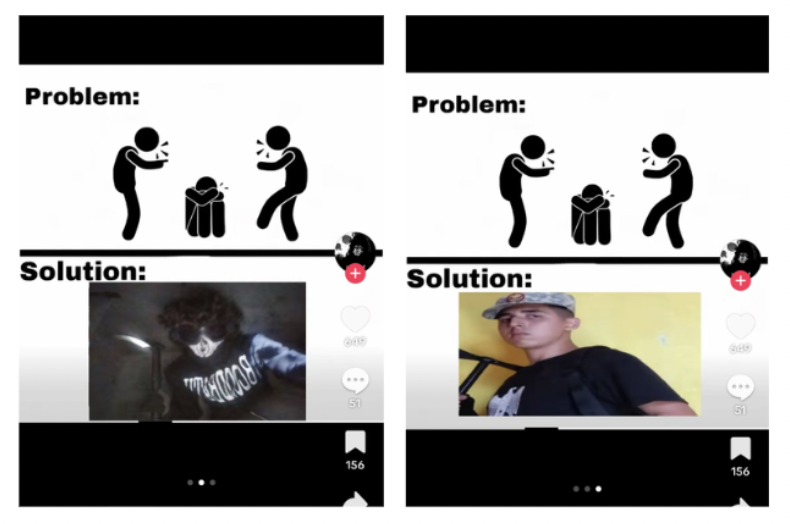
Figure 8: Content on TikTok that portrays attackers as a solution to the bullying problem.
Conclusions and Recommendations
The Teotihuacán attack should not be understood as an isolated case, but rather as part of a broader and increasingly visible pattern of nihilistic violence in Latin America. These dynamics can no longer be treated in the region as foreign phenomena or isolated incidents; rather, they constitute an emerging regional trend that requires a coordinated, multidisciplinary response involving policymakers, researchers, educational institutions, public health actors, and social media platforms. The consolidation of local Latin American reference figures within TCC-related ecosystems may further increase the risk of copycat attacks driven by the search for notoriety and symbolic recognition within these online communities.
Digital platforms play a central role both in processes of exposure to nihilistic online subcultures and in the circulation of content glorifying perpetrators. Addressing these dynamics requires stronger enforcement of policies related to the glorification of violence, particularly given the importance of notoriety and visibility within these online communities. Platforms should also improve crisis and escalation protocols for identifying potential pre-attack signalling and strengthen collaboration with researchers and law enforcement. Particular attention should also be paid to recommendation systems and the algorithmic amplification of violent and glorification-related content, which may contribute to wider memetic circulation and copycat patterns. Given the cross-platform nature of these online environments, stronger coordination and information-sharing mechanisms across platforms are also necessary to identify emerging threats and evolving symbolic trends. Platforms should also strengthen language-specific and locally informed detection capacities adapted to Latin American contexts to improve early identification of emerging risks across online communities.
–
Urszula Mrozowska has worked as an online safety analyst, specialising in hate speech, extremism, and disinformation, including climate-related and electoral disinformation, on social media. She has worked in the tech industry, focusing on investigating these issues across Spain, Latin America, and Poland. She holds a Bachelor’s in Linguistics from the University of Barcelona and a Master’s in Latin American Studies, completed between the University of Warsaw and the Andean University Simón Bolívar of Ecuador. Previously, she conducted research in Business and Human Rights, investigating corporate human rights violations and their social and environmental impacts.
–
Are you a tech company interested in strengthening your capacity to counter terrorist and violent extremist activity online? Apply for GIFCT membership to join over 30 other tech platforms working together to prevent terrorists and violent extremists from exploiting online platforms by leveraging technology, expertise, and cross-sector partnerships.
The views and opinions expressed in this Insight are the authors’ own and do not necessarily reflect those of GNET or any of its partners.