

Truth, Trust, and Extremism: The Sovereign Citizen Movement and Porepunkah
On 27 August 2025, ten police officers, including members of the sexual offences and child investigation team, descended on a property in the regional Victorian town of Porepunkah to serve a search warrant to 56-year-old Dezi Freeman, born Desmond Filby. Freeman allegedly responded by shooting dead senior constables Neal Thompson and Vadim De Waart, and injuring a third officer, before fleeing into the dense bushland. Freeman was reported to identify as a Sovereign Citizen with strong anti-police views. It was also reported that he likely knew the surrounding bushland better than the authorities, borne out by the fact that he was not found again for seven months.
Freeman was eventually found on March 20, 2026, hiding at a rural property in north-east Victoria, in a makeshift shelter described as ‘a cross between a shipping container and a long caravan’. A three-hour standoff ensued until finally he was shot and killed by officers, having refused efforts to facilitate a surrender and brandishing a gun. The circumstances under which Freeman was found suggest he was being aided by sympathisers within the Sovereign Citizen movement – alterations to his quarters appeared to have required more than one person, and there were signs that he had received visitors at his hideout.
This Insight will explore reactions to the death of Dezi Freeman within Sovereign Citizen groups and the larger conspiracist milieu online, and relate this to the larger crisis of truth and trust being experienced in Australia and elsewhere throughout the Western world. It will then discuss the technology industry’s role and offer recommendations for restoring a shared understanding of reality, both online and offline.
The Sovereign Citizen Movement in Australia
Freeman belonged to a network of Sovereign Citizens in Australia who are believed to have helped him in the aftermath of the Porepunkah murders, and who continue to believe in the pseudolegal doctrines that motivated him. Researchers who have studied the Sovereign Citizen movement in Australia claim that its growth in recent years is connected to various stressors on daily life in recent years, such as COVID and, more immediately, the economic pressures linked to the war in Iran. The ideology posits that the current government is illegitimate due to various technicalities that led to a divergence from the real governance system, and the establishment of administrative methods of social control, such as driver’s licenses and birth certificates. Increased government intervention into private lives during the initial outbreak of COVID saw the popularity of these ideas grow rapidly, usually in concert with other conspiracy beliefs.
The process by which people come to accept such alternative belief systems typically begins with a disruption to an otherwise less stable and contented life. Such a catalyst is easily found for many in the current polycrisis. During such times, simple and often extreme explanations are appealing, regardless of an individual’s intelligence or erstwhile mental stability. While the details of pseudolaw are often intricate, the movement’s black-and-white morality provides simplicity. Convinced of this moral narrative, Freeman’s activities in the years leading up to Porepunkah document a crusade against the so-called impostor government, including an attempted ‘prosecution’ of then Premier Daniel Andrews that would feature prominently in conspiracy theories about later events.
For Freeman, early signs of radicalisation appear to be linked to an unbending anti-authoritarian attitude that led to an inability to maintain stable employment. He spent some time in his twenties living in his car and was eventually placed on a disability pension. Past online communications reveal a violent hatred of police and politicians. Later, he changed his name in line with his adopted Sovereign Citizen beliefs. An unclassified Australian Federal Police document from 2023 warned of the movement‘s increasing organisation and commitment in Australia. This is reflected in the impression Freeman has left with some conspiracists as a modern-day Ned Kelly.
Online Reactions to the Death of Dezi Freeman
Commentary about Freeman’s case on Facebook and Telegram, two popular haunts for the Australian conspiracist milieu, varies; however, a large portion portrays Freeman not as a murderer but as a revolutionary and attempted whistleblower cut down by a corrupt and illegitimate government. Such posts risk glorifying Freeman’s actions and justifying them as self-defence rather than the result of a violent extremist mindset. Among the themes documented is the common refrain employed in the wake of dramatic public events that ‘something doesn’t add up’. Rather than being illustrative of a complex and often incoherent world, such moments are evidence of conspiracist thinking of deception. In the case of Freeman’s death, posts demand the release of body cam footage or post-event evidence of a body.
Generally, posters accept that Freeman is dead. However, many believe the standoff was staged for one of a few reasons, and his death occurred shortly after the Porepunkah shootings in August 2025, with the body being kept in a freezer in order to stage a dramatic manhunt and provide impetus for new laws targeting the Sovereign Citizen movement and gun owners (Figure 1). A single reported gunshot in the area shortly after he originally fled, but never confirmed, plays into this theory.
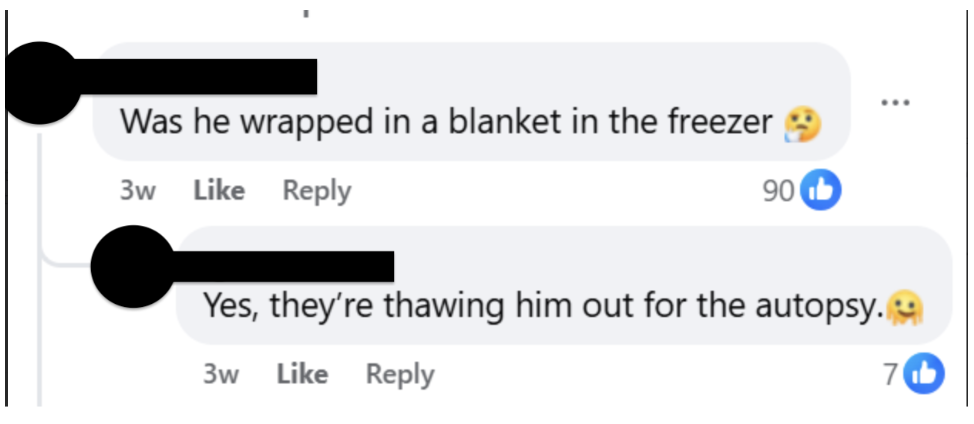
Figure 1: users muse about how Freeman was discovered
Another theory that posits a carefully staged event claims that no attempt was made to take Freeman alive; in fact, he was executed with excessive force because he was a ‘threat to the system’. Alternatively, commentators claim his death was revenge for the killing of police officers. In this version of events, it is claimed that he was shot 20 times either out of anger or to prevent him from having his day in court, where he would have an opportunity to expose the government’s misdeeds (Figure 1). In the words of one poster, ‘He had information as a whistle blower that led to his corrupt death by the (police that are controlled by the child eating psychopaths)!’.

Figure 2: a user expresses a conspiracy theory about Freeman being martyred
As is common with the Sovereign Citizen movement and conspiracy theories in general, the events surrounding the crimes and death of Dezi Freeman are connected with broader ‘plots’ and events. It is by now almost a truism that belief in a conspiracy theory predicts likely belief in others. The murders in Porepunkah are referred to as ‘Wieambilla psyop part 2’. Commentors demand full investigations of ‘Port Arthur, The Train Brothers, The Lindt Cafe Siege, Oct 7, Bondi… and Dezis execution’. Child sacrifice, a common theme in contemporary (and historical) conspiracism, is raised. This underscores how the case and its accompanying discourse fit within a broader conspiracist worldview, highlighting its role in reinforcing systemic patterns of belief.
Online Platforms and the Post-Truth Era
Conspiracism and the Sovereign Citizen movement predate Facebook, Telegram, and other platforms; however just as this communication medium penetrates much of modern-industrial life, it plays a significant role in the erosion of shared understandings of truth and reality. Daniël de Zeeuw characterises social media as occupying a role akin to the Habermasian public sphere, but one that operates under a different set of logics, ones that ultimately distort the function of a healthy public sphere. He refers to ‘post-truth conspiracism’ as reliant on the logics of ‘communicative capitalism’ and information warfare, rather than the sincere and earnest exchange of ideas. As such, the danger lies in treating social media as a neutral or equivalent ‘public square’, rather than engaging with it more critically and with an awareness of the medium’s underlying distortions.
Similarly, a report by the Guringai Foundation argues that the sociopolitical environment in Australia has entered into a time of
‘rapid transformation defined by economic dislocation, digital disinformation, and ideological fragmentation. Within this environment, far-right mobilisation, pseudolegal subcultures, and spiritualised conspiracy movements have converged into a complex ecosystem of distrust and performative defiance.’
Within the global post-truth condition lies much of contemporary extremism, promising as it does certainty and legitimacy in a world where these are being eroded. In this sense, conspiracism is both a symptom of and contributor to the problem. The Guringai report concludes that a suite of measures, including prebunking, education, and the restoration of trust and civil ethics, will be necessary to reverse the tide.
Gabriele Cosentino has argued compellingly that recent events (in particular the 2024 US election) have demonstrated the extent of the problem. Not only does the post-truth crisis world give rise to violent events such as Porepunkah, but it is inimical to the fundamentals of democracy. However, there is hope, as digital literacy is becoming a basic necessity of online life, and calls for better regulation are increasing.
Conclusion, Recommendations, and the Role of Tech
The role that social media and tech companies play in our current predicament is not set in stone. A 2021 study in Frontiers in Political Science examined the relationship between conspiracy belief, social media, and cognitive reflection – the ability to override immediate instinctive, intuitive reactions with more considered, critical responses. It found that social media use (specifically Facebook) is associated with conspiracy theory beliefs, but only among individuals with low capacity for cognitive reflection. In other words, the medium itself need not be harmful if users are adequately primed for its use. This same relationship (between misinformation and receptiveness due to low capacity for cognitive reflection) is also related to the adoption of extremist views.
Scholars and practitioners broadly agree that existing regulatory practices need to be improved with regard to misinformation on social media – while acknowledging the complicating factors of free speech and potential government misuse of any restraints on this. In a sense, governance challenges must be addressed online and offline in concert to combat a problem that is both technical and social. Otherwise, any efforts to lessen the post-truth environment online will not be well received while being implemented by offline forces that lack the requisite legitimacy.
In Australia, as elsewhere, conspiracist thinking progresses with a mistrust and fear of the establishment, mediated by the online world. As such, government responses need to balance security with mental health care and a commitment to earning citizens’ trust. Responses from tech companies should similarly include an understanding of these processes and the role platforms play in accelerating them. Trust-building, dialogue, and empowerment of influential moderate voices may be fruitful avenues. These strategies require resources to be properly allocated and supported trust and safety teams.
The case of Dezi Freeman should not be viewed as an unfortunate outlier but a crystallisation of deeper failures of trust, truth, and institutional legitimacy. The dynamics that have given rise to our post-truth environment were not technically determined, but platforms are acting as a force multiplier in many cases. Political will and institutional courage are required across our online and offline landscapes to create different, better realities.
—
Gerard Gill, PhD, is an independent researcher on extremism, with a particular interest in conspiracism and the far right in Australia. He has experience working in Countering Violent Extremism and as a consultant on the implementation of online safety legislation for the Australian Government.
—
Are you a tech company interested in strengthening your capacity to counter terrorist and violent extremist activity online? Apply for GIFCT membership to join over 30 other tech platforms working together to prevent terrorists and violent extremists from exploiting online platforms by leveraging technology, expertise, and cross-sector partnerships.
The views and opinions expressed in this Insight are the authors’ own and do not necessarily reflect those of GNET or any of its partners.